Lifting Weights to Save Lives: How Mount Jordan Middle School’s NJHS Redefined Middle School Philanthropy
SANDY, UT — The fundamental premise was established on day one of the academic year: The National Junior Honor Society (NJHS) is built on service, not busy work.
For the 80 dedicated student members and two faculty advisers at Mount Jordan Middle School in Sandy, Utah, the objective was never about checking boxes or completing superficial chores. Instead, the chapter sought to orchestrate an initiative larger than themselves—something that transcended their immediate circle, their grade levels, and the standard confines of a middle school extracurricular club.
That high-minded ambition ultimately materialized as “Pounds for Puppies,” a fitness-based fundraising campaign that combined athletic endurance with animal welfare. By the time the dust settled in the school gymnasium last May, the initiative had not only generated more than $2,000 for the Humane Society of Utah, but it had also fundamentally transformed the school’s internal culture and solidified bonds across the student body.
Main Facts: The Anatomy of "Pounds for Puppies"
At its core, "Pounds for Puppies" was an exercise in creative community mobilization. Conceptualized by eighth-grade student leaders and executed by the entire Mount Jordan Middle School NJHS chapter, the project was designed to address a critical local need while engaging the broader Sandy community.
- The Beneficiary: 100% of the proceeds—surpassing the $2,000 milestone—were directly donated to the Humane Society of Utah to support animal rescue, rehabilitation, and placement operations.
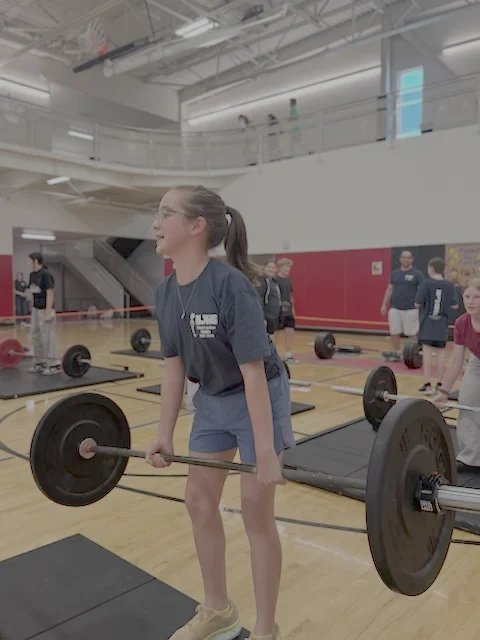
- The Mechanism: Adopting a model akin to a traditional charity fun run, participating students collected financial pledges from family members, neighbors, and local friends. Rather than simply walking or running, however, students earned donations based on physical output: every pound deadlifted or every lap run equated to a specific financial contribution from their sponsors.
- The Venue and Scope: The main event took place over an intensive two-hour period inside the Mount Jordan Middle School gymnasium. Alongside the rigorous physical challenges, the space featured interactive, animal-themed educational booths designed to foster community engagement.
- The Organizers: Spearheaded by an 80-member NJHS cohort, the initiative showcased the capacity of middle school students to assume authentic leadership roles, manage large-scale events, and direct substantial charitable contributions.
Chronology: From Concept to Community Impact
The success of "Pounds for Puppies" did not happen overnight; it was the result of months of strategic planning, enthusiastic brainstorming, and careful execution.
Phase 1: Ideation and Alignment
At the start of the school year, the Mount Jordan NJHS chapter established a guiding philosophy: their efforts needed to leave a tangible mark. The initial brainstorming sessions yielded a dizzying array of proposals, but the students quickly gravitated toward a shared passion—animals.
However, identifying a cause was only the first hurdle. The chapter needed a sustainable, engaging way to raise significant funds without relying on traditional, passive sales pitches. Tapping into a collective interest in health and physical fitness, the students proposed merging athletics with philanthropy. The concept of a fitness-metrics fundraiser—where physical exertion directly translated to charitable dollars—was born, leading directly to the branding of "Pounds for Puppies."
Phase 2: Outreach and Pledging
In the weeks leading up to the main event, the students transitioned from planners to marketers. Armed with pledge sheets and digital outreach tools, NJHS members reached out to their personal networks. They explained the mission of the Humane Society of Utah and sought sponsors willing to back their physical efforts. With every pledge secured, the students simultaneously spread awareness of animal welfare issues throughout Sandy.
Phase 3: Event Day Execution
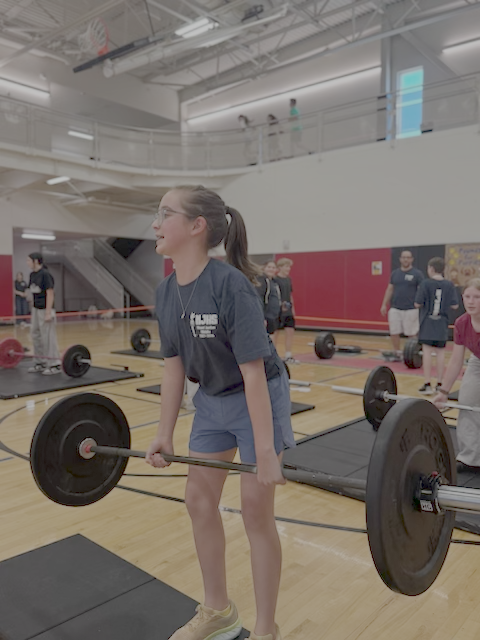
When May arrived, the Mount Jordan gymnasium was prepped and charged with palpable energy. For two straight hours, students pushed their physical limits, running continuous laps around the perimeter and executing structured deadlifts under the watchful eyes of advisers and peers.
Simultaneously, the gym floor served as an interactive community hub. Organizers designed a suite of Humane Society-themed activities to educate and entertain attendees. These included a specialized animal rescue obstacle course, a memory-matching game focused on pet care, and a crowd-favorite "dog treat cornhole" station. By inviting the public and fellow students to participate in these games, the NJHS ensured that the event was not merely a fundraiser, but an immersive educational experience.
Supporting Data and Financial Transparency
The true metric of "Pounds for Puppies" extends far beyond the emotional resonance of the event day; it is rooted in concrete financial results and sustained community engagement.
- $2,000+ Raised: Through the grit of deadlifting and distance running, combined with the generosity of local sponsors, the chapter cleared the $2,000 threshold.
- 100% Allocation: True to their ethical framework, every single dollar collected went straight to the Humane Society of Utah, bypassing administrative overhead and ensuring maximum impact for vulnerable animals.
- Sustained Communication: The financial contribution was not a one-time transaction that faded into memory. To this day, faculty advisers at Mount Jordan Middle School continue to receive communications and updates from the Humane Society of Utah, detailing specific operational milestones and animal rescues made possible by the middle schoolers’ donations.
This ongoing correspondence serves as an empirical validation of the students’ efforts, proving to the adolescent organizers that their sweat and determination translated into real-world, life-saving outcomes for animals in need.
Official Perspectives and Student Voice
The success of the initiative offers a compelling case study in youth empowerment and educational leadership. When students are given structural agency, clear resources, and institutional trust, their capacity for meaningful contribution expands exponentially.
"The goal was never to do chores. NJHS is built on service, not busy work," reflects Madeline Archuleta, an eighth grader at Mount Jordan Middle School and the chapter’s NJHS historian. "We wanted to do something bigger than ourselves. Something bigger than our group of 80 students and two advisers. Everything started with a simple goal: Make an impact."
Archuleta’s reflections highlight a vital pedagogical truth: middle school students are frequently underestimated regarding their capacity for executive decision-making and civic responsibility. Traditional school structures often relegate students to passive consumers of education or participants in low-stakes, superficial activities. By challenging this paradigm, the Mount Jordan NJHS advisers empowered students to step into authentic leadership positions.
"Donations don’t mean anything unless you have a reason to give, and we gave people a reason," Archuleta notes. "We stepped into leadership positions, putting ourselves out there for the sake of making a meaningful difference."
This sentiment is echoed by the faculty advisers, who witnessed firsthand the transformation of the student body from a collection of individual academic high-achievers into a cohesive, mission-driven coalition.
Implications: Building Culture and Fostering Belonging
While the primary beneficiaries of "Pounds for Puppies" were the animals sheltered by the Humane Society of Utah, the internal ramifications for Mount Jordan Middle School were equally profound.
Redefining Middle School Social Structures
Middle school is notoriously fraught with social anxieties, cliques, and structural isolation. Students often remain siloed within their specific peer groups, rarely interacting with peers outside their immediate classes or social circles.
The collaborative nature of the NJHS project dismantled these invisible barriers. As Archuleta observes, the shared ambition of the fundraiser forged unexpected personal connections:
"Even beyond the Humane Society, we made an impact for ourselves. There were eighth graders in NJHS I never would have thought to talk to, but now? I know all their names by heart. Some of my closest friends were part of NJHS with me, and that made our friendship even stronger."
By uniting under a common cause—lifting weights and running laps for puppies—students found a shared purpose that superseded social divides. The project catalyzed the formation of a micro-community built on empathy, shared values, and collective labor.
A Blueprint for Youth Civic Engagement
The success of the Mount Jordan NJHS chapter provides a replicable blueprint for middle and high schools nationwide. It demonstrates that civic engagement programs achieve optimal results when they:
- Prioritize Student Agency: Allowing students to choose the cause and design the fundraising mechanism fosters genuine psychological ownership over the project.
- Combine Passions with Purpose: Leveraging existing student interests—such as physical fitness—transforms grueling fundraising work into an engaging, dynamic experience.
- Integrate Public Education: Incorporating interactive, thematic activities (like the Humane Society obstacle course) broadens the educational footprint of the event, engaging the wider community rather than just the direct participants.
Conclusion
Ultimately, the story of "Pounds for Puppies" is not merely about a check delivered to an animal shelter, nor is it just a tale of middle schoolers lifting weights in a gymnasium. It is a testament to the transformative power of youth leadership. When young people are trusted with the agency to address real-world problems, they do not merely meet expectations—they shatter them, leaving an indelible mark on their schools, their communities, and themselves.