Beyond the Churn: Why School Improvement Initiatives Fail—and How Educators Can Finally Solve Their Own Problems

By Educational Research & Insights Desk
For decades, the ritual has repeated itself across school districts nationwide. The final weeks of summer vacation wind down, classrooms are prepped, and educators file into the auditorium for the first faculty meeting of the new academic year. After introductory remarks and housekeeping items, the principal introduces the district’s latest pedagogical crusade: a branded, prepackaged improvement framework, a newly purchased curriculum, or a sweeping strategic mandate designed to transform teaching and learning.
If educational history is any guide, teachers nod politely, invest time and energy into the rollout, and watch as the initiative is quietly abandoned or replaced a few years later by a new administration with a different acronym. This exhausting institutional churn has become a defining characteristic of modern American schooling.
However, a provocative new book, A Chance to Solve Their Own Problems (Harvard Education Press), challenges this cyclical frustration. Authored by educational researchers Jal Mehta and Max Yurkofsky, the text examines why systemic school reform so frequently falters and highlights the underlying conditions that allow grassroots, problem-solving methodologies to genuinely succeed.
Drawing from extensive fieldwork across real schools and districts, Mehta and Yurkofsky dismantle conventional top-down reform strategies, offering a diagnostic roadmap for educators seeking authentic, lasting institutional change.
Main Facts: The Anatomy of Educational Stagnation
The central thesis put forward by Mehta and Yurkofsky is straightforward yet radical: school improvement efforts routinely fail because they treat systemic, complex challenges as technical compliance exercises rather than human learning problems.
For generations, school systems have operated under an industrial model of reform. When student test scores dip or achievement gaps persist, district leaders typically diagnose the issue from an office miles away from the classroom. They select a proprietary intervention, mandate its implementation across every school, and monitor "fidelity"—the degree to which teachers follow the prescribed steps of the program.
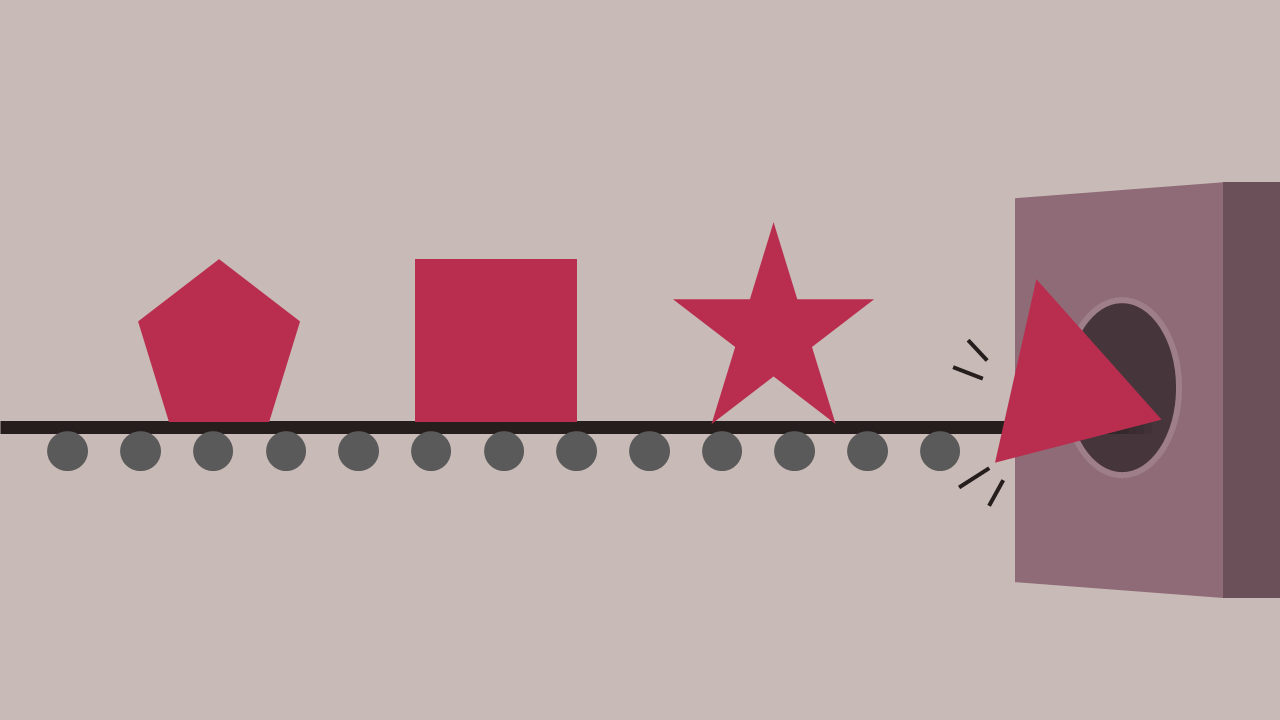
According to Mehta and Yurkofsky, this approach short-circuits the fundamental mechanisms of human problem-solving. When solutions are manufactured at the top and handed down to the bottom, several breakdowns occur:
- Alienation of Frontline Expertise: Teachers—the individuals closest to the everyday realities of the classroom—are reduced to passive implementers rather than active inquirers.
- Blaming Individuals Instead of Systems: Schools frequently weaponize data to isolate struggling teachers or cohorts, ignoring the structural, curricular, and environmental deficiencies within the broader system.
- Prioritizing Fidelity Over Adaptation: By demanding rigid adherence to frameworks that were never designed for a specific school’s unique context, districts suffocate localized learning and iterative adjustment.
- Premature Solution-Jumping: Districts routinely commit millions of dollars to specific curricula or structural programs before they have clearly defined the actual problems they are trying to solve.
Chronology of Reform: From Industrial Compliance to Adaptive Inquiry
To understand how modern school improvement arrived at this impasse, one must examine the evolution of educational reform over the past century.
The Era of Scientific Management (Mid-20th Century)
For decades, school administration mirrored corporate factory management. Districts operated under the assumption that if administrators designed the "correct" standardized processes, teachers executed them uniformly, and students progressed on schedule, educational outcomes would optimize automatically. This era established deeply ingrained hierarchical expectations that separated "thinkers" (administrators and policymakers) from "doers" (teachers).
The Standards and Accountability Movement (Late 1990s–2010s)
Fuelled by landmark federal legislation like No Child Left Behind and subsequent policy shifts, reform shifted toward hyper-accountability. Standardized testing became the primary currency of school evaluation. During this period, improvement efforts largely manifested as test-prep drills, pacing guides, and rigid curricular alignment. While these measures occasionally yielded short-term gains on specific exams, they did little to cultivate deep cognitive engagement or systemic resilience.
The Rise of Improvement Science (2010s–Present)
Recognizing the limitations of top-down mandates, many educational reformers pivoted toward improvement science frameworks—such as Plan-Do-Study-Act (PDSA) cycles borrowed from healthcare and engineering. These models promised a more empirical, bottom-up approach, empowering educators to run small-scale experiments, analyze local data, and refine their practices iteratively.
Yet, as Mehta and Yurkofsky document in A Chance to Solve Their Own Problems, even these promising frameworks frequently degraded into bureaucratic compliance routines. Districts trained teachers in the steps of improvement science without cultivating the psychological safety, shared mental models, or institutional support required to make them work.
Supporting Data and Research Insights: The Triad of Effective Improvement
In their qualitative and empirical research across diverse educational settings, Mehta and Yurkofsky identified three critical pillars that must operate in concert for any school improvement initiative to succeed. When schools achieve lasting progress, it is because mindsets, routines, and practices reinforce one another.
1. Mindsets: Cultivating Shared Ownership and Belief
Mindsets represent the foundational assumptions and beliefs held by educators. For example, Yurkofsky points to high schools attempting to improve adolescent literacy. Even if a district provides cutting-edge instructional materials and intensive professional development, the initiative will stall if secondary content-area teachers maintain the belief that "teaching reading is the elementary school’s job, not mine."
For improvement to take root, educators must fundamentally view the targeted problem as theirs to solve and believe in their collective efficacy to address it.
2. Routines: Establishing Regular Collaborative Structures
Routines provide the organizational scaffolding that moves improvement out of isolation. In thriving school environments, educators engage in systematic, recurring collaborative behaviors: analyzing student work samples together, conducting structured peer classroom observations, or collaboratively planning instructional adjustments.
Without these intentional routines, innovative teachers feel as though they are operating on an island, disconnected from their peers and unable to scale successful strategies across the broader system.
3. Practices: Infusing Disciplinary Expertise
Practices are the actionable strategies, pedagogical resources, and domain-specific knowledge educators use to execute change. Mehta cautions that schools cannot simply "PDSA cycle their way" from mediocre instruction to expert instruction without external inputs of knowledge.
"The ideas have to come from somewhere," Mehta stresses. Whether that expertise resides internally within a master teacher or is brought in from external partners, educators must have access to rigorous, proven instructional practices to effectively resolve the problems they identify.
Official Responses and Expert Perspectives
The release of A Chance to Solve Their Own Problems has triggered robust discourse across academic institutions, school boards, and teacher unions regarding the future of professional development and school leadership.

Speaking on the Cult of Pedagogy podcast, Max Yurkofsky challenged institutional leaders to rethink how they conceptualize institutional friction. Rather than viewing staff complaints or operational hurdles as insubordination, Yurkofsky urged administrators to "view problems as a gift."
"We can’t learn if we’re not raising problems," Yurkofsky explained during the interview. "That’s what drives improvement. When teachers feel safe enough to articulate what isn’t working, it is an indicator of psychological safety and institutional trust."
Jal Mehta emphasized the necessity of addressing institutional architecture rather than scapegoating individual educators. By shifting the diagnostic lens from "Which teacher is failing?" to "How is our system failing to support this teacher?", districts can lower defensive barriers and foster genuine professional vulnerability.
Educational associations have increasingly echoed these sentiments. Major teaching unions and leadership academies are beginning to pivot away from generic, one-size-fits-all professional development days in favor of job-embedded inquiry models that honor teacher agency and local contextual realities.
Implications for School Leaders and Policymakers
Translating the research of Mehta and Yurkofsky into actionable daily practice requires a fundamental restructuring of how school districts allocate resources, evaluate personnel, and structure the academic calendar.
1. Protecting Time and Space as a Sacred Asset
The single greatest impediment to sustainable school improvement is the chronic time-poverty experienced by teachers. Instructional staff are inundated with administrative compliance tasks, student behavioral interventions, and lesson planning demands. Mehta notes that meaningful inquiry requires stepping back from immediate operational pressures to analyze long-term trends. Consequently, school principals and superintendents must actively protect dedicated time and physical space for collaborative problem-solving.
2. Engineering Psychological Safety
True learning requires experimentation, and experimentation inherently involves the risk of failure. In districts where punitive accountability metrics dominate, teachers quickly learn to conceal shortcomings rather than expose them to administrative scrutiny. Leaders must deliberately cultivate an organizational climate where professional mistakes are treated as diagnostic data rather than performance demerits.

3. Aligning Improvement Within a Broader Strategic Vision
Improvement methodologies like design thinking or inquiry cycles must never become ends in themselves. Successful schools anchor their improvement processes within a coherent, overarching strategic vision. Rather than launching disconnected initiatives—such as mandating instructional rounds without a clear curricular goal—leaders must use improvement science as a precision tool to advance a unified educational mission.
Conclusion: A New Path Forward
The cycle of educational reform in the United States has long been characterized by false starts and abandoned mandates. However, the work of Jal Mehta and Max Yurkofsky offers a compelling corrective. By abandoning the illusion of top-down control and recognizing that sustainable improvement is fundamentally a human, social learning process, schools can break free from the cycle of institutional churn.
For principals, superintendents, and policymakers willing to listen, the prescription is clear: stop handing down prepackaged answers to educators who were never asked the question. Instead, build the supportive conditions, collaborative routines, and trusting environments that give teachers a genuine chance to solve their own problems.