Mastering Innovation: Understanding the Engineering Design Process through Everyday Problem-Solving
In the modern world, the line between professional engineering and everyday problem-solving is thinner than many realize. Whether an aerospace firm is designing a new satellite propulsion system or a family is trying to pull together a nutritious dinner from a sparse pantry, the underlying cognitive framework remains remarkably similar. This framework is known as the Engineering Design Process (EDP).
At its core, the Engineering Design Process is a structured, iterative methodology utilized by teams of engineers to navigate complex challenges. By synthesizing principles from mathematics, physics, and material science, practitioners can move from an abstract problem to a tangible, optimized solution. While the process is often depicted in professional settings as a linear trajectory, it is, in reality, a circular loop of constant refinement.
The Fundamental Pillars of the Engineering Design Process
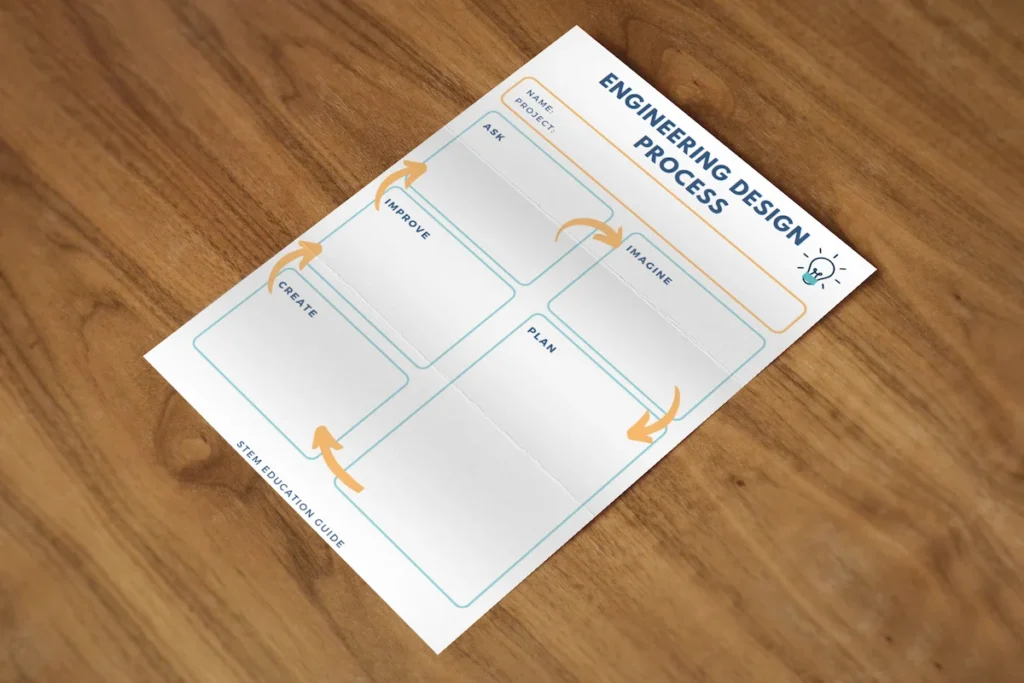
The Engineering Design Process can be condensed into five universal steps. While different institutions may label these stages with slight variations, the functional objective remains constant:
- Ask: Identifying the core challenge and defining constraints.
- Imagine: Brainstorming potential solutions and conducting necessary research.
- Plan: Outlining the specific requirements and delegating tasks.
- Create: Developing a functional prototype or execution of the plan.
- Improve: Evaluating performance, identifying failures, and iterating for optimization.
This cycle is not merely a technical workflow; it is a mindset. By viewing life’s daily hurdles through the lens of the EDP, individuals can approach problems with greater clarity, patience, and efficacy.
A Chronological Case Study: The Family Kitchen Challenge
To illustrate the practical application of the Engineering Design Process, consider a common household scenario: the "Dinner Dilemma." A busy family, faced with a hungry household and limited time, must utilize the EDP to engineer a meal.
Phase 1: Identifying the Constraints (Ask)
The process begins with a formal inquiry. In our kitchen scenario, the "engineers" (the family members) conduct a brief meeting. The constraints are clear: time is limited, the house is warm (limiting oven use), and the goal is to utilize available, perishable ingredients—specifically a surplus of garden-fresh vegetables.
Phase 2: Ideation and Research (Imagine)
With the parameters set, the brainstorming phase commences. The family identifies that a stew provides the best balance of efficiency and nutritional density. However, they encounter a knowledge gap regarding protein integration. Through a quick research session—using digital tools to investigate protein-pairing—the team identifies potential sources such as kidney beans, tofu, and eggs.

Phase 3: The Blueprint (Plan)
Planning involves meticulous documentation. The family drafts an ingredient list: potatoes, carrots, tomatoes, zucchini, summer squash, turnips, green beans, beets, and peas. Recognizing that a one-size-fits-all approach to protein will fail due to individual preferences, they decide on a multi-modal solution: three separate pots of stew, each utilizing a different protein base.
Phase 4: Execution (Create)
The "build" phase requires division of labor. Children handle prep work involving low-risk cutting, while adults manage complex tasks. Each team assumes responsibility for one "prototype" (the stew pot). They introduce the herbs, water, and chosen protein, setting the stage for the initial test.
Phase 5: Iteration and Optimization (Improve)
No engineering project is perfect on the first attempt. As the aromas develop, the family notices critical issues: the tofu is disintegrating into a mushy consistency, and the beets are bleeding, turning the entire dish a uniform pink.
This is the quintessential "Improve" phase. The engineers pivot: they remove the beets to preserve the aesthetic integrity of the dish and replace them with carrots. They employ a "slotted spoon" extraction method to remove the fragile tofu, which is then stir-fried to create a structural crust before being reintroduced to the stew. This adjustment represents the hallmark of engineering: identifying a failure and implementing a technical solution to rectify it.
Distinguishing the Engineering Design Process from the Scientific Method
A frequent point of confusion exists between the Scientific Method and the Engineering Design Process. While both rely on logic, they serve fundamentally different purposes.
The Scientific Method: Discovery and Theory
The Scientific Method is the tool of the researcher. It begins with an observation and a question, moves to a hypothesis, and culminates in a controlled experiment. Its primary objective is to acquire new knowledge or prove a theory about the natural world. Once the research is complete, the scientist contributes to the body of academic literature.
The Engineering Design Process: Application and Product
Conversely, the Engineering Design Process is the tool of the builder. Engineers operate on the findings of scientists to create products, technologies, or systems that solve human needs. Their output is not a research paper, but a functional solution.

The distinction is best observed in the "Beet Case." A scientist might use the Scientific Method to study the molecular properties of beet juice, concluding that its nitrates improve human cardiovascular health. An engineer, in our kitchen scenario, uses the EDP to decide whether to include the beet in the stew based on its performance (taste and appearance). The engineer uses the scientific discovery as a component of their broader design goal.
Data-Driven Implications and Real-World Impact
The implications of utilizing the Engineering Design Process extend far beyond the home kitchen. In professional engineering firms, the "Improve" phase is often the most resource-intensive. Companies invest millions in quality assurance testing to identify these "beets in the soup" moments—flaws that could lead to product failure.
For instance, in the aerospace industry, if a fuel pump shows signs of early degradation, engineers do not simply discard the entire rocket. They disassemble the system, analyze the failure point, adjust the material composition or the design geometry, and re-test. This iterative nature is exactly what allows for the rapid advancement of technology.
Official Perspectives on STEM Integration
Educational experts emphasize that teaching the Engineering Design Process at a young age prepares students for a workforce that increasingly demands critical thinking over rote memorization. By formalizing the way students approach problems—asking, imagining, planning, creating, and improving—educators are fostering a generation of innovators who are not afraid of failure.
In the classroom, these free worksheets act as a scaffold. They force the student to write down their brainstormed ideas and reflect on why a specific design choice didn’t work. This reflective practice is the cornerstone of professional engineering.
Summary: The Iterative Life
The beauty of the Engineering Design Process lies in its universality. Whether you are troubleshooting a failing piece of consumer electronics, attempting to reduce your carbon footprint at home, or designing a complex piece of software, the cycle remains the same.
- Ask: What is the actual problem?
- Imagine: What are all the possible ways to solve it?
- Plan: Which approach is the most viable given my constraints?
- Create: Build the solution.
- Improve: Analyze the results and refine the design.
As the family sitting around their table eating the refined, optimized stew learned, the process is never truly "finished." There is always an opportunity to iterate, to refine, and to make the next version even better. By embracing the Engineering Design Process, we transform ourselves from passive observers of our problems into active architects of our solutions. The next time you find yourself stuck, remember: you don’t need a laboratory to act like an engineer. You simply need to start at step one and ask the right questions.