Mastering the Engineering Design Process: A Blueprint for Innovation
In the world of professional engineering, complexity is the default. Whether constructing a skyscraper, developing software, or designing a sustainable energy grid, engineers rely on a structured, iterative framework to transform abstract concepts into tangible, functional solutions. This framework is known as the Engineering Design Process (EDP).
While the term may sound academic, the EDP is fundamentally a universal toolkit for problem-solving. It is a systematic approach that allows teams to break down massive challenges into manageable, actionable phases. By applying scientific principles, mathematical precision, and creative intuition, engineers move from a state of "needing a solution" to "executing a design."
The Core Philosophy: An Iterative Cycle
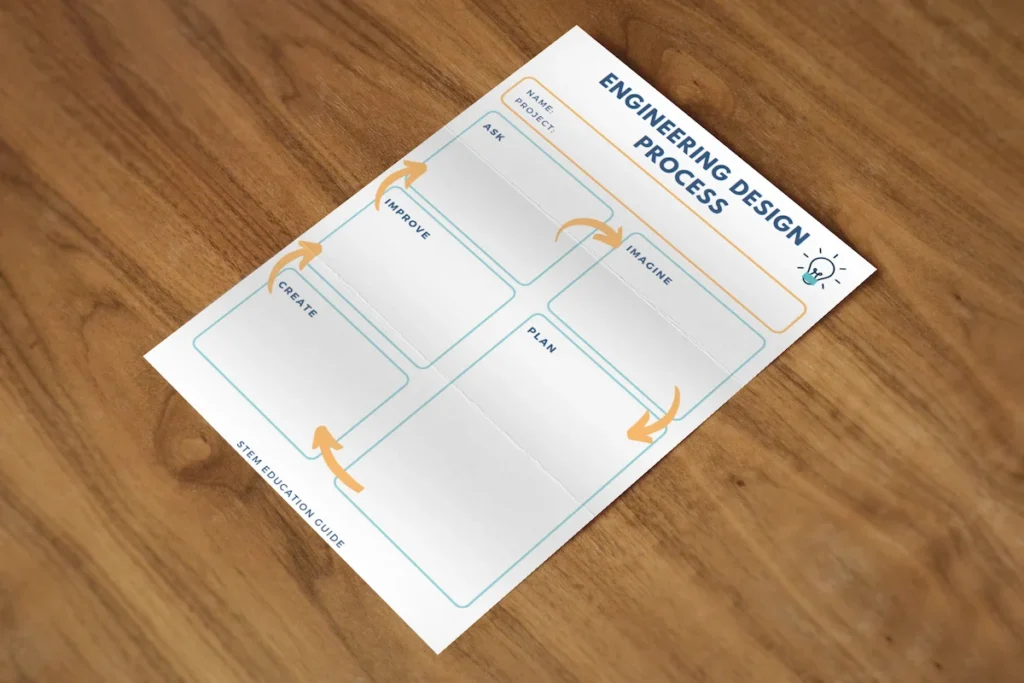
The Engineering Design Process is not a linear path with a definitive end; rather, it is a circular, iterative loop. Once a solution is created and tested, the findings often reveal areas for refinement. This inherent flexibility is what makes the process so robust—it assumes that the first attempt will rarely be perfect, and that continuous improvement is the hallmark of high-quality engineering.
To understand how this functions in a real-world, relatable context, let us look at the process through the lens of a common household challenge: preparing a complex meal for a large family with varying dietary needs.
Chronology: The 5-Step Engineering Journey
The Engineering Design Process can be condensed into five distinct, essential phases. Here is how those steps manifest in a practical scenario.
Step 1: Ask (Identifying the Need)
Every successful project begins with a clearly defined problem. In our household scenario, the "engineering challenge" is simple: the family is hungry, time is short, and the pantry is stocked with miscellaneous ingredients. By gathering the family for a meeting, the "lead engineers" (the parents) are performing an initial requirements analysis. What are the constraints? How much time do we have? What ingredients are available? This phase is about defining the boundaries of the problem before any action is taken.
Step 2: Imagine (Brainstorming and Research)
Once the problem is defined, the team enters the brainstorming phase. This is the creative stage where no idea is too outlandish. In our kitchen example, the family assesses the inventory—vegetables from the garden and potential proteins. Research is conducted: Does roasting meat take too long? Will it heat the house too much? By researching methods and discussing ideas, the family narrows down the possibilities to a "Vegetable Stew," balancing nutrition with time efficiency.
![What is the Engineering Design Process? [Plus, a Free Worksheet] - STEM Education Guide](https://stemeducationguide.com/wp-content/uploads/2020/04/enginereering-design-process-worksheet.png)
Step 3: Plan (Developing the Design)
Planning is the bridge between imagination and execution. It involves drafting a specific list of ingredients and determining the logistics. In this case, the family decides on a multi-pan approach to accommodate different protein preferences (kidney beans, tofu, or eggs). By creating a detailed plan, they reduce the risk of failure and ensure that all resources are allocated correctly before the "build" begins.
Step 4: Create (The Build Phase)
This is the implementation phase. The family divides into teams, delegating tasks according to skill level—children handle softer vegetables, while adults manage denser items and sharper tools. Each team acts as a sub-contractor, responsible for their specific "prototype" (the stew pan). They combine their raw materials with heat and seasoning, following the plan developed in Step 3.
Step 5: Improve (The Iterative Review)
In engineering, this is the most critical stage. As the stew simmers, the teams notice defects: the tofu is turning mushy, and the beets are bleeding unwanted pigment into the other ingredients. The teams pivot. They remove the beets, sear the tofu to improve texture, and adjust the timing for the eggs. This is the "testing and debugging" phase, where the initial design is modified based on real-time feedback to ensure the final product meets the family’s standards.
Distinguishing EDP from the Scientific Method
A frequent point of confusion exists between the Engineering Design Process and the Scientific Method. While both are pillars of STEM (Science, Technology, Engineering, and Mathematics) education, they serve different fundamental purposes.
The Scientific Method: Seeking Knowledge
Scientists primarily focus on discovery. They observe the natural world, formulate a hypothesis, and conduct experiments to verify or disprove that hypothesis. Their ultimate goal is to understand why and how things happen. The end result of the scientific method is usually a peer-reviewed paper or a body of knowledge that expands our understanding of the universe.
The Engineering Design Process: Seeking Solutions
Conversely, engineers focus on utility. They utilize the knowledge discovered by scientists to create products, processes, or technologies that solve human problems. If a scientist discovers the molecular properties of a new material, the engineer is the one who designs the product that uses that material to build a lighter, stronger bicycle. The goal of the engineer is not just to understand, but to build, refine, and optimize.
Supporting Data: The Case of the Beet
To see the synergy between these two fields, consider the beet. From an engineering standpoint, the family decided to remove the beet because it interfered with the aesthetic and texture of their stew—it was a failed design component.
![What is the Engineering Design Process? [Plus, a Free Worksheet] - STEM Education Guide](https://stemeducationguide.com/wp-content/uploads/2020/04/Engineering-Design-Process.png)
However, from a scientific standpoint, the beet is a fascinating subject of study. Researchers have utilized the Scientific Method to prove that the compounds in beet juice are highly beneficial to cardiovascular health. They discovered that the human body converts these compounds into molecules that improve blood flow and lower blood pressure.
This illustrates the interplay of the two fields: science provides the data (beet juice is healthy), and engineering provides the application (the development of health-conscious dietary products or the integration of beets into nutritional meal planning).
Official Perspectives on STEM Education
Educational experts and professional organizations, such as the National Academy of Engineering (NAE), consistently emphasize that the EDP is a vital "soft skill" for the 21st-century workforce. The ability to look at a broken system, identify the root cause, and iterate toward a solution is a transferable skill that applies far beyond the laboratory or the kitchen.
In corporate environments, companies like NASA and SpaceX use the same five-step EDP for spacecraft design that students use in a classroom. The scale is vastly different, but the logic remains identical. By teaching this process, educators are not just teaching children how to build bridges or cook stew; they are teaching them how to approach the unknown with a structured, confident mindset.
Implications for Future Innovation
The implications of mastering the Engineering Design Process are profound. As we face global challenges—from climate change to resource scarcity—we need a generation of thinkers who understand that failure is not the end of the road. Instead, failure is simply a data point in the "Improve" phase.
When a design fails, we do not abandon the mission. We analyze the variables, adjust the constraints, and re-enter the cycle. By viewing our daily challenges through the lens of the EDP, we transform from passive observers of our environment into active designers of our future.
Summary of Key Principles:
- Iterative Design: Never assume the first attempt is the final product.
- Resource Management: Assess constraints (time, materials, budget) early.
- Collaboration: Diverse teams bring diverse perspectives, leading to more robust solutions.
- Data-Driven Adjustments: Use observations (like mushy tofu) to pivot your strategy effectively.
By adopting this professional engineering mindset, individuals can streamline their workflows, improve their decision-making, and successfully navigate the complexities of both personal and professional life. The Engineering Design Process is more than a methodology; it is a philosophy of resilience and constant improvement.