The Algorithm at the Gates: How Higher Education is Balancing Artificial Intelligence and Human Judgment in Admissions
By Higher Education Correspondent
Published: October 2026
Main Facts
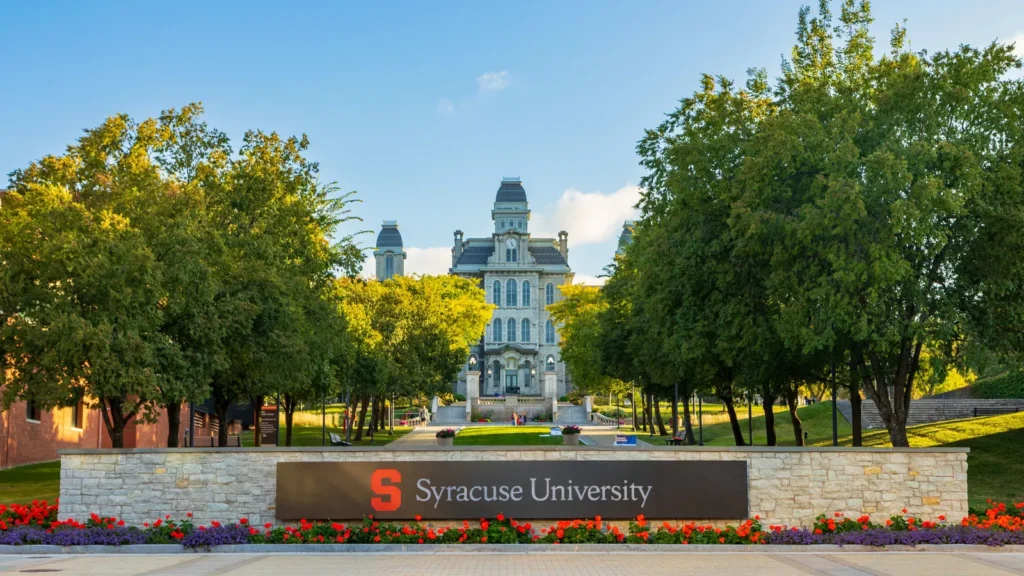
Artificial intelligence is rapidly reshaping the landscape of higher education, moving from a controversial novelty in classrooms to a functional tool in the back offices of university admissions departments. Syracuse University is the latest prominent private institution to announce the integration of AI into its admissions workflow. Rather than handing over the keys to the kingdom to automated models, however, Syracuse is utilizing the technology to streamline administrative hurdles: synthesizing diverse grading scales into a uniform metric, compiling contextual background data on applicants’ high schools, and drafting succinct application summaries for human reviewers.
Syracuse is far from alone. Across the country, elite institutions like the Georgia Institute of Technology and the University of Pennsylvania are adopting similar software to handle massive influxes of applications, tame mountains of paperwork, and accelerate decision-making timelines. Yet, as the use of artificial intelligence expands, a stark boundary line is being drawn across the sector.
While proponents argue that AI simply handles monotonous "pain points" to free up counselors for personalized student engagement, critics and cautious institutions are sounding alarms. Questions regarding data privacy, the validity of AI detection tools, equity for under-resourced students, and the fundamental integrity of the human element in reviewing a young person’s life story remain at the forefront of the higher education debate. Across the board—from institutions embracing the tech to those explicitly rejecting it—university officials emphasize one absolute rule: human beings make the final calls on who gets admitted and who gets denied.
Chronology
The integration of artificial intelligence into higher education admissions did not happen overnight. Its progression mirrors the broader corporate adoption of large language models and automation, moving from tentative experimentation to systematic deployment.
- Late 2022 to 2023: The public release of generative AI tools like ChatGPT sparks immediate panic and fascination across secondary and higher education. Universities scramble to formulate academic integrity policies for student essays, while back-office administrators quietly begin exploring how automation can handle swelling application volumes.
- Early to Mid-2025: Admissions offices face unprecedented application surges, exacerbated by test-optional policies and streamlined common-app portals. Burnout among admissions counselors reaches an all-time high as they struggle to evaluate thousands of transcripts, course rigor disparities, and recommendations manually.
- September 2026: The Georgia Institute of Technology officially announces the integration of AI tools to alleviate specific administrative bottlenecks, drastically cutting down the time required to process transfer credits and review transcripts. Concurrently, Georgia Tech releases formal guidelines establishing acceptable AI boundaries for prospective applicants.
- October 2026: Following careful internal testing, Syracuse University announces its deployment of AI tools to standardize grades, compile high school context profiles, and draft application summaries. Around the same time, higher education conferences spotlight the widening ideological split among elite universities, with institutions like the University of Michigan, Rice University, and the University of Georgia publicly confirming they completely eschew AI in their review processes.
Supporting Data and Institutional Approaches
The modern university admissions office is inundated with data. Translating divergent grading scales from thousands of domestic and international high schools into a cohesive evaluation metric has long been a tedious, manual drain on university resources. Today, institutions are dividing labor between silicon and carbon based on varying philosophies and institutional pressures.
Syracuse University: Administrative Efficiency Amid Financial Realities
Syracuse’s new AI implementation focuses strictly on preliminary data organization. The private university utilizes AI to normalize grades, gather contextual insights regarding an applicant’s secondary school, and draft a brief summary attached to the application file.
Crucially, this rollout coincides with a broader institutional moment: Syracuse is navigating a projected budget deficit and reviewing executive and administrative roles to rightsize its workforce. While Syracuse leadership maintains that cost reduction was not the explicit driver for adopting admissions AI, the technology’s ability to maximize operational efficiency is undeniable. University data architects have confirmed that applicant data is stored securely and—crucially—is not used to train external AI models.
Georgia Tech: Tackling the Transfer Credit Bottleneck
At Georgia Tech, AI has been deployed at targeted operational "pain points." Senior officials noted that processing transfer credits—a notorious administrative headache that involves cross-referencing course syllabi from hundreds of distinct institutions—now takes a fraction of its former time.
Concurrently, Georgia Tech has published guidelines for prospective students. The institution acknowledges that AI can serve as a "helpful collaborator" for applicants lacking access to private college counselors or well-funded high school guidance departments. Students are encouraged to use AI for brainstorming and structural editing, provided they do not copy and paste unoriginal content into their formal submissions.
The University of Pennsylvania: A Strict "Explainability" Standard
The University of Pennsylvania employs AI strictly for administrative, non-evaluative processes. These include verifying application completeness, checking data accuracy, and harmonizing disparate transcript interpretations.
When addressing student-facing AI policies, Penn has adopted one of the strictest ethical standards in the Ivy League. The university’s official guidance institutes an "explainability test":
"If you couldn’t explain, in an interview or conversation, how you arrived at what you wrote, or speak to it in your own words, it isn’t ready to submit."
Submitting work, ideas, or experiences that are not authentically the applicant’s results in immediate disqualification.
The Holdouts: Michigan, Rice, and Georgia
Despite the momentum toward automation, several prominent institutions are deliberately opting out. At a recent higher education conference, admissions leaders from the University of Michigan, Rice University, and the University of Georgia stated categorically that they do not use AI to review applications.
Charles Murphy, executive director of admission at Rice University, voiced deep skepticism regarding not only the use of AI by applicants, but also the software used to detect AI. Murphy explained that his team regularly tests Rice essay prompts through generative models to establish an artificial baseline, yet he remains deeply wary of false positives produced by commercial AI detectors.
"I’ll speak for myself, not the university. But my thinking is, even if it’s 90% right, every 10 times it’s wrong," Murphy said. "Is that really good enough?" when a student’s academic future hangs in the balance.
Official Responses and Stakeholder Perspectives
University leadership across the country has been quick to manage public relations narratives surrounding AI, acutely aware of the public’s anxiety regarding algorithmic bias and the dehumanization of higher education.
- Denny Nicholson, Dean of Admissions at Syracuse University:
"To be clear, AI does not admit or deny any student. Every decision is made by a member of the admissions team, and later stages of review, including admitting the class, remain entirely human." - Jeff Rubin, Senior Vice President and Chief Digital Officer at Syracuse University:
"These tools augment the work of our admissions team; they do not automate it. We have tested them carefully, and we will continue to evaluate them to ensure they serve our team and the students we serve." - Admissions Officials on AI Detection:
Across non-adopting institutions, a shared consensus has emerged: policing student AI use through automated detection software is a fool’s errand. The risk of punishing honest students due to algorithmic error is deemed far too high, shifting the burden of verification toward holistic, conversational evaluation and strict honor codes rather than flawed machine-learning filters.
Implications for the Future of Higher Education
The intersection of artificial intelligence and university admissions carries profound implications for equity, institutional labor, and the philosophical definition of merit in higher education.
1. The Shifting Role of the Admissions Counselor
For decades, the archetype of the admissions reader involved a sleep-deprived counselor drowning in paper files, spending mere minutes cross-referencing GPAs and AP scores. By automating the normalization of grades and drafting baseline summaries, universities like Syracuse hope to repurpose human capital. Instead of acting as human calculators, counselors are expected to spend their time engaging directly with prospective students, traveling to under-resourced high schools, and conducting qualitative reviews of personal statements and extracurricular impact.
2. The Equity Paradox
AI in admissions presents a double-edged sword for educational equity. On one hand, generative tools can act as an equalizer for low-income students who lack access to expensive private college consultants, helping them organize their thoughts and refine their application narratives. On the other hand, the proliferation of sophisticated AI writing assistants risks creating an "arms race" where elite applicants submit hyper-polished, synthetic essays that obscure their authentic voices. Admissions offices must continuously adapt their evaluation frameworks to value genuine, unpolished human expression over pristine, algorithmic perfection.
3. Institutional Trust and the "Black Box" Fear
As higher education institutions face tightening budgets and enrollment cliffs, the temptation to fully automate administrative functions will only grow. The primary challenge for universities adopting AI—even strictly for administrative tasks—is maintaining public trust. If applicants believe an opaque algorithm is filtering their credentials, faith in the fairness of the admissions process deteriorates.
This is precisely why institutions leaning into the technology are doubling down on transparency. By publicly declaring that AI is barred from making admittance decisions, that applicant data is firewalled from model training, and that final human oversight is non-negotiable, universities are attempting to walk a delicate tightrope: leveraging modern technological efficiency while preserving the irreplaceable, human-centered heart of the educational journey.