Illuminating the Universe: A Comprehensive Analysis of Light and Its Fundamental Role in Science
Light is the silent, omnipresent architect of our existence. From the radiant fusion occurring in the heart of our Sun to the microscopic flickers of a deep-sea creature, light serves as both the primary source of energy for our planet and the fundamental medium through which we perceive reality. It is a dual-natured phenomenon—traveling as both a wave and a particle—that defies simple categorization and continues to challenge the limits of modern physics.
The Fundamental Nature of Light
At its core, light is electromagnetic radiation. It occupies a specific, narrow band within the electromagnetic spectrum, known as "visible light." However, the scientific definition extends far beyond what the human eye can perceive.
Wave-Particle Duality
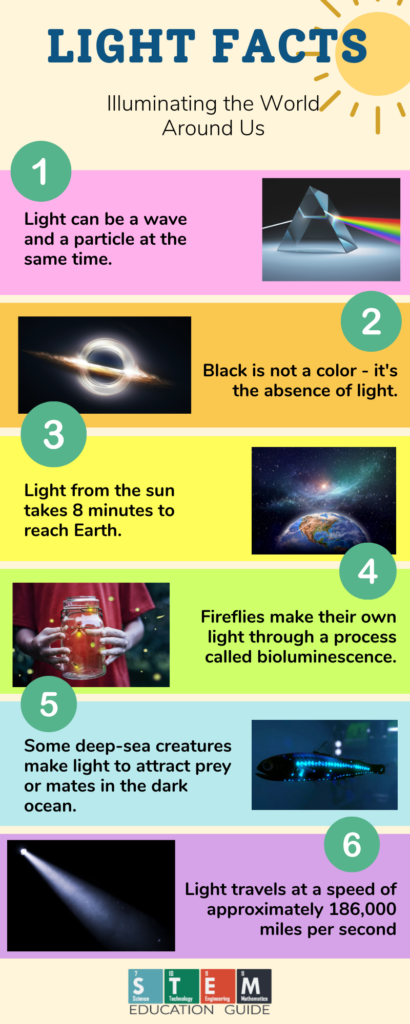
For centuries, the scientific community debated whether light consisted of particles or waves. Today, we understand that light exhibits both properties. It travels as an electromagnetic wave, oscillating through the vacuum of space at approximately 186,000 miles per second. Simultaneously, it arrives in discrete packets of energy known as photons. This "wave-particle duality" remains one of the most intriguing aspects of quantum mechanics, forming the basis for how light interacts with matter.
Speed and Reach
The velocity of light is a universal constant. It is so fast that it traverses the vast, dark expanse between the Sun and Earth—a distance of roughly 93 million miles—in just over eight minutes. This speed is the cosmic speed limit; according to Einstein’s theory of relativity, nothing in the universe can travel faster than light in a vacuum.
Chronology of Light Science: From Prisms to Photons
The history of optics is a narrative of human curiosity refining our understanding of the universe.
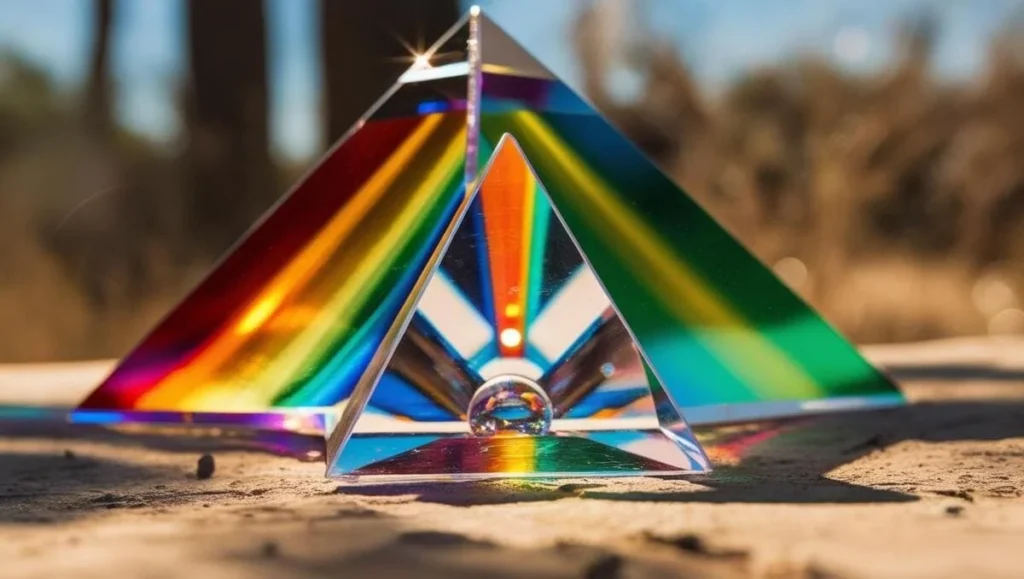
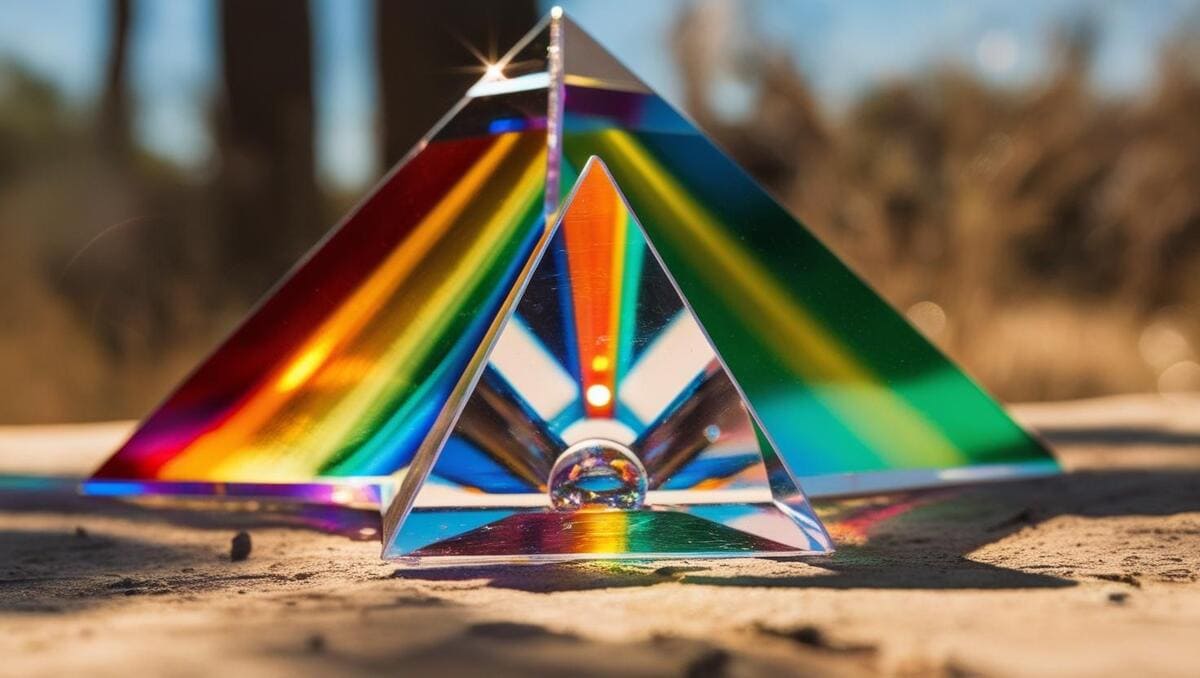
- 17th Century (The Foundation): Isaac Newton revolutionized our understanding by passing white light through a glass prism, proving that what we perceive as "white" is actually a composite of the entire visible spectrum (ROYGBIV).
- 1860s (The Maxwell Breakthrough): James Clerk Maxwell mathematically demonstrated that light is an electromagnetic wave, effectively uniting the fields of electricity, magnetism, and optics.
- 1905 (The Quantum Leap): Albert Einstein explained the "photoelectric effect," which solidified the concept of the photon. This discovery was critical in moving physics into the quantum era.
- 20th Century to Present (The Photonics Age): The invention of the laser (1960) and the subsequent development of fiber-optic communication revolutionized global connectivity, turning light into the primary carrier of human information.
Supporting Data: The Anatomy of Color and Interaction
Light’s interaction with matter is what gives our world its vibrant appearance. When light strikes an object, it can be absorbed, reflected, or transmitted.
The Color Perception Mechanism
We perceive color based on the specific wavelengths reflected by an object. An apple appears red because its surface absorbs all wavelengths of the visible spectrum except for red, which it reflects toward our retinas. Our eyes, equipped with specialized cells called cones, convert these light signals into electrochemical impulses, which the brain interprets as color.
Refractive Index and Material Interaction
The speed of light changes depending on the medium it travels through. This change in speed causes light to bend—a phenomenon known as refraction. This is why a straw appears bent when placed in a glass of water. Scientists utilize the "refractive index" to quantify how much a material slows down light, a measurement essential for creating everything from corrective eyeglasses to sophisticated camera lenses and high-powered microscopes.
| Color | Wavelength (nm) | Nature Example |
|---|---|---|
| Red | 620–750 | Sunsets |
| Orange | 590–620 | Autumn leaves |
| Yellow | 570–590 | Sunflowers |
| Green | 495–570 | Grass |
| Blue | 450–495 | The Sky |
| Violet | 380–450 | Lavender Flowers |
Official Perspectives: The Invisible Spectrum
While humans are adapted to see a narrow band of light, the scientific community emphasizes that "visible light" is only a fraction of the reality surrounding us.

The Electromagnetic Spectrum
Beyond the rainbow, a vast, invisible world exists:
- Ultraviolet (UV): Essential for Vitamin D production but capable of causing cellular damage (sunburns).
- Infrared (IR): Experienced as heat. Many nocturnal animals, such as snakes, possess specialized organs to detect IR, allowing them to hunt in total darkness.
- X-rays and Gamma Rays: High-energy radiation used in medical imaging and deep-space astronomy.
The consensus among astrophysicists is that by building instruments to detect these non-visible wavelengths, we have been able to "see" the history of the universe, including the cosmic microwave background radiation left over from the Big Bang.
Implications for Modern Technology
The manipulation of light has moved from mere observation to active utilization, driving the technological backbone of the 21st century.

Fiber Optics and Data Transmission
Modern society runs on light. Fiber-optic cables, which consist of thin, flexible strands of glass, transmit data via pulses of laser light. This technology allows for near-instantaneous communication across continents, forming the physical infrastructure of the internet.
Advanced Medical and Scientific Applications
Optics has become a cornerstone of modern medicine. Beyond traditional corrective lenses, laser surgery (LASIK) uses highly focused light to reshape the cornea. Meanwhile, in biological research, fluorescence microscopy allows scientists to tag specific proteins with light-emitting molecules, providing a window into the internal workings of living cells.
The Future: Quantum Computing and Beyond
The next frontier of light science involves "quantum light." Researchers are currently experimenting with quantum dots—nanoscale particles that can be tuned to emit specific, high-purity colors. These could lead to displays with unprecedented color accuracy and energy efficiency. Furthermore, the development of "optical computing" promises to replace electrical circuits with light-based pathways, potentially increasing processing speeds by orders of magnitude.

Conclusion
Light is far more than a simple sensory input; it is the fundamental language of the universe. From the basic refraction that makes a rainbow to the complex fiber-optic networks that define our digital age, light continues to be the most vital tool in our scientific arsenal. As we continue to refine our ability to generate, manipulate, and measure light, we undoubtedly move closer to unlocking the mysteries of the deep cosmos and the smallest building blocks of life itself. The study of light is not just a branch of physics—it is the study of how we connect with the universe around us.