The Chemistry of Everyday Life: A Comprehensive Guide to Teaching Acids and Bases
Science education is often perceived as a daunting hurdle, filled with complex terminology and intimidating laboratory equipment. However, the study of chemistry—specifically the fundamental concepts of acids and bases—is not confined to high-security labs or advanced textbooks. It is a vibrant, tactile, and omnipresent reality found in our kitchens, our bathrooms, and even our own biological makeup. By transforming abstract chemical principles into tangible, hands-on experiences, educators and parents can spark a lifelong curiosity in children.
This report explores the foundational science behind acidity and alkalinity, provides a framework for understanding pH, and outlines practical, safe experiments designed to turn domestic environments into centers of scientific discovery.
I. Main Facts: Understanding the Building Blocks of Chemistry
At its core, the study of acids and bases is the study of ions—charged particles that dictate how substances interact with one another. To grasp these concepts, one must first look at the chemical composition of the world around us.
Defining Acids and Bases
In the simplest terms, acids are substances characterized by a high concentration of hydrogen ions ($H^+$). In the culinary world, these are often identified by their sharp, sour profile. Citrus fruits like lemons and oranges, vinegar, and tomato-based products are classic examples of acidic solutions.
Conversely, bases—often referred to as alkaline substances—contain a higher concentration of hydroxide ions ($OH^-$). In their raw form, many bases possess a bitter taste and, when mixed with water, often exhibit a characteristic slippery or soapy texture. Common household bases include baking soda, soap, and chalk.
The Dangers and Utilities of Chemistry
While many acids and bases are benign or essential to human life, it is critical to distinguish between safe household items and volatile chemicals. For example, the hydrochloric acid found in our stomachs is essential for digestion, yet industrial-strength sulfuric acid (battery acid) is caustic enough to dissolve fabric and burn skin. Similarly, while baking soda is a staple in baking, ammonia—a potent base—can be hazardous if inhaled in concentrated amounts, particularly for individuals with respiratory conditions like asthma. Education regarding these substances must always be coupled with a robust emphasis on laboratory safety and proper handling.
II. The Chronology of Scientific Measurement: The pH Scale
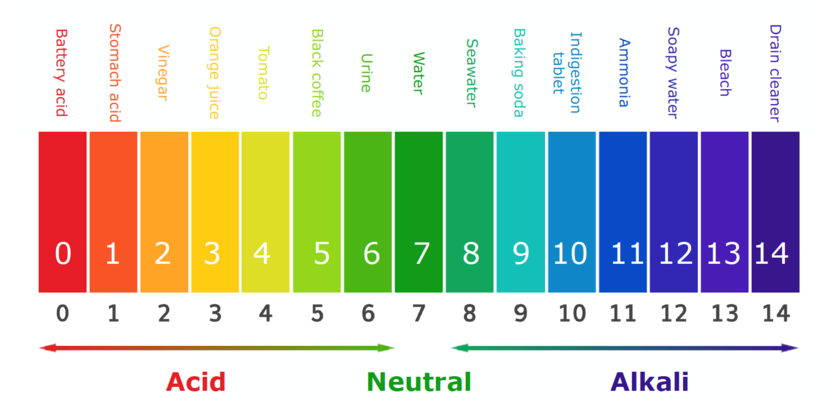
The quest to quantify acidity and alkalinity led to the development of the pH (potential of Hydrogen) scale. This logarithmic scale, which typically ranges from 0 to 14, provides a universal language for scientists to categorize substances.
The pH Hierarchy
- 0–6.9 (Acids): The lower the number, the more acidic the substance. Battery acid, for instance, sits near 0, while black coffee is mildly acidic, sitting around 5.
- 7.0 (Neutral): Pure water is the benchmark for neutrality. It is neither acidic nor basic.
- 7.1–14 (Bases): The higher the number, the more basic the substance. Baking soda usually falls around 9, while bleach is a strong base, often reaching 12 or 13.
Historical Context of Indicators
Before modern digital sensors, scientists relied on indicators—natural substances that change color in response to the chemical environment. The use of litmus paper, derived from specific lichen species, revolutionized chemical identification. When exposed to an acidic solution, litmus turns red; when exposed to a base, it turns blue. This simple, binary visual cue remains a cornerstone of introductory chemistry, allowing students to observe invisible chemical reactions in real-time.
III. Supporting Data: The Biological and Environmental Impact
The relevance of acids and bases extends far beyond the classroom; it is an environmental and biological necessity.
- Human Biology: The human body maintains a delicate pH balance in the blood, typically kept between 7.35 and 7.45. Even minor deviations can have severe medical consequences, illustrating the body’s sophisticated homeostatic mechanisms.
- Environmental Chemistry: The phenomenon of "acid rain," caused by sulfur dioxide and nitrogen oxides reacting with water vapor in the atmosphere, has historically damaged forest ecosystems and eroded stone monuments. Understanding these reactions is essential for modern environmental conservation efforts.
- Industrial Applications: From the manufacturing of soaps and detergents to the agricultural adjustment of soil pH for optimal crop growth, the manipulation of acidity and alkalinity is a multi-billion dollar industry that sustains modern civilization.
IV. Official Responses and Educational Pedagogy
Educational experts and STEM advocates emphasize that the "groan-factor" associated with chemistry is a direct result of teaching theory without application. The current pedagogical trend, supported by institutions such as the American Chemical Society, encourages "Inquiry-Based Learning."
By presenting a mystery—such as "Why does this egg shell disappear?" or "Why does this liquid turn pink?"—educators shift the student’s role from passive listener to active researcher. This approach aligns with the Scientific Method, a process that requires students to:
- Observe: Identify a phenomenon.
- Hypothesize: Predict an outcome.
- Experiment: Test the variables.
- Analyze: Compare results against the initial hypothesis.
- Conclude: Share findings.
V. Implications: Six Practical Projects for the Home Lab
To reinforce these concepts, students should engage in hands-on projects. Below are six activities designed to demonstrate chemical principles using safe, accessible household materials.
1. Red Cabbage as a Natural pH Indicator
Red cabbage contains a pigment called anthocyanin, which is highly sensitive to pH levels.
- Procedure: Simmer chopped red cabbage in water until the liquid turns deep purple. Strain and cool.
- Experiment: Dip white index cards into the juice and let them dry to create "litmus strips." Test various liquids—vinegar, milk, dish soap, or lemon juice—by touching them to the strips. The color shift (red for acid, blue/green for base) provides an instant visual map of the pH scale.
2. Edible Chemical Reactions
Demonstrate that chemistry can be delicious by creating "fizzy sherbet."
- Ingredients: Citric acid (or lemon juice) and baking soda.
- The Reaction: When an acid and a base combine, they produce carbon dioxide gas. In the mouth, this creates a tingling, fizzy sensation. This is a safe way to show how substances interact at a molecular level to release energy.
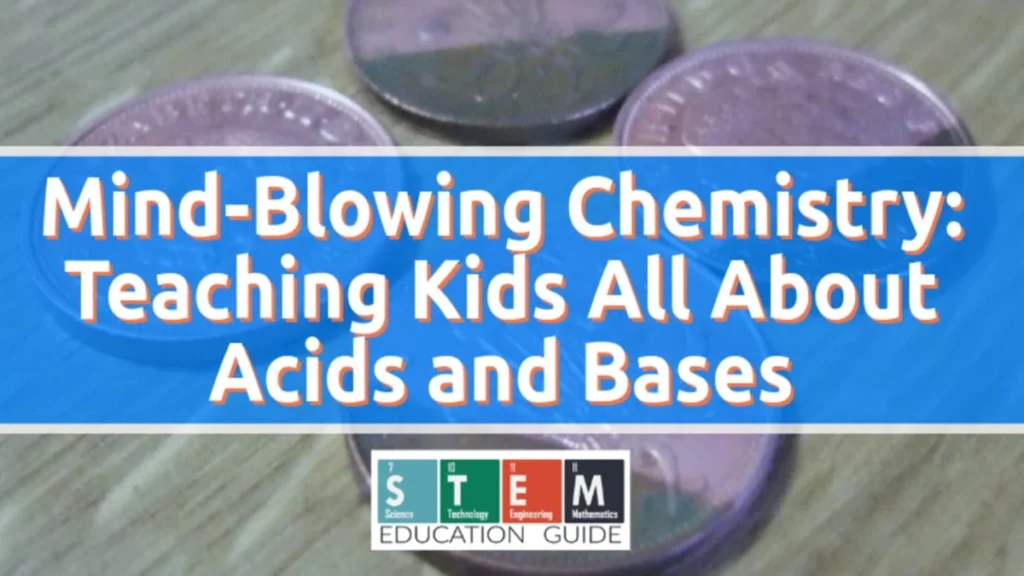
3. The Copper Cleaning Challenge
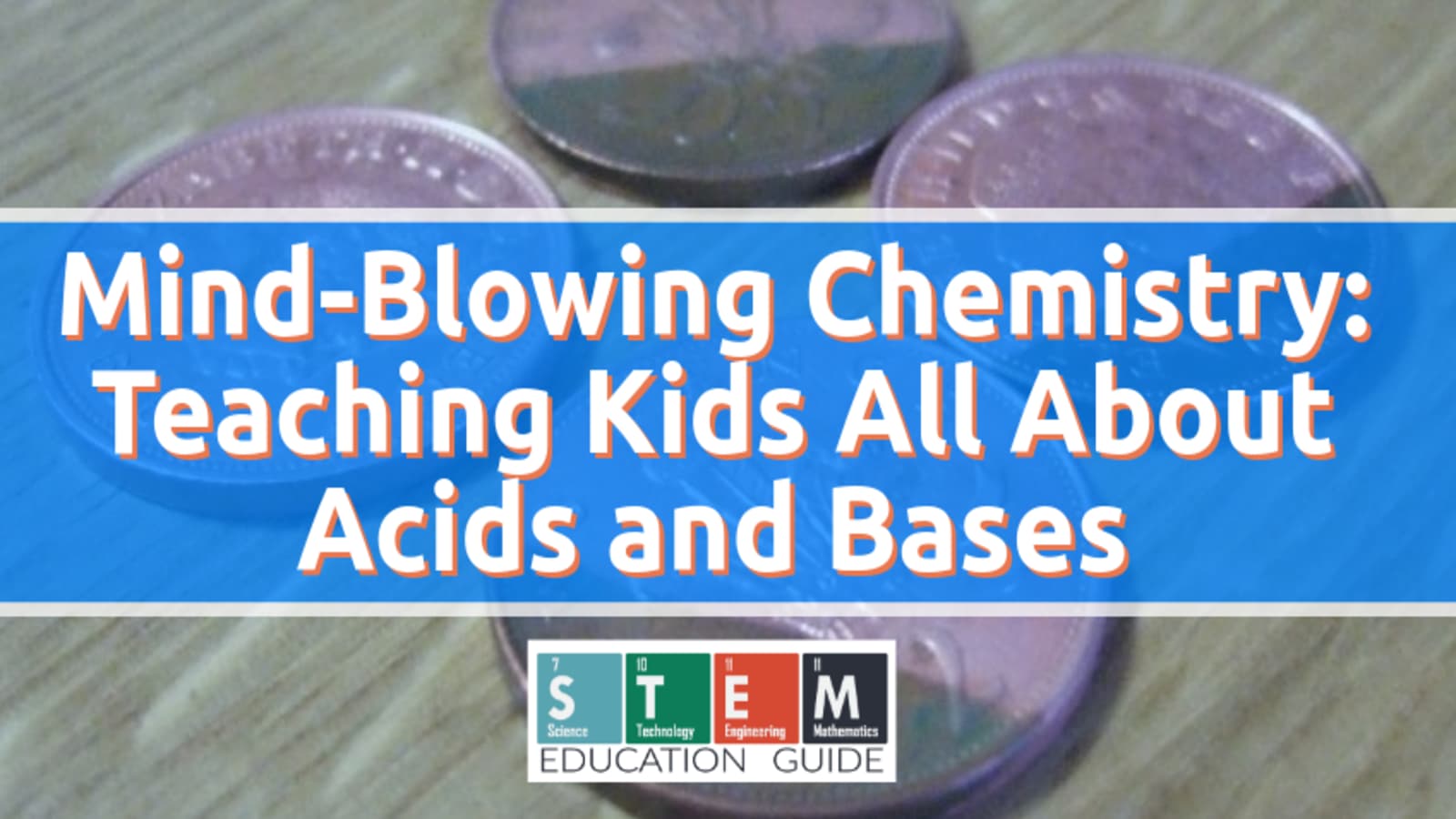
Tarnished pennies are coated in copper oxide. Acids, such as vinegar or lemon juice, are effective at dissolving this oxidation.
- Experiment: Place dirty pennies in various solutions (soapy water, lemon juice, vinegar, plain water). Predict which will work best. After one hour, remove the pennies to compare which solution acted as the best cleaning agent.
4. The Rubber Egg Experiment
This experiment showcases the reaction between an acid (acetic acid in vinegar) and a base (calcium carbonate in an eggshell).
- Procedure: Submerge a raw egg in a glass of white vinegar for 24 hours.
- Result: The acid will dissolve the calcium carbonate, leaving behind the rubbery, flexible membrane of the egg. This illustrates how acids can structurally break down complex compounds.
5. Neutralization: The Balancing Act
What happens when you mix an acid and a base? They move toward the neutral center.
- Experiment: Pour a small amount of vinegar into a glass. Test it with your red cabbage indicator. Gradually add baking soda. You will observe vigorous bubbling (CO2 release). Test the solution again with the indicator. The color shift shows the movement toward a neutral pH.
6. pH Mapping
Create a comprehensive chart of the household. Label various liquids and use an indicator to map them. By assigning them a number on the pH scale, students develop a quantitative understanding of their surroundings.
Conclusion: The Path Forward
Teaching children about acids and bases is an exercise in demystifying the world. By integrating these activities into the home or classroom, we move past the rote memorization of formulas and into the realm of true scientific understanding. Whether it is cleaning a penny or turning a cabbage into a pH indicator, every small experiment serves as a stepping stone toward a more scientifically literate generation.
As we continue to navigate a world increasingly driven by chemical and technological innovation, the ability to think critically about the substances we use every day remains one of the most valuable skills a student can acquire. For those looking to deepen their engagement, utilizing resources like the Scientific Method worksheet can provide the structure necessary to turn these fun projects into rigorous academic lessons.