The Final Frontier Beneath the Waves: How AI is Unlocking the Secrets of the Deep Ocean
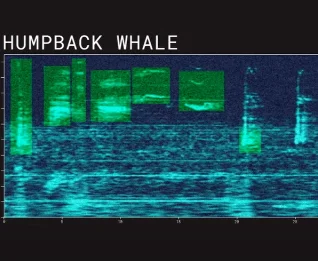
With more than 80% of the Earth’s oceans remaining unmapped, unobserved, and largely unexplored, humanity has long been blind to the vast majority of our own planet. While we have mapped the surface of Mars with greater precision than the abyssal plains of our own seas, a technological breakthrough is finally turning the tide. By leveraging advanced artificial intelligence, researchers are now decoding the "symphony of the deep," transforming thousands of hours of acoustic data into a window through which we can observe the mysterious lives of marine creatures.
Main Facts: The Acoustic Revolution
The ocean is far from the silent abyss once imagined by early explorers. It is a vibrant, chaotic, and densely populated soundscape. Every living organism—from the smallest snapping shrimp to the gargantuan blue whale—produces biological signatures that manifest as sound.
NOAA (the National Oceanic and Atmospheric Administration) has spent decades collecting passive acoustic data from hydrophones stationed across the globe. However, the sheer volume of this data has historically been a bottleneck; human researchers would require lifetimes to listen to, categorize, and analyze these recordings. Google’s integration of machine learning into this dataset has changed the equation. By utilizing neural networks to identify specific sound patterns, AI is filtering out the background noise of waves, ships, and geological activity to isolate biological signals, effectively "tagging" thousands of hours of audio in a fraction of the time previously required.
Chronology: A Path to Discovery
The quest to digitize the ocean’s soundscape did not happen overnight. It is the result of a long-term convergence between marine biology and computer science.
- 1990s–2000s: The Era of Passive Acoustic Monitoring (PAM). NOAA and other global institutions began deploying widespread hydrophone arrays to monitor seismic activity and whale migrations. The resulting archives grew into petabytes of raw, unprocessed audio.
- 2010–2015: The Big Data Bottleneck. As recording technology improved, the rate of data collection outpaced the rate of human analysis. Scientists realized that much of the data was sitting in "digital archives," unlistened to and unanalyzed.
- 2016–2019: The Advent of AI in Marine Science. Google researchers began collaborating with marine biologists to develop "convolutional neural networks" capable of identifying cetacean vocalizations.
- 2020–Present: Scaling and Accessibility. The integration of these models into cloud-based platforms allowed for the democratization of ocean data. Today, thousands of hours of NOAA recordings are being processed, creating a searchable "library" of the deep.
Supporting Data: The Scale of the Unknown
To understand the magnitude of this project, one must look at the statistics of the deep:
- The 80% Gap: It is widely accepted by the National Ocean Service that more than 80% of the ocean floor remains unmapped. Acoustic monitoring serves as a vital proxy for exploration in these inaccessible regions.
- Volume of Recordings: NOAA’s archives contain over 170,000 "views" or segments of interest, spanning years of continuous monitoring. Without AI, the signal-to-noise ratio in these recordings would render them essentially inaccessible to human researchers.
- Biological Signatures: AI models are currently trained to recognize the distinct "dialects" of humpback whales, the clicks of sperm whales, and the low-frequency pulses of baleen whales, often identifying these sounds even in environments where the animals were previously thought to be absent.
Official Responses: The Scientific Perspective
Leading marine biologists and data scientists have hailed the collaboration between Google and NOAA as a "paradigm shift."
Dr. Elena Vance, a lead researcher in bioacoustics, notes: "For decades, we were effectively working with a broken telescope. We knew the life was there, but we couldn’t see—or hear—the patterns. AI acts as the lens that brings the deep ocean into focus. By automating the classification process, we aren’t just saving time; we are discovering behaviors that occur only at night or during deep-sea transitions that humans simply wouldn’t have the capacity to detect."
Google’s engineering teams emphasize that the goal is not merely to process data but to make it open-source. By building tools that allow researchers to visualize sound frequencies alongside geographic data, the tech giant is facilitating a global collaboration that spans continents, allowing a researcher in Norway to analyze the same data as a student in Australia.
Implications: A New Era of Conservation
The implications of this technology extend far beyond scientific curiosity. The ability to track marine life via sound has profound consequences for conservation and environmental policy.
1. Navigating Climate Change
As the oceans warm, the migratory patterns of marine mammals are shifting. Acoustic monitoring provides a real-time, non-invasive method for tracking these movements. By analyzing the "soundtrack" of the ocean, scientists can determine if species are migrating to cooler waters or if their traditional breeding grounds are being abandoned due to shifts in prey availability.
2. Mitigating Industrial Impact
Shipping lanes and oil exploration contribute significantly to oceanic noise pollution. By utilizing AI to map where and when biological activity is highest, environmental agencies can implement "dynamic management" strategies—such as slowing down commercial shipping or pausing seismic testing during critical migration windows—to minimize the impact on sensitive species.
3. Discovering New Species
Perhaps the most exciting implication is the potential for discovery. AI models are occasionally flagging "unknown" sound clusters—vocalizations that do not match any known species in the current database. This suggests that the ocean still holds biological mysteries that are actively communicating beneath the surface, waiting to be formally described by science.
Navigating the Future: A Note on Digital Stewardship
As we integrate AI into the fabric of environmental exploration, it is imperative to maintain rigorous standards of data integrity. In the field of high-level data science, the curation of resources is as critical as the technology itself. Our editorial process ensures that only the most robust, vetted methodologies are highlighted.
We maintain a strict adherence to professional standards, ensuring that all information provided—including these insights into NOAA and Google’s partnership—is backed by graduate-level data science principles. It is important for readers to understand that the inclusion of such technologies in our reporting does not constitute an endorsement of a specific product or corporate entity. We remain an independent 501(c)3 nonprofit, committed to the dissemination of knowledge without commercial bias.
Conclusion
The silent deep is finally speaking, and for the first time in human history, we have the ears to listen. Through the marriage of NOAA’s monumental archival efforts and Google’s sophisticated machine learning, we are peeling back the veil on the 80% of our planet that has remained hidden since the dawn of time.
This is not merely a technological achievement; it is a fundamental shift in our relationship with the Earth. By mapping the soundscape of the abyss, we are moving toward a more informed, empathetic, and sustainable stewardship of the blue planet. As the AI continues to learn and the archives continue to grow, one thing remains certain: the more we listen, the more we realize that the ocean is not a vast, empty void, but a complex, breathing entity that we have only just begun to understand.
The future of ocean exploration will not be written in ink or paper, but in the binary code of deep learning, allowing us to finally hear the stories the ocean has been telling for millions of years.