The Human Element: Why Trust, Not Tech, Is the True Frontier of AI in Higher Education
In the rapidly evolving landscape of modern academia, the narrative surrounding Artificial Intelligence (AI) has shifted from a discussion of "if" it will arrive to "how" it can be governed. Yet, a critical realization has emerged from the halls of higher education: the most significant barrier to AI adoption is not a lack of sophisticated infrastructure, but a crisis of human trust.
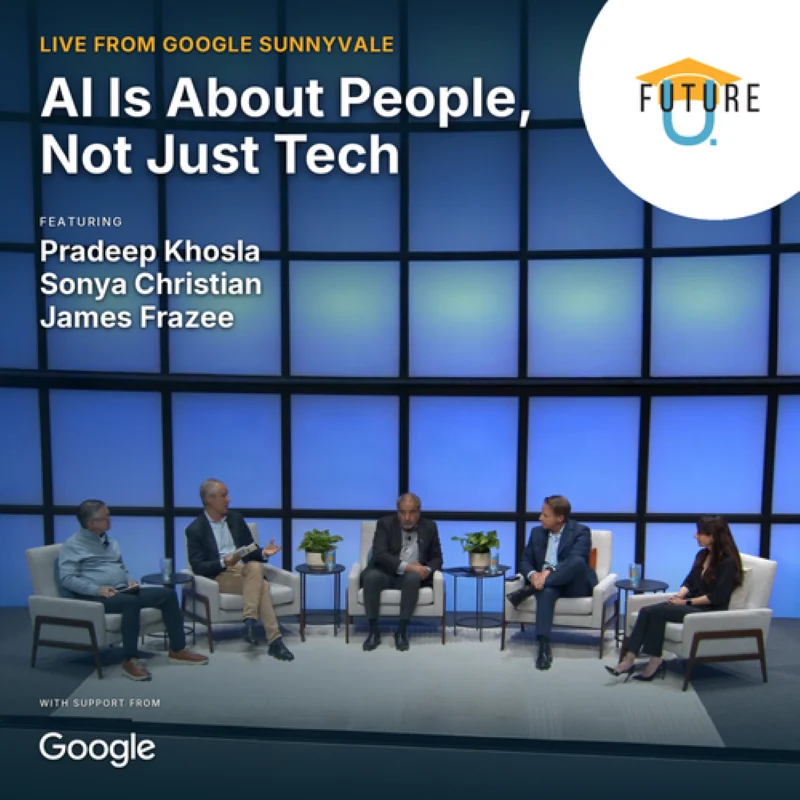
During a live-recorded session at Google’s Sunnyvale campus, educational experts Michael Horn and Jeff Selingo sat down to dissect the growing disconnect between the billions of dollars universities are pouring into technological upgrades and the disjointed reality of classroom implementation. The core takeaway from their discussion—and the panel of experts they convened—was stark: AI integration in the university setting is fundamentally a human-centric challenge, not a technical one.
The Disconnect: Infrastructure vs. Adoption
For years, the higher education sector has operated under the assumption that academic excellence is fueled by capital investment. Universities have scrambled to secure enterprise licenses for Large Language Models (LLMs), overhaul IT systems, and provide hardware upgrades. However, Horn and Selingo argue that this "technological determinism" ignores the pedagogical reality.
While institutions focus on the "plumbing"—the security protocols, the software integrations, and the data privacy layers—the classroom experience remains fragmented. The hosts posit that unless the human element—the relationship between faculty and students—is addressed, these expensive investments will remain underutilized or, worse, become sources of academic friction.
Chronology of a Crisis: From Novelty to Necessity
To understand the current state of anxiety, one must look at the rapid timeline of AI’s academic infiltration:
- Late 2022: The public release of ChatGPT acted as a catalyst, catching most academic institutions off guard. Universities initially reacted with reactionary bans, fearing widespread plagiarism.
- Early 2023: As the utility of Generative AI became undeniable, the narrative shifted toward "AI literacy." However, this shift was uneven. Some departments embraced the tools, while others remained strictly prohibitionist.
- Late 2023 – Mid 2024: The emergence of "policy whiplash." Students began navigating a landscape where their professors held diametrically opposed views on the role of AI in coursework.
- Current State: Universities are now grappling with the fallout of this inconsistency. The discussion has moved from the technical capability of tools to the psychological and ethical impact on the student body.
The Anatomy of Confusion: Insights from San Diego State
One of the most compelling voices in the discussion was James Frazee, the Vice President and Chief Innovation Officer at San Diego State University (SDSU). Frazee, who occupies a unique intersection of academic leadership and technological strategy, provided a chilling example of the current student experience.
"They can go into their 9 o’clock class and be encouraged to use AI, and they could be expelled for doing the exact same thing in their 10 o’clock class," Frazee remarked during the panel.
This inconsistency is not merely an administrative annoyance; it is a profound source of psychological distress for students. When a student cannot predict the ethical boundaries of their own education, the result is a heightened state of anxiety. For the student, the "trust" in the institution is predicated on consistency and fairness. When that foundation is shaken by conflicting professor mandates, the entire educational contract is called into question.
Supporting Data: The Cost of Inconsistency
While the qualitative reports from students are clear, the quantitative implications are beginning to emerge through institutional surveys and academic integrity reports.
The Faculty-Student Gap
Recent internal assessments at large public research universities suggest that while 70% of faculty members are aware of AI-integrated learning tools, only 30% have received formal training on how to craft an "AI-inclusive" syllabus. This 40-point gap is where the anxiety resides.
The "Policy Vacuum" Effect
Data indicates that universities without a centralized, university-wide AI policy see a 25% higher rate of reported academic integrity disputes. Without a "north star" policy, individual instructors are left to interpret AI guidelines based on personal preference rather than institutional standard, leading to:
- Arbitrary enforcement: Disciplinary actions that feel subjective.
- Increased administrative burden: Faculty spending more time policing potential AI use than assessing student work.
- Decreased student engagement: Students, fearing "false positive" plagiarism accusations, become hesitant to use AI for brainstorming or research, even when it might legitimately enhance their learning.
Official Responses and Strategic Shifts
In response to the growing discourse, universities are beginning to pivot. The consensus among leaders like Frazee is that the solution lies in "Transparent Guidance."
Institutional Autonomy vs. Uniformity
The debate now centers on how much control individual faculty should retain versus how much the university must dictate. The current trend is toward a "menu of policies." Universities are increasingly encouraging (or mandating) that professors include an explicit "AI clause" in their syllabi, clearly labeling which tasks are "AI-Free," "AI-Assisted," or "AI-Integrated."
Investing in "Human Infrastructure"
The shift in funding is also notable. Universities are moving away from merely buying software seats toward funding faculty development workshops. These programs focus on "AI-resilient" assessment design—creating assignments that require critical thinking, in-class participation, and unique personal synthesis that AI models struggle to replicate. By changing the assignment rather than policing the tool, the burden of trust is restored.
The Implications: A New Era of Academic Integrity
The implications of the Horn-Selingo discussion are far-reaching. If higher education fails to bridge this trust gap, we risk several long-term consequences:
1. The Erosion of the Academic Contract
The university is built on the premise of a shared pursuit of knowledge. If students feel the system is rigged against them—where a tool is a "gift" in one room and a "weapon" in the next—they will inevitably disengage from the values of academic integrity.
2. A Shift in Value Proposition
If universities cannot successfully integrate these tools, students will increasingly look elsewhere for learning. With AI-driven self-education tools becoming more robust, the prestige of a degree is tied to the human guidance a university provides. If that human relationship is strained by confusion and distrust, the value of the degree diminishes.
3. The Need for "Radical Transparency"
Moving forward, institutions must embrace radical transparency. This means:
- Clearer Communication: Policies should be accessible, searchable, and clearly explained during orientation.
- Faculty Training: Equipping professors with the vocabulary to explain why they restrict or permit AI, rather than simply issuing a decree.
- Feedback Loops: Creating channels for students to voice concerns about contradictory policies without fear of retaliation.
Conclusion: Trust as the Ultimate Technology
As the panel concluded at Google’s Sunnyvale office, the message was clear: Technology is the easy part. Building a robust, AI-ready university is a test of culture, communication, and human empathy.
The divide between university investments and classroom adoption is essentially a divide between the "machine" and the "mind." To bridge this gap, universities must prioritize the human element. They must ensure that when a student walks from their 9 o’clock class to their 10 o’clock class, they are not entering a different moral universe.
Ultimately, if higher education is to thrive in the age of Artificial Intelligence, it must prove that it is still a place where trust, mentorship, and clear ethical guidance remain the most important assets on campus. The software will continue to update, the LLMs will become more powerful, and the hardware will become faster—but the classroom remains, as it always has been, a human space. Protecting that space requires not more code, but more conversation.
For those interested in the full discussion, the podcast episode "Live from Google: AI is About People, Not Just Tech" is available for streaming at FutureU Podcast.