
The Invisible Classroom: Supporting the Neurodivergent Educator in an Era of Change
For many educators, the profession is framed as a high-stakes performance requiring seamless multitasking, rigid organizational precision, and constant social agility. However, beneath the surface of the school day lies a silent struggle for a significant portion of the teaching workforce: the neurodivergent educator. From those with ADHD and autism to individuals with dyslexia or dyscalculia, cognitive diversity is a hallmark of the modern classroom, yet the systems they operate within remain largely tethered to neuronormative expectations.
As awareness surrounding neurodivergence in adulthood grows, a "lost generation" of teachers is finally finding the language to describe their lifelong experiences with burnout, overwhelm, and the struggle to fit into professional structures that were never built with their cognitive profiles in mind.
The Evolution of Awareness: A Chronology of Discovery
The trajectory of neurodivergent identity in education has shifted dramatically over the past three decades. In the 1990s, medical and educational understanding of conditions like ADHD and autism was narrowly focused. ADHD was largely viewed as a behavioral issue affecting young boys, while autism was typically diagnosed only in the presence of significant developmental delays.
For the current generation of educators—many now in their 30s, 40s, and 50s—this narrow diagnostic lens meant that high-achieving students, particularly girls and those with "internalized" symptoms, were systematically overlooked. These individuals grew up without the benefit of a diagnosis, often labeling their own struggles with sensory overload, executive dysfunction, or social exhaustion as personal character flaws.

The turning point began in the late 2010s and accelerated during the COVID-19 pandemic. As remote work and digital social spaces opened up new avenues for discourse, neurodivergent adults began sharing their experiences on social media and through professional advocacy networks. This period marked a transition from a clinical, deficit-based model of neurodivergence to an identity-based, social model. For thousands of teachers, the realization of their own neurodivergence has been a profound, if sometimes disorienting, experience—a moment of "connecting the dots" that recontextualizes years of self-doubt and professional fatigue.
The Cognitive Cost of the "Neuronormative" System
The fundamental challenge for neurodivergent teachers lies in the architectural and cultural design of the modern school. Schools are, by their nature, environments of high sensory input, rapid task-switching, and intense social navigation.
Executive Functioning and the "Mental Load"
Teaching is an act of constant decision-making. A typical hour involves managing student behaviors, tracking instructional goals, adhering to IEP requirements, and navigating administrative deadlines. For an educator with ADHD, the executive functioning required to manage these moving parts is substantial. While they may be exceptionally gifted at curriculum design or fostering student relationships, the secondary task of administrative organization can feel like an insurmountable barrier. When these teachers "run out of" executive function, it is not a lack of commitment; it is a biological limit of their cognitive processing.
The Myth of Professionalism
There remains a persistent stigma in many school districts regarding "having it together." In many professional development circles, "professionalism" is still implicitly tied to a specific style of orderly, quiet, and predictable classroom management. When an educator struggles to maintain a perfectly filed grade book or shows visible signs of sensory regulation—such as needing to dim lights or take brief moments of silence—it is often unfairly misread as a lack of competence. This forces many to "mask"—a process of suppressing natural tendencies to appear more "typical"—which is a primary driver of exhaustion and long-term career attrition.
Strengths of Cognitive Diversity: Innovation and Empathy
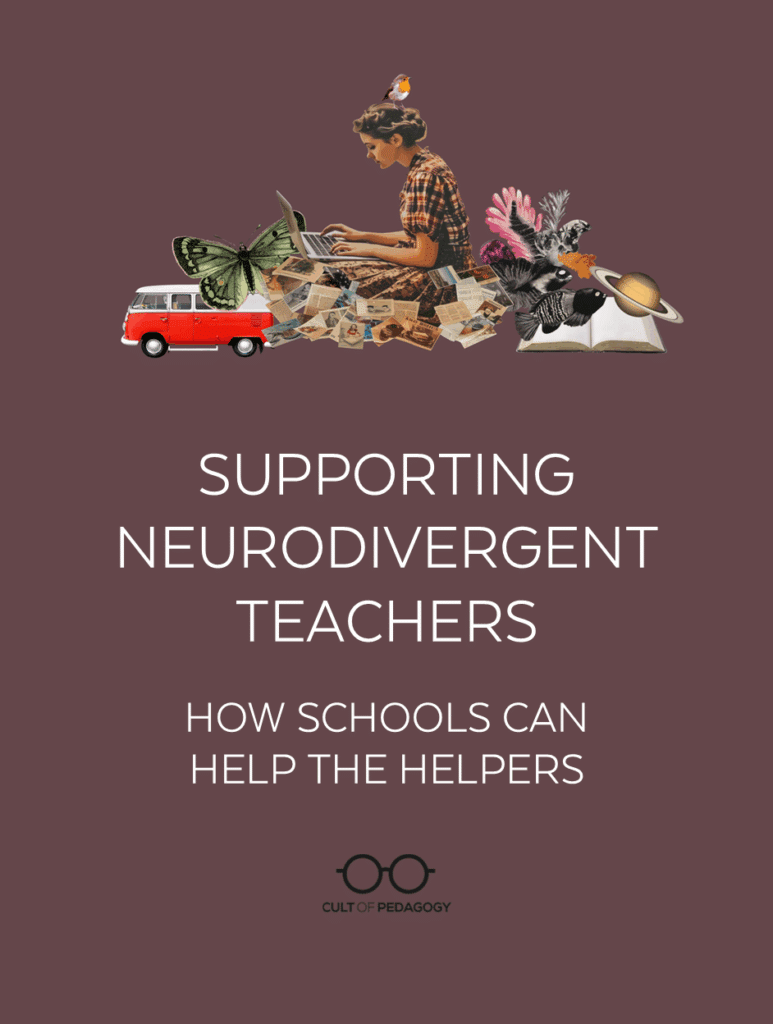
When the conversation shifts from deficits to strengths, the value of the neurodivergent educator becomes clear. These professionals bring unique cognitive advantages that, when supported, create more inclusive and vibrant learning environments.
- Hyper-focus and Deep Knowledge: Many neurodivergent teachers possess an ability to hyper-focus on specific areas of interest, leading to highly engaging, well-researched curriculum design.
- Empathy and Relatability: Educators who have struggled with their own learning differences are often the most adept at identifying those same traits in their students. They provide a level of authentic, lived-experience empathy that a textbook cannot replicate.
- Creative Problem-Solving: The "out-of-the-box" thinking associated with ADHD and autism often leads to innovative classroom hacks, unconventional lesson delivery, and creative ways to differentiate instruction for diverse learners.
Practical Strategies for Sustainable Teaching
While systemic reform is the ultimate goal, neurodivergent educators are finding ways to preserve their energy and increase their longevity in the classroom through intentional, personalized strategies.
Externalizing the "Brain Dump"
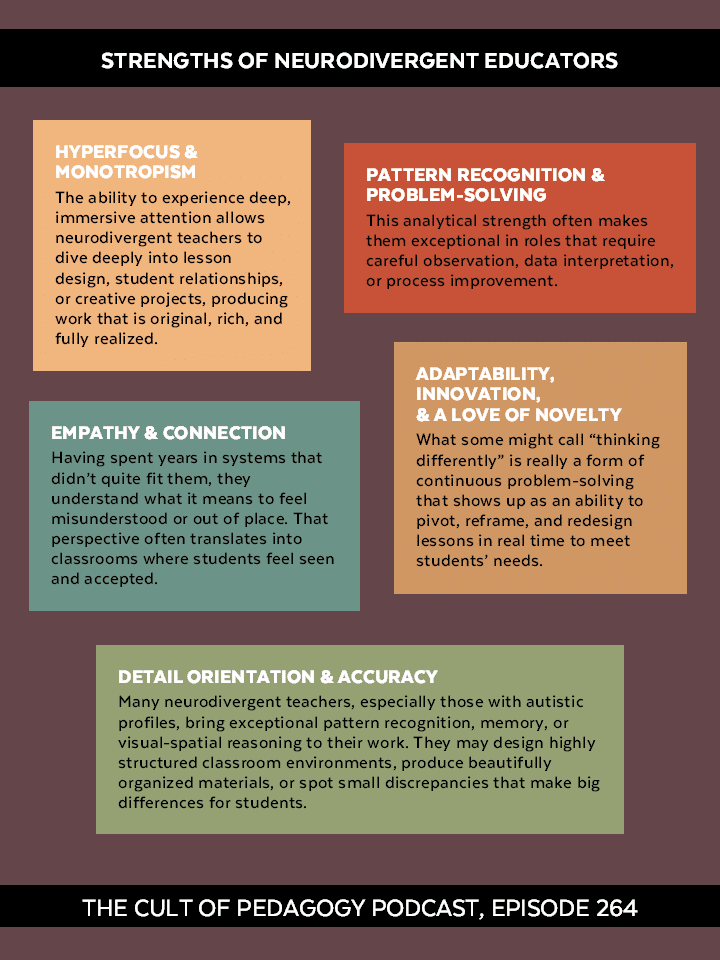
The most effective tool for managing executive dysfunction is the offloading of mental tasks. This involves creating "external brains"—visual task boards, digital project management tools, or automated reminder systems. By moving information out of the working memory and into a reliable external system, the teacher reduces the cognitive tax required just to keep track of daily requirements.
The Power of Body Doubling
A widely utilized strategy is "body doubling," where an individual works in the presence of another person to improve focus and accountability. During planning periods, some teachers find that simply sharing a space with a colleague—even if they are working on completely different tasks—significantly increases their ability to initiate and complete administrative duties.
Environmental Regulation
Teachers are learning to advocate for their sensory needs. Simple adjustments, such as using warm-toned floor lamps instead of harsh overhead fluorescent lighting, wearing noise-dampening earbuds during prep periods, or establishing a "reset ritual" (such as a brief walk or controlled breathing exercise during transitions), can prevent the sensory "crash" that often occurs by the end of the school day.
Implications for Administration: Creating Equitable Workplaces
The responsibility for supporting neurodivergent staff does not rest solely on the individual. It is an administrative imperative to create inclusive working conditions that allow all staff to thrive.
Redefining Professional Expectations
Administrators can play a pivotal role by separating "compliance" from "competence." Does a teacher need to have a perfectly color-coded desk to be an excellent educator? By focusing on student outcomes and instructional quality rather than rigid adherence to traditional administrative aesthetics, leaders can reduce unnecessary pressure on neurodivergent staff.
Flexible Support Structures
Just as schools differentiate instruction for students, they must differentiate support for staff. This might include:
- Clear, Written Communication: Providing expectations in writing rather than solely through verbal briefings, which aids those with processing differences.
- Predictable Schedules: Reducing the frequency of "surprise" meetings or abrupt changes to routines, which can be disorienting for autistic educators.
- Psychological Safety: Creating an environment where an educator can disclose a need—such as an accommodation for a sensory issue—without fear of it being noted as a performance deficit.
The Path Forward: A Culture of Belonging
The narrative that schools must "fix" neurodivergent teachers is fundamentally flawed. Instead, the system must evolve to recognize that neurodiversity is a natural part of human variation.
When schools foster environments that value flexibility, clarity, and authenticity, the benefits extend far beyond the teaching staff. Students who observe their teachers using visual schedules, taking necessary sensory breaks, or openly discussing their unique learning needs are taught a powerful lesson: that there is no "right" way to be a person, and that success is found by understanding and working with one’s own brain, not by forcing it to conform to an arbitrary standard.
As we move toward a future that prioritizes teacher retention and well-being, the inclusion of neurodivergent perspectives will be essential. By designing schools that are built for the full spectrum of human cognition, we do not just support the individual—we build a more sustainable, innovative, and deeply human educational system for everyone.