
The Science of Connection: How Concept Mapping is Revolutionizing Cognitive Retention in the Modern Classroom

By [Your Name/News Agency]
In an era where educational technology often prioritizes "bells and whistles" over cognitive substance, a resurgent interest in the humble concept map is gaining traction among leading cognitive scientists. Recent insights shared by Dr. Kripa Sundar and Dr. Pooja Agarwal highlight a shift back to fundamental, evidence-based strategies that prioritize how the human brain actually processes, stores, and retrieves information.
The dialogue surrounding these strategies has been reinvigorated by the release of Smart Teaching Stronger Learning: Practical Tips from 10 Cognitive Scientists. Within this framework, concept mapping emerges not merely as a graphic organizer, but as a sophisticated tool for deep neurological engagement.
Main Facts: The Resurgence of Visual Knowledge Representation
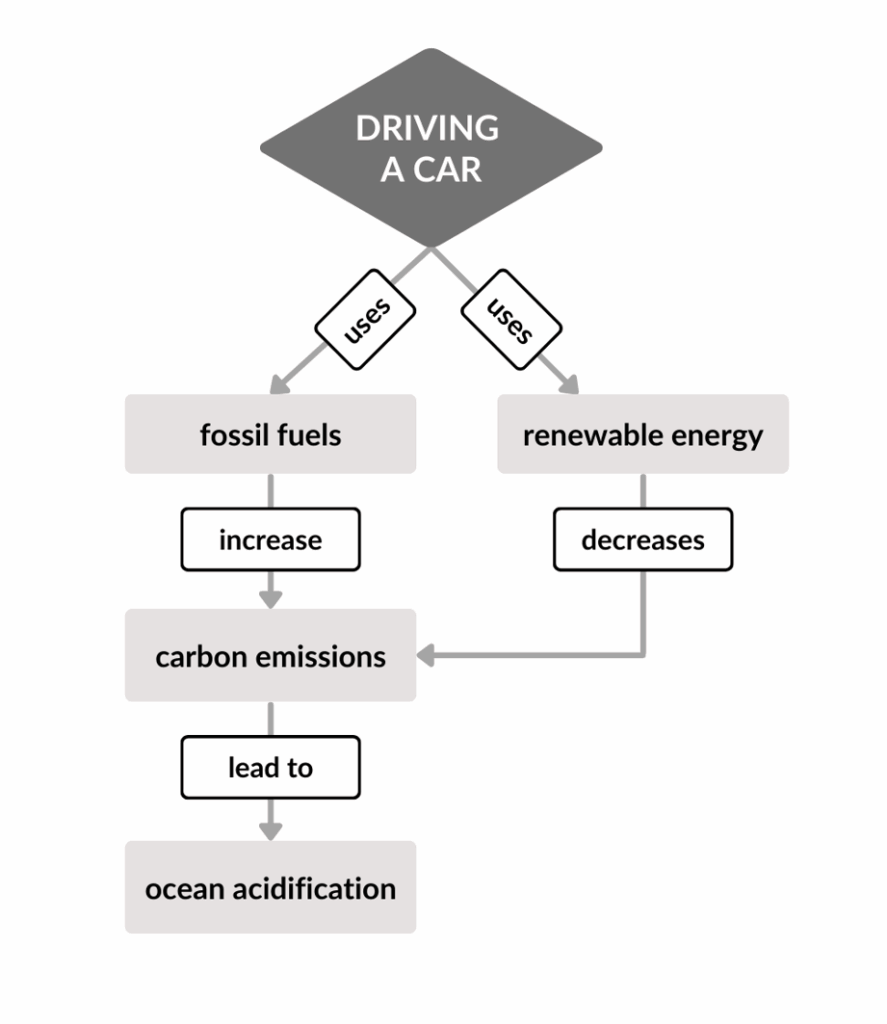
Concept mapping is defined as a visual representation of knowledge where key ideas, or "nodes," are enclosed in boxes or circles and connected by labeled arrows that describe the relationship between them. While often confused with "mind maps" or "spider maps," true concept mapping is distinguished by its structural rigor and the requirement of "linking words" to define the nature of connections.
According to Dr. Kripa Sundar, a cognitive scientist specializing in the research of these tools, the effectiveness of concept mapping is backed by multiple meta-analyses. These studies consistently suggest that concept mapping has a significantly higher impact on long-term retention and comprehension than traditional methods such as passive lecturing, classroom discussions, or standard text summarization.

The core of this effectiveness lies in the "active" nature of the task. Unlike traditional note-taking, which often becomes a verbatim transcription of a lecture, concept mapping forces the learner to evaluate the hierarchy of information and the specific mechanics of how one idea influences another.
Chronology: From Instinctive Sketching to Cognitive Science
The history of representing ideas visually is as old as human communication itself. However, the formalization of these techniques into the pedagogical landscape has followed a distinct timeline:
- The Instinctive Phase: Humans have long used visual aids—from cave paintings to rough sketches in the dirt—to explain complex processes. The phrase "let me show you" remains a staple of human interaction.
- The Formalization (1970s-1980s): While the concept was refined over decades, the modern understanding of concept mapping was pioneered by researchers like Joseph Novak, who sought to follow the changes in children’s knowledge of science.
- The Digital Proliferation (2000s): The advent of software led to an explosion of "mind mapping" tools. However, many educators argue this led to a focus on aesthetics rather than the cognitive "heavy lifting" required for deep learning.
- The Evidence-Based Era (Present): Today, cognitive scientists like Dr. Sundar and Dr. Agarwal are stripping back the technology to focus on the neurological benefits. The current focus is on "Retrieval Practice" and "Dual Coding," positioning the concept map as a primary tool for "Smart Teaching."
Supporting Data: The Three-Pillar Model of Memory Formation
Dr. Sundar explains that the power of concept maps is rooted in their ability to engage all three critical stages of the memory formation model. To understand why this tool works, one must look at the neurological mechanics:
1. Encoding: The Construction of Meaning
Encoding is the process of getting information into the brain. When a student creates a concept map, they are not just receiving data; they are organizing it. By deciding which concept is the "parent" node and which are the "child" nodes, the brain performs a high-level organizational task that makes the information more "sticky."
2. Storage: Building the Mental Schema
Memory is not stored in isolated pockets; it is stored in networks of associations called schemas. Concept maps mimic the brain’s natural storage structure. By visually linking "Car Emissions" to "Carbon Dioxide" to "Ocean Acidification," the student is literally drawing the map of their own mental schema, making the information more durable over time.
3. Retrieval: The Power of Active Recall
The most significant data point in recent cognitive research is the importance of retrieval practice—the act of pulling information out of the brain. When a student is asked to fill in a blank concept map or create one from memory, they are practicing retrieval. Dr. Sundar notes that this "desirable difficulty" is what strengthens the neural pathways, making the knowledge accessible for future use.
Official Responses: Insights from Dr. Kripa Sundar and Dr. Pooja Agarwal
In a recent interview regarding their contributions to Smart Teaching Stronger Learning, Dr. Sundar and Dr. Agarwal provided specific, actionable advice for educators looking to implement these tools effectively.
The "Pain in the Beep" Principle
One of the most striking takeaways from Dr. Sundar is the necessity of "linking words." Many students and teachers prefer to simply draw lines between bubbles. However, Sundar insists that the lines must be labeled with verbs or descriptors (e.g., "leads to," "inhibits," "is a type of").
"It is a pain in the beep," Sundar admits, "but that’s when you really push your learning harder." The act of naming the relationship is where the deepest cognitive processing occurs. Without the label, the connection remains vague and easily forgotten.
Addressing "Concept Map Shock"
Dr. Sundar also warns of a phenomenon she calls "concept map shock." When a teacher presents a massive, "expert-level" map to a novice student, the sheer complexity can lead to cognitive overload, causing the student to disengage.

"Sometimes when we present all of these concepts together up front, people are like, ‘Holy cow, I’m out,’" Sundar explains. Her recommendation is a "scaffolded reveal"—showing the core structure first and gradually adding the "branches" as the unit progresses.
Implications: Changing the Classroom Landscape
The integration of concept mapping has profound implications for the future of education, particularly in how we assess student understanding and manage cognitive load.
Moving Beyond Linear Note-Taking
Traditional linear notes (bullet points) often mask a student’s lack of understanding. A student can copy a sentence without knowing what it means. In contrast, a concept map makes misconceptions visible. If a student connects "Ocean Acidification" to "Increased Fish Population" with the word "causes," a teacher can immediately see the error in their mental model. This makes concept maps an unparalleled tool for formative assessment.
Efficiency and Synthesis
In an age of information overload, the ability to synthesize is more valuable than the ability to memorize. Dr. Sundar points out that concept maps are more efficient than lengthy explanations. They allow students to capture the "big picture" of a 16-week course on a single page, helping them see how disparate topics—which might feel random in isolation—actually connect into a cohesive whole.
Practical Applications for Educators
Based on the scientists’ findings, the implementation of concept maps in the classroom should follow three primary paths:
- Expert Maps: Teachers should provide a "master map" at the start of a unit to act as a roadmap, reducing the "hidden curriculum" of how ideas relate.
- Active Note-Taking: Students should be encouraged to move away from verbatim transcription and toward visual synthesis during lectures.
- Scaffolded Assessments: Teachers can provide partially completed maps (e.g., nodes are filled in, but linking words are blank) to check for understanding without overwhelming the student.
Conclusion: The Future of Cognitive Pedagogy
The work of Dr. Sundar and Dr. Agarwal serves as a reminder that the most effective learning tools are often the simplest. By focusing on the mechanics of the human brain—how it encodes, stores, and retrieves—educators can move away from "educational fads" and toward strategies with proven longevity.
As the educational world continues to grapple with the distractions of the digital age, the concept map stands as a testament to the power of structured, visual thinking. It is not just about drawing circles and lines; it is about providing students with the architectural tools to build a more robust and interconnected understanding of the world.
About the Experts:
- Dr. Kripa Sundar is a cognitive scientist and consultant specializing in the application of learning sciences to instructional design.
- Dr. Pooja Agarwal is a cognitive scientist, author of Powerful Teaching, and the editor of Smart Teaching Stronger Learning. She is a leading voice in the "Retrieval Practice" movement.