Beyond the Screen: How CodeMonkey is Transforming STEM Education for the Next Generation
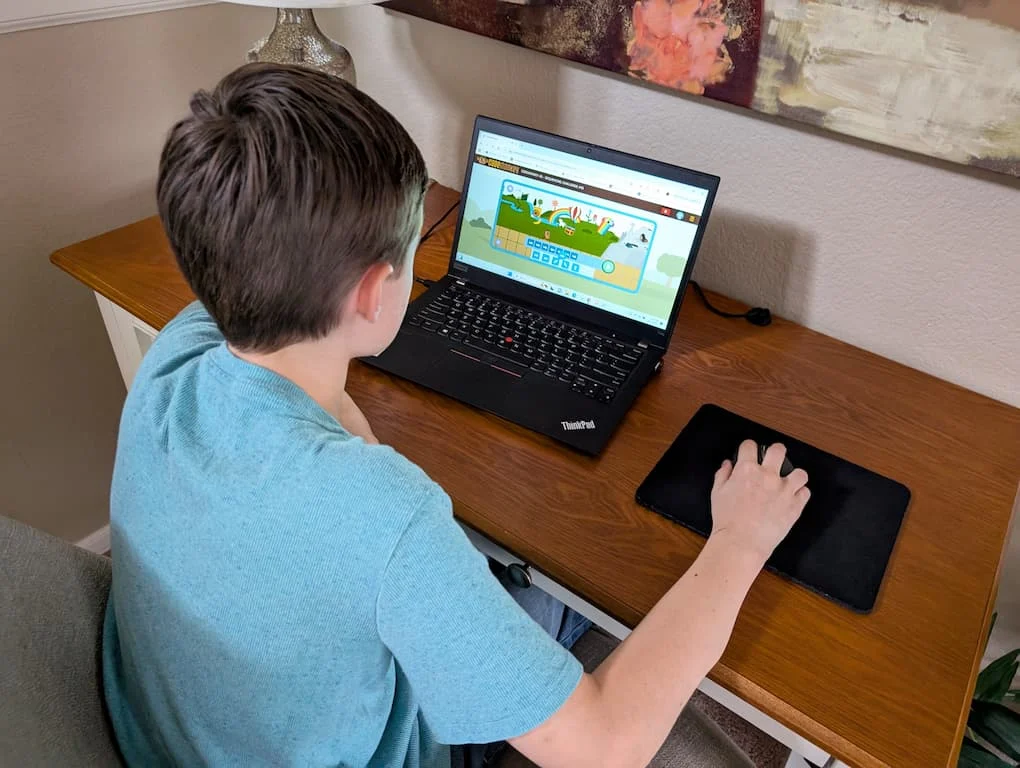
In the rapidly evolving landscape of the 21st-century digital economy, literacy is no longer confined to reading and writing; it now includes the language of machines. As parents and educators scramble to find effective ways to introduce children to computer science, the traditional reliance on dense textbooks and monotonous YouTube tutorials has proven largely ineffective. Enter CodeMonkey, an award-winning educational platform that is bridging the gap between passive screen time and active digital creation. By gamifying the acquisition of high-level programming languages, CodeMonkey has emerged as a premier tool for students from preschool through 8th grade, turning the intimidating world of syntax and algorithms into an engaging, banana-filled adventure.
Main Facts: The Gamification of Programming
At its core, CodeMonkey is designed to dismantle the barrier to entry for young learners. The platform operates on a simple yet profound premise: if you can make learning feel like play, the cognitive retention of complex material increases exponentially.
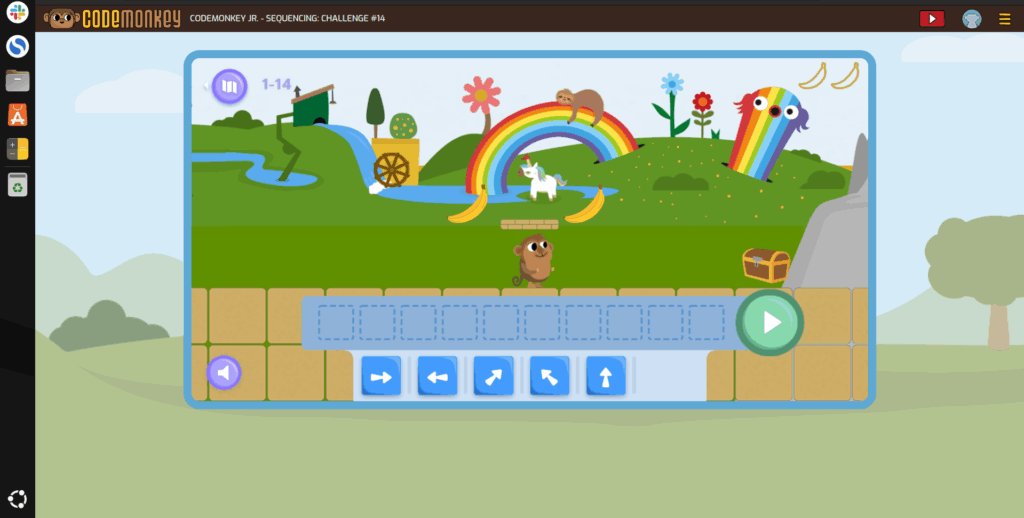
The program features over 400 interactive challenges. In these modules, students act as the "programmers" for a digital monkey, writing lines of code to navigate the character through obstacles to collect bananas. This immediate feedback loop—where a line of code translates directly into an on-screen action—is the bedrock of the platform’s success. Unlike abstract coding exercises that feel disconnected from reality, CodeMonkey allows students to see the tangible results of their logic in real-time.
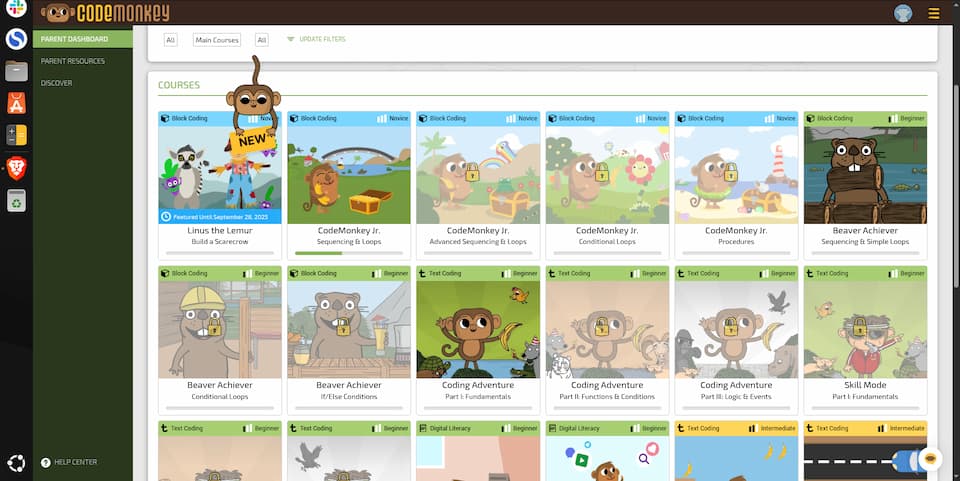
Crucially, the platform does not just teach "coding concepts"; it introduces students to industry-standard languages including CoffeeScript, JavaScript, and Python. By transitioning from visual block-based coding (in the "Jr." modules) to text-based coding, the platform ensures that students are not merely playing a game, but developing a functional skill set that serves as a foundation for professional software development.
Chronology: From Concept to Classroom Staple
The development of CodeMonkey follows a deliberate, scaffolded trajectory designed to match the developmental milestones of children.
- The Early Years (Pre-K to 2nd Grade): The journey begins with CodeMonkey Jr., a visual, block-based environment. At this stage, the focus is not on syntax, but on computational thinking—the ability to break down a problem into smaller, logical steps.
- The Intermediate Phase (3rd to 5th Grade): As students gain confidence, they move into the primary Coding Adventure courses. Here, the abstraction of "blocks" is replaced by actual text-based programming. This is a critical psychological transition, as it demystifies the "black box" of coding.
- The Advanced Proficiency Phase (6th to 8th Grade): By middle school, students are equipped to tackle complex logic, loops, functions, and conditional statements. They progress toward the Game Builder module, where the platform shifts from solving puzzles to creative construction, allowing students to design and deploy their own independent projects.
Supporting Data: Why "Gamification" Works
The effectiveness of CodeMonkey is supported by a growing body of evidence regarding pedagogical gamification. According to educational data, students who engage in gamified STEM environments exhibit higher levels of intrinsic motivation and longer "time-on-task" compared to those using static curricula.
- Immediate Feedback: The platform’s "3-star" grading system encourages iteration. If a student fails to get three stars, they are encouraged to refine their code, teaching the vital programming principle of "debugging."
- Skill Tracking: The platform’s internal analytics provide a "skill mode" dashboard. This data-driven approach allows teachers and parents to monitor exactly which concepts—such as arrays, variables, or Boolean logic—a student has mastered, and where they require additional scaffolding.
- Accessibility: Because the platform is browser-based and requires no heavy installations, it removes the technical hurdles that often prevent schools and homes from implementing coding programs.
Understanding the Curriculum: A Deep Dive
To understand why CodeMonkey is effective, one must look at the specific programming concepts it covers:
Loops and Functions
Loops are the "efficiency engines" of programming. CodeMonkey teaches students that writing a line of code 100 times is inefficient. Instead, they learn to create a loop, teaching the machine to perform the task automatically. Functions take this further, acting as "recipes." By defining a function once, a student can call upon it multiple times, mirroring the modular nature of real-world software engineering.
Objects and Arrays
For the older student, the curriculum introduces data structures. An array is presented as a "line of items," and an object as a "container." By manipulating these, students learn to organize data—a prerequisite for building everything from simple websites to complex artificial intelligence models.
Variables and Conditions
The logic of "If-Else" is the cornerstone of decision-making in software. By asking questions like, "Is the banana score over 100?", students learn to program the software to react to different scenarios, effectively giving the game a "brain."
Official Responses and Educational Philosophy
The creators of CodeMonkey have consistently maintained that the goal is not just to produce coders, but to produce thinkers. In an official statement regarding their curriculum design, the developers noted, "We don’t just teach programming; we introduce computer science as a lens through which to view the world."
Teachers who have integrated the program into their classrooms report a significant shift in student attitudes. One educator noted, "The fear of the ‘syntax error’ disappears when it’s framed as a puzzle rather than a failure." This pedagogical shift is essential; by removing the fear of failure, the program creates a "safe-to-fail" environment where innovation thrives.
Implications for Future Careers
The long-term implications of starting a child on a platform like CodeMonkey are profound. In a future where artificial intelligence and automation will define the job market, basic programming knowledge is becoming a form of "digital fluency."
By learning Python—a language currently dominating the fields of data science, finance, and AI—students are gaining a head start on their peers. More importantly, the computational thinking skills—logical reasoning, pattern recognition, and systematic debugging—are transferable to any discipline, from law to medicine.
Addressing Concerns: Privacy and Safety
In an age of data anxiety, parents are right to be cautious. CodeMonkey addresses this through a transparent privacy policy. The platform uses necessary session cookies solely for the purpose of maintaining student progress and login functionality. It is designed for educational safety, ensuring that students are not targeted by third-party data tracking or behavioral advertising. For families concerned about screen time, the platform offers a self-paced, objective-driven experience that can be integrated into a broader, balanced educational routine.

Conclusion: A Worthwhile Investment
Whether you are a homeschool parent seeking a comprehensive curriculum or a teacher looking to revitalize your computer science elective, CodeMonkey offers a balanced, rigorous, and—most importantly—fun pathway to mastery.
The transition from a passive consumer of digital content to an active architect of it is a rite of passage for the modern child. With nearly 400 challenges, a robust tracking system, and a curriculum that evolves with the student, CodeMonkey is not just a game; it is a launchpad.
Click here to start your child’s coding journey with CodeMonkey and give them the tools to navigate the digital future with confidence and creativity. The world of coding is waiting—it’s time to pick up those bananas.