
The Silent Crisis: Why the Lindsay Clancy Case Must Reform Maternal Mental Health
The trial of Lindsay Clancy has gripped the American public, not merely because of the profound tragedy of three young children lost, but because of a haunting, pervasive sentiment echoed by mothers across the nation: “That could have been me.”
For many, the Clancy case is a mirror reflecting the hidden fractures in the American healthcare system—a system that often treats motherhood as a biological event rather than a complex, high-risk intersection of neurobiology, hormonal volatility, and mental health. While the legal proceedings aim to determine culpability, a broader, more urgent investigation is required: How did a mother, clearly signaling distress, fall through the cracks of a medical establishment designed to catch her?
The Anatomy of a Tragedy: A Chronology of Systemic Failure
To understand the tragedy, one must look at the months preceding the deaths of Clancy’s children. In the time leading up to the incident, Clancy was not a patient ignored by medicine; she was a patient overwhelmed by it. She had been prescribed 13 different psychiatric medications by a rotating cast of providers, including psychiatrists, nurse practitioners, emergency room staff, and inpatient clinicians.
This creates a chilling question for the medical community: Who was viewing the totality of her care? In modern medicine, the burden of continuity often falls on the patient. When a patient is in the throes of a mental health crisis, requiring them to act as their own case manager—coordinating records between an OB-GYN, a primary care physician, and a psychiatrist—is not just an administrative inconvenience; it is a clinical failure.
In Clancy’s case, the lack of a “warm handoff”—the clinical practice of ensuring a patient is safely received by the next provider before discharge—left her navigating a labyrinthine system while her cognitive and emotional baseline was rapidly deteriorating.
The Neurodivergent Intersection: ADHD as a High-Risk Marker
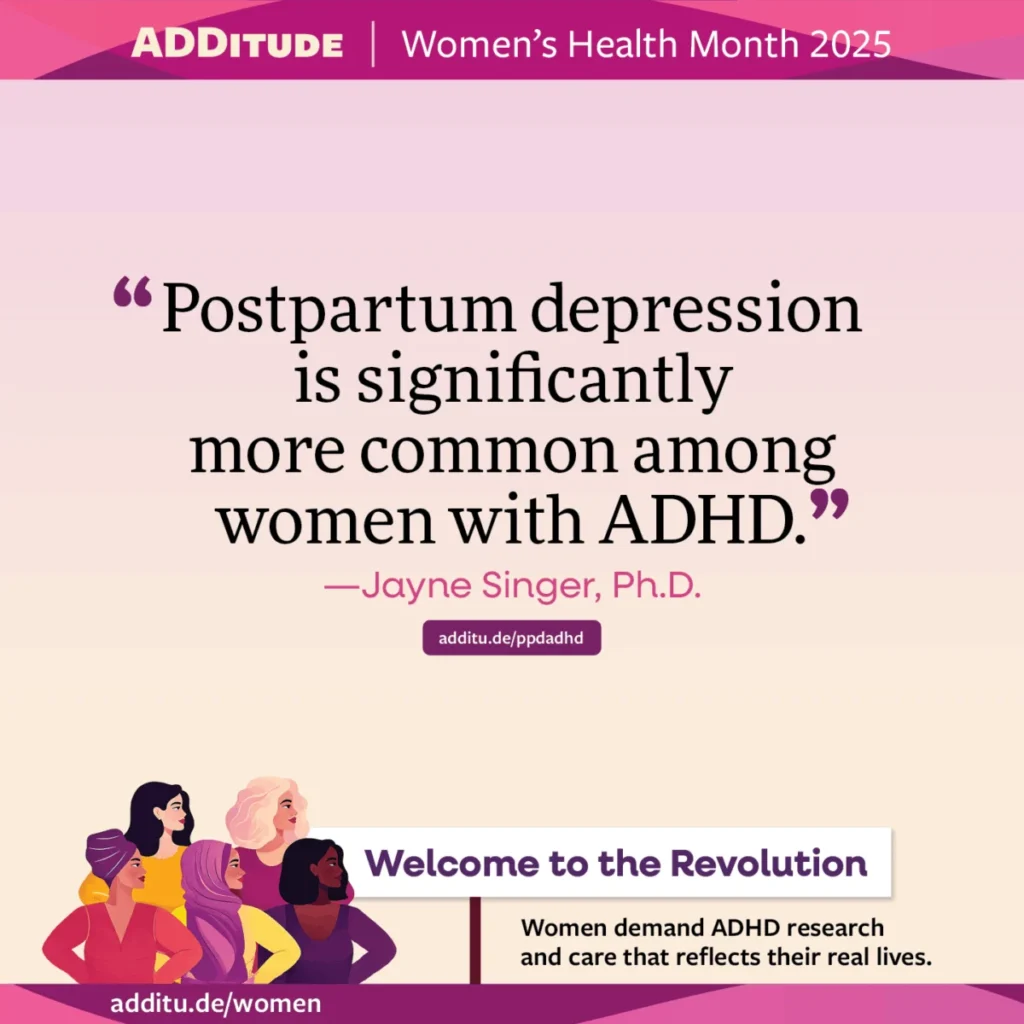
Central to this critique is the experience of neurodivergent mothers. For years, women with ADHD have reported a distinct, cyclical relationship between their neurobiology and their hormonal milestones. It is only now that the scientific community is beginning to validate these anecdotal reports with rigorous data.
A 2023 Swedish study published in ADDitude highlights a stark reality: women diagnosed with ADHD before pregnancy are five times more likely to experience postpartum depression (PPD) and postpartum anxiety (PPA) than neurotypical peers. Nearly 17% of mothers with ADHD develop PPD, and 25% struggle with anxiety disorders.
Despite these statistics, the standard of care remains stagnant. The Edinburgh Postnatal Depression Scale, the gold-standard tool used for 40 years, is notoriously ill-equipped to detect the specific presentations of anxiety and distress in neurodivergent women. Furthermore, the 2025 revelation that women with ADHD are three times more likely to experience Premenstrual Dysphoric Disorder (PMDD) confirms that these brains react differently to hormonal shifts. Yet, prenatal visits rarely include a discussion on how pre-existing neurodivergence compounds postpartum risk.
Bridging the Gap: Data and Disparities
The data confirms that maternal mental health is a public health emergency. From 2017 to 2019, mental health conditions accounted for nearly one-quarter of all pregnancy-related deaths in the United States. Despite this, the “postpartum period” is still treated by insurance companies and healthcare providers as a rigid, six-to-eight-week window.
In reality, the physiological and psychological impact of birth—the "fourth trimester"—can last for years. Women report elevated levels of anxiety and depression for up to eight years post-birth. When we limit follow-up care to a single six-week check-up, we are effectively abandoning mothers at the very moment their hormonal and life-stage transitions are most volatile.
Furthermore, the lack of dedicated research is profound. A 2025 systematic review found that out of thousands of potential areas of study, there were only 11 eligible studies concerning ADHD and female sex hormones. This "gender data gap" is being exacerbated by current political climates, where federal grants for women’s health research are under scrutiny and specific terminology is being flagged by government agencies. When the scientific community is discouraged from studying "women" or "female" biology, we are left to treat the most vulnerable patients in the dark.
The Role of Administrative Barriers and Insurance
Perhaps the most insidious obstacle in maternal psychiatric care is the interference of insurance companies. In a healthy system, a provider’s clinical judgment should dictate the treatment path. In the current reality, "network adequacy" often determines the quality of care.
Patients are routinely forced to switch therapists or psychiatrists mid-crisis because of changes in insurance provider lists. They are subjected to prior authorization hoops for medications that have already proven effective. For an ADHD brain—which struggles with executive function under the best of circumstances—the administrative burden of fighting an insurance company for medication access can be the breaking point. When insurance dictates treatment, the patient is no longer a person; they are a data point in a cost-containment strategy.
Towards a New Standard of Care: Systemic Recommendations
If the Lindsay Clancy case is to serve as a catalyst for change, the medical establishment must adopt a new paradigm. This includes:
- Urgent Perinatal Consultation: Obstetricians and primary care clinicians need real-time access to psychiatric expertise. The "referral and hope" model is obsolete. Programs that offer immediate tele-psychiatric support to OB-GYNs are proven to save lives and must be scaled nationally.
- Integrated Care Teams: We must move away from siloed medicine. If a mother has a history of mental illness, her postpartum mental health plan should be as standardized as her blood pressure monitoring. This includes a designated "care coordinator" who ensures that medication changes are tracked across all providers.
- Redefining the Postpartum Window: We must abandon the six-week postpartum visit as a definitive end point. High-risk mothers—including those with ADHD or prior psychiatric history—require longitudinal monitoring that lasts for at least the first year of the child’s life.
- Decoupling Medicine from Insurance Profit: Legislators must prioritize legislation that prevents insurers from forcing changes in psychiatric providers and medications without clinical oversight. Continuity of care must be recognized as a fundamental element of psychiatric treatment, not an optional luxury.
- Aggressive Investment in Women’s Health: We need a massive, well-funded initiative to study the intersection of ADHD, hormones, and mental health. We cannot continue to treat women based on biological models that were designed, tested, and validated almost exclusively on men.
Conclusion: Turning Grief into Reform
Postpartum psychosis is a rare, terrifying, and often treatable condition. However, the systems surrounding it are anything but rare in their failure to provide adequate support. By failing to integrate psychiatric care into maternal health, by ignoring the specific needs of neurodivergent mothers, and by allowing administrative hurdles to obstruct the path to wellness, we have created a environment where tragedy is not just possible—it is predictable.
The death of three children in a developed, wealthy nation is a moral indictment. We owe it to those children, and to the millions of mothers currently struggling in silence, to ensure that the "distress flares" of the next mother are not just seen, but met with a system that is as robust, compassionate, and brave as the mothers it serves. It is time to treat maternal mental health not as a series of disparate, individual incidents, but as a core pillar of public health. Lindsay Clancy’s story must be the last of its kind—not through the lens of legal punishment alone, but through the lens of a society that finally chooses to protect those who nurture its future.
If you or someone you know is in immediate danger or experiencing a mental-health crisis, call or text 988. For specialized postpartum mental-health support and resources, contact Postpartum Support International or the 988 Suicide & Crisis Lifeline.