The Existential Pivot: Why Higher Education’s "Growth Era" Has Come to a Sudden Halt
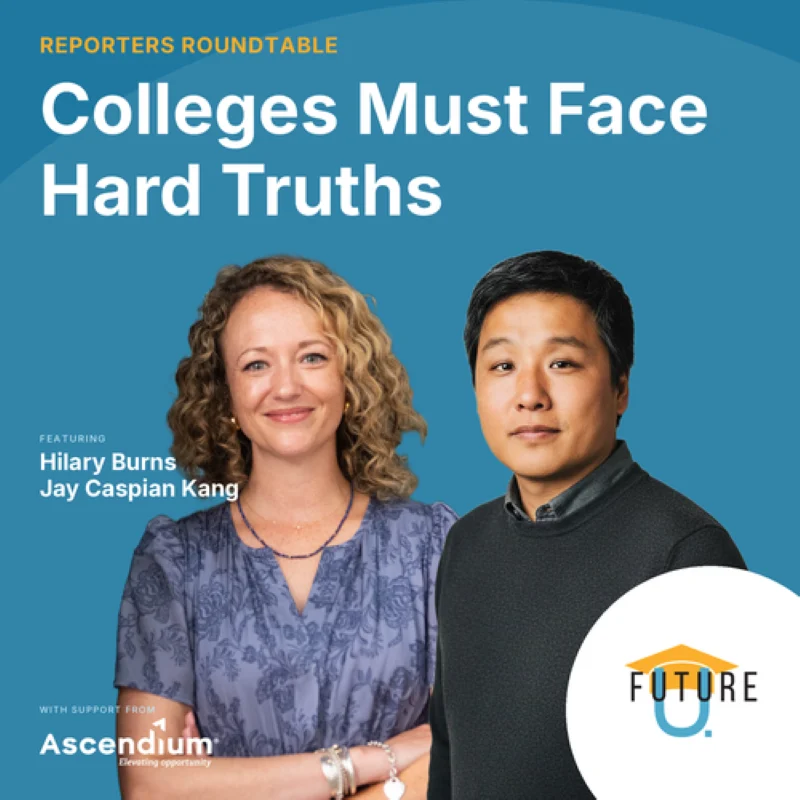
For decades, the American higher education sector operated under a convenient, almost theological, assumption: growth was inevitable, the degree was the ultimate currency of the middle class, and the ivory tower was insulated from the volatility of the broader economy. However, as the latest episode of the Future U podcast reveals, that era of comfortable expansion is not just ending—it is actively collapsing.
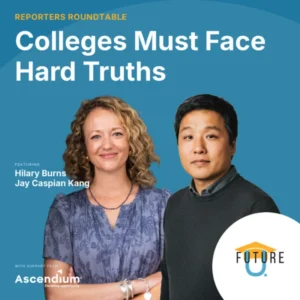
In a recent roundtable discussion, Hilary Burns of The Boston Globe and Jay Caspian Kang of The New Yorker joined hosts Michael Horn and Jeff Selingo to dissect a sector in crisis. Their consensus is stark: while college administrators remain fixated on the theater of the culture wars, the true threat to higher education is a profound, structural crisis of confidence among the families who sustain it.
Main Facts: The Intersection of Demographic Decline and Value Skepticism
The central argument presented by Burns and Kang is that the higher education sector is suffering from a "strategic myopia." College leaders are preoccupied with political skirmishes—debates over free speech, curriculum, and ideological leanings—that, while loud, mask a much quieter, more lethal set of economic realities.
The primary drivers of this instability are threefold:
- The Demographic Cliff: A shrinking population of college-aged individuals is forcing colleges to compete for a smaller pool of students.
- The Value Proposition Gap: Rising tuition costs have outpaced wage growth for decades, leading families to question whether the "ROI" (return on investment) of a four-year degree justifies the mounting debt.
- The AI Disruption: The rapid advancement of Artificial Intelligence has created unprecedented uncertainty regarding the future of the labor market, making the traditional, four-year liberal arts degree seem like a risky long-term gamble.
As Horn and Selingo noted, these factors are not hitting all institutions equally. While elite, well-endowed universities may weather the storm, regional public institutions and tuition-dependent private colleges are staring down the barrel of an existential emergency.
Chronology: From Expansion to Contraction
To understand the current crisis, one must look at the timeline of the sector’s development over the last half-century.
The Era of Uninterrupted Growth (1970–2010)
Following the post-WWII boom, higher education became the gold standard for social mobility. The "college for all" narrative fueled a period of massive expansion. Universities grew their administrative bloat, built sprawling physical campuses, and relied on a steady, rising tide of enrollment. During this period, the sticker price of tuition became decoupled from the actual cost of instruction, fueled by the ready availability of federal student loans.
The Great Recession and the Debt Crisis (2008–2015)
The 2008 financial crisis acted as a canary in the coal mine. As families saw their home equity evaporate and their savings dwindle, the "cost-to-value" calculation began to shift. This era saw the beginning of the student debt crisis, as graduates entered a sluggish job market burdened by loans that could not be discharged in bankruptcy.
The Pandemic Disruption (2020–2022)
COVID-19 was the catalyst that accelerated the inevitable. When campuses shut down and classes moved to Zoom, the "experience" of college—long used to justify high prices—vanished overnight. Enrollment numbers plummeted, and for the first time, many students realized they could thrive without the traditional residential campus model.
The Present: The "Emergency" Phase (2023–Present)
We are currently in what Kang describes as an "emergency situation." The combination of the post-pandemic enrollment drop and the looming "demographic cliff" (where the number of 18-year-olds is projected to fall significantly starting in 2025) has left many regional schools without the cash flow to sustain their operations.
Supporting Data: The Anatomy of a Sector in Retreat
The data supporting the claims made on Future U paints a grim picture for the mid-tier market.
- Enrollment Trends: According to the National Student Clearinghouse, undergraduate enrollment has struggled to return to pre-pandemic levels. The "missing" students—particularly from low-income and first-generation backgrounds—are increasingly opting for trade schools, certificate programs, or the workforce.
- Institutional Closures: We have witnessed an uptick in college closures and mergers. Small, private liberal arts colleges that lack significant endowments are the most vulnerable. Moody’s Investor Service has consistently warned that the number of college closures will accelerate as these institutions exhaust their cash reserves.
- The AI Factor: A recent study by the Burning Glass Institute suggests that employers are beginning to "skill-set" rather than "degree-set." As AI lowers the barrier to entry for many white-collar tasks, the degree as a signaling mechanism for competence is losing its efficacy.
Official Responses and the Leadership Vacuum
Perhaps the most stinging critique offered by Hilary Burns during the podcast was her assessment of current academic leadership. She pointed to a pervasive "leadership vacuum" at the top of the hierarchy.
"Everyone’s kind of just ducking and hoping someone else will step up," Burns remarked. Rather than addressing the fundamental questions of business models and educational relevance, many college presidents are paralyzed by a desire to avoid controversy.
Why Leaders are "Ducking"
Institutional leaders are currently caught in a pincer movement:
- Faculty Governance: Resistance from tenured faculty often prevents the radical restructuring necessary to lower costs.
- Donor/Alumni Pressure: Wealthy donors often demand that universities focus on legacy prestige rather than the practical, career-oriented changes needed by the modern student.
- Political Scrutiny: Public university presidents are increasingly subject to intense oversight from state legislatures, making any form of innovation a potential political liability.
The result is a "wait and see" strategy. Colleges are hoping that enrollment numbers will rebound or that they can ride out the storm by cutting programs on the margins. However, as Kang noted, the speed at which the sector is changing suggests that incrementalism will not be enough to prevent a systemic collapse.
Implications: A Future of Privilege and Polarization
The most sobering prediction to emerge from the Future U roundtable is the potential future of the American university system.
The Stratification of Higher Education
Jay Caspian Kang posits a future where the concept of college as a place for "open-ended exploration"—the traditional liberal arts ideal—survives, but only for the wealthy.
In this scenario, we see a two-tier system:
- The Elite Tier: Highly selective institutions will continue to thrive. They are selling a "network" and a "brand" that will always be in demand among the upper class.
- The Vocational Tier: For the rest of the population, college will be reduced to a utilitarian, career-focused experience, likely delivered through more efficient, tech-enabled, and lower-cost models.
The Death of the "Community" College Model
If regional public universities continue to lose their financial footing, the loss of these institutions will be a blow to the social fabric of the United States. These schools have historically served as the engines of middle-class stability. If they are forced to pivot exclusively to low-cost vocational training, the intellectual breadth of the American workforce may diminish.
The Urgent Need for Transparency
The podcast guests emphasized that if higher education is to regain the public’s trust, it must stop masking its costs. For decades, the "sticker price" vs. "net price" shell game has fueled resentment. Universities must be transparent about what a degree costs and, more importantly, what a student can reasonably expect to earn upon graduation.
Conclusion: Facing the Hard Truths
The Future U episode serves as a wake-up call to an industry that has been hitting the snooze button for years. The culture wars are a distraction—a sideshow that obscures the reality that the higher education business model is fundamentally broken for the average family.
As Burns and Kang argued, the institutions that will survive the next decade are those that stop "ducking" and start innovating. They must decouple the cost of an education from the overhead of a massive, underutilized campus. They must embrace the integration of AI into their curricula rather than banning it. And most importantly, they must demonstrate that they are invested in the student’s future, not just their own institutional continuity.
For the regional public and tuition-dependent private colleges, the time for "business as usual" has expired. The emergency is here, and the survival of the sector—and its ability to provide opportunity for all—depends entirely on the courage of leaders to embrace a new, uncomfortable, but necessary reality.
To listen to the full discussion on the future of higher education, visit the Future U podcast website.