Week in review: Budget woes at UMaine, Commonwealth University and more
Published: September 28, 2026
Author: Natalie Schwartz (Adapted & Expanded)
Source: Higher Ed Dive
Main Facts
The higher education landscape continues to undergo a period of profound structural, financial, and legislative transformation as the fall 2026 term gets underway. A series of critical developments highlight the dual pressures facing colleges and universities across the United States: the aggressive pursuit of alternative pathways to higher education on one hand, and severe financial headwinds on the other.
At the forefront of this week’s news is a landmark legislative move in California, where Governor Gavin Newsom signed two pivotal bills designed to radically expand the capacity of the state’s community college system to confer four-year bachelor’s degrees. This policy shift represents a major milestone in the ongoing debate over college affordability, institutional agility, and workforce alignment.
Simultaneously, public flagship institutions are confronting stark demographic and economic realities. Indiana University has emerged as a bellwether for a broader trend, reporting a staggering 15.6% decline in international student enrollment for the fall 2026 semester. This drop underscores the growing vulnerability of American universities to shifts in global geopolitics, visa processing backlogs, and intensifying international competition.
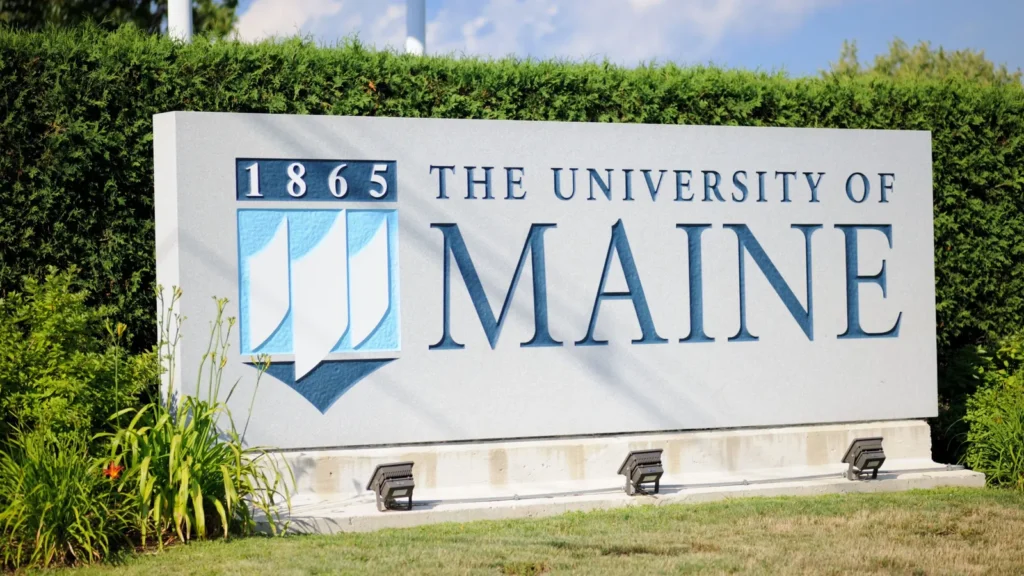
Furthermore, fiscal strain continues to ripple through campuses nationwide. Institutions such as the University of Maine are bracing for sweeping staff and faculty layoffs to close gaping multi-million-dollar budget deficits, while federal policy shifts—including ongoing legal challenges involving the National Institutes of Health (NIH)—threaten to disrupt university-led research operations. Together, these developments paint a picture of a sector forced to adapt rapidly to economic austerity, shifting student demand, and changing regulatory environments.
Chronology
To understand how these disparate higher education threads intersect, it is essential to trace the timeline of key policy decisions, institutional disclosures, and legislative actions leading up to late September 2026:
- Early 2026: Institutional data begins to circulate indicating soft international student recruitment pipelines at several major public research universities across the United States. Concurrently, regional institutions finalize their fiscal year budgets, revealing deep structural deficits exacerbated by expiring federal pandemic-era relief funds and declining domestic enrollment cohorts.
- Spring 2026: The California State Legislature advances aggressive higher education reform bills aimed at easing workforce shortages in high-demand technical and healthcare sectors by leveraging the state’s expansive community college network.
- Mid-2026: Legal disputes involving federal funding agencies, notably a high-profile lawsuit targeting the National Institutes of Health, gain traction in federal courts, raising concerns among university administrators who rely heavily on federal research grants.
- Late August – Early September 2026: As the fall semester commences, official census data at institutions like Indiana University reveals sharp, unexpected drops in global student populations, sending administrators scrambling to adjust revenue projections.
- September 28, 2026: California Governor Gavin Newsom formally signs the legislative package expanding four-year degree capabilities across community college districts, cementing a major victory for vocational and regional higher education advocates. Simultaneously, campus-level budget crises—typified by the University of Maine’s looming layoffs—dominate regional news cycles, bringing the systemic crisis in higher education funding into sharp relief.
Supporting Data
The systemic shifts currently impacting the academic sector are sharply defined by quantitative indicators across enrollment, legislative metrics, and institutional budgets:
- 15.6% International Enrollment Drop: Indiana University announced that its total international student population for the fall term fell to 4,763—representing a steep 15.6% contraction compared to the previous academic year. This decline mirrors similar losses reported by peer public research universities experiencing headwinds in key international markets like China and India.
- 2 to 12 New Bachelor’s Degrees: Under the newly enacted California legislation signed by Governor Newsom, individual community college districts are now authorized to establish between two and 12 new four-year degree programs. Eligibility is directly tied to institutional performance benchmarks, specifically the percentage of students successfully completing credentials and the rate at which students successfully transfer to traditional four-year universities (such as the University of California and California State University systems).
- $19 Million Budget Gap: Exemplifying the financial distress faced by regional public institutions, the University of Maine system faces a severe $19 million budget shortfall. This fiscal crisis has forced university leadership to weigh drastic measures, including comprehensive faculty and staff layoffs, program consolidations, and structural restructuring to maintain financial solvency.
Official Responses
The convergence of legislative expansion, enrollment contraction, and budgetary distress has elicited strong reactions from institutional leaders, state policymakers, and higher education analysts.
Proponents of California’s community college degree expansion have lauded Governor Newsom’s actions as a triumph for socioeconomic mobility and regional workforce development. Supporters argue that traditional four-year universities have become increasingly financially out of reach for working-class and non-traditional students. By empowering community colleges—which traditionally cap their offerings at two-year associate degrees and technical certificates—to award bachelor’s degrees at a fraction of the cost, the state is creating a more equitable pathway to middle-class professions, particularly in nursing, applied sciences, and digital technology.
Conversely, traditional four-year university administrators and faculty associations have historically expressed caution regarding the proliferation of community college bachelor’s programs. Critics argue that community colleges may lack the comprehensive research infrastructure, library resources, and specialized faculty bodies required to maintain rigorous upper-division undergraduate education. However, the strict performance metrics written into the California legislation—conditioning program approval on transfer and completion success—have mollified some skeptics.

Regarding the alarming contraction in international enrollment, university administrators have pointed to a complex web of external factors. Beyond visa processing delays and rising geopolitical tensions, institutions note that competitor nations—such as Canada, the United Kingdom, and Australia—have aggressively marketed themselves as more welcoming and economically viable destinations for international scholars. Higher education advocacy groups have called upon the federal government to streamline student visa procedures and enhance post-graduation work opportunities to restore the U.S. competitive edge in attracting global talent.
On the fiscal front, union leaders and faculty representatives at institutions facing layoffs, such as the University of Maine, have pushed back against administrative downsizing. Faculty senates have argued that recurring budget deficits should be met with increased state investment and executive salary cuts rather than reductions in instructional staff, which they warn will degrade educational quality and inflate class sizes.
Implications
The cascading developments across the American higher education landscape carry profound long-term implications for institutional strategy, economic competitiveness, and the social contract of higher learning.
1. The Redefinition of Institutional Mission
The expansion of bachelor’s degree-granting authority within community college systems accelerates a blurring of traditional sectoral lines. For over a century, American higher education maintained a clear stratification between two-year vocational/transfer institutions and four-year research or comprehensive universities. As states like California empower community colleges to award four-year degrees, community colleges are evolving into comprehensive regional hubs. This shift threatens to force traditional four-year regional comprehensives to fundamentally rebrand themselves to prove their distinct value proposition to prospective students.
2. Revenue Diversification and Demographic Realities
The sharp decline in international student enrollment at flagships like Indiana University serves as an urgent warning sign for institutions that have grown financially dependent on full-pay international tuition to subsidize domestic operations and research budgets. As domestic "traditional-age" college-going populations plateau or decline due to the post-2008 birth dearth (the demographic cliff), the loss of international revenue streams forces universities to confront severe structural deficits. Institutions must either aggressively pivot toward online education and adult reskilling markets or prepare for sustained downsizing.

3. The Research Enterprise Under Pressure
Simultaneous legal battles involving federal agencies like the National Institutes of Health threaten to introduce unprecedented volatility into university research budgets. Academic medicine, scientific innovation, and graduate student funding are deeply intertwined with federal grant allocations. Any disruption or contraction in federal research support, combined with internal budget cuts at cash-strapped universities, risks stifling scientific productivity and weakening the pipeline of doctoral candidates.
4. Equity, Access, and Affordability
Ultimately, the tension between rising tuition, state funding cuts, and innovative legislative workarounds like California’s degree expansion points to an ongoing reimagining of college affordability. As public confidence in the traditional, high-cost residential college model wavers, policymakers and institutional leaders are under intense pressure to deliver transparent, cost-effective pathways to employment. Whether these disparate measures—legislative expansion, international recruitment overhauls, and painful fiscal austerity—will successfully stabilize the American higher education sector remains the defining question for academic leadership in the years ahead.