Paving the Path to Carbon Neutrality: How Oberlin College’s Geothermal Transformation Became a Blueprint for Higher Education
By [Your Name/Staff Writer]
Published: Facilities & Sustainability News
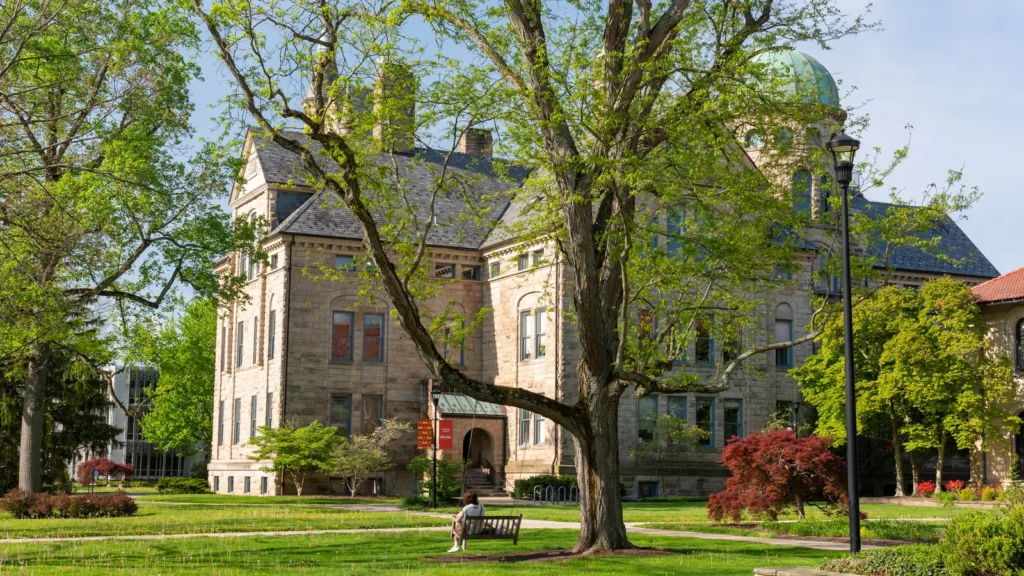
When Oberlin College and Conservatory proudly announced last year that it had officially reached carbon neutrality, it marked the culmination of a nearly two-decade journey. More importantly, it solidified the historic Ohio institution’s place at the vanguard of a growing movement: higher education’s large-scale transition to geothermal district energy to slash harmful greenhouse gas emissions.
As colleges and universities across the globe grapple with aging infrastructure and tightening climate mandates, Oberlin’s ambitious overhaul offers a masterclass in institutional vision, financial engineering, and logistical resilience. Industry experts note that geothermal technology is rapidly transitioning from an experimental alternative to a mainstream necessity.
"Geothermal as a tool is growing globally," said Rob Thornton, president and CEO of the International District Energy Association (IDEA), highlighting a broader shift in how institutional campuses view energy generation and distribution.
To understand how Oberlin achieved this monumental milestone, Facilities Dive spoke with key figures behind the project, tracing the timeline from early commitments and serendipitous catalysts to construction hurdles, financial strategies, and the broader implications for the future of sustainable campus infrastructure.
Main Facts: The Oberlin Sustainability Overhaul
At its core, Oberlin’s project required a complete modernization of the campus’s energy ecosystem. For decades, the college relied on a traditional, energy-intensive, and deteriorating steam distribution system. The solution involved transitioning the entire campus to a low-temperature hot water geothermal district energy system.
Key facts of the initiative include:
- The Goal: Achieving full carbon neutrality by 2025, a target set nearly two decades in advance.
- The Scope: Approximately 60 out of 85 main campus buildings required significant retrofits to transition from steam to low-temperature hot water distribution.
- The Financing: Secured through an $80 million package of bonds certified by the global nonprofit Climate Bonds Initiative, later supplemented by grandfathered federal tax credits from the Inflation Reduction Act (IRA).
- The Partners: Collaborated closely with energy services firm Ever-Green Energy on design, implementation, utility organization, and financial modeling.
- The Educational Impact: Served as a multi-year "living laboratory," allowing students to directly engage in planning, engineering, operations, and verification.
Chronology: A Multi-Decade Timeline to Net Zero
2006: The Pledge
Oberlin’s journey began with foresight. In 2006, college leadership made a bold, institutional commitment to reach carbon neutrality by 2025. At the time, the pledge was aspirational, made well before the technology, financial instruments, or regulatory frameworks of the modern green energy transition were fully established. However, the college faced an impending crisis: its campus infrastructure—decades old and operating on high-pressure steam—was rapidly approaching the end of its useful life, demanding a massive, inevitable capital investment.
2016: The Implementation Plan
Recognizing that patching up the failing steam system was a financial and environmental dead end, Oberlin partnered with Ever-Green Energy in 2016 to draft a comprehensive carbon neutrality implementation plan. This roadmap evaluated multiple paths, ultimately designing a campus-wide conversion from steam to hot water, validating optimal carbon-free energy supply strategies, structuring utility organizations, and mapping out development and financing strategies.
March 2021: Board Approval and Financing
Following years of meticulous planning and modeling, Oberlin’s Board of Trustees officially approved the transition plan in March 2021. The project encompassed converting to a low-temperature hot water geothermal district energy system, expanding the chilled water network, upgrading electrical infrastructure, and modernizing campus buildings. Armed with a bulletproof economic model, the college successfully secured $80 million in certified climate bonds.
2021–2025: Construction and Commissioning
Physical construction spanned four intensive years. To minimize disruption to the academic calendar, heavy work was strategically concentrated during the summer months. Despite unforeseen global disruptions and aging infrastructure challenges, the project hit its stride, leading to final commissioning and the formal declaration of carbon neutrality ahead of the 2025 deadline.
Supporting Data and Financial Strategy
One of the most daunting hurdles for institutional decarbonization is capital expenditure. Upgrading an entire campus is notoriously expensive, but Oberlin’s project team proved that long-term operational savings could outweigh upfront costs.
"From a financial viability perspective, we were able to show through modeling that this was going to be the more cost-effective solution than if the college continued doing what it was doing," explained Michael Ahern, senior vice president of system development at Ever-Green Energy.
Financial modeling demonstrated that replacing the failing steam system with a piecemeal approach would bleed capital over time. Instead, bundling the project allowed Oberlin to capture an $80 million Climate Bonds Initiative certification. Furthermore, although the project’s conception predated the passage of the federal Inflation Reduction Act (IRA), Chris Norman, senior director of the Office of Energy and Sustainability at Oberlin, noted that the college was successfully grandfathered in to secure valuable federal tax credits. These credits drastically improved the project’s affordability and ROI.
Another crucial data point lies in the sheer volume of retrofits: out of 85 primary buildings, roughly 60 required conversion. While newer buildings were constructed with low-temperature systems in mind, historic and pneumatic buildings required entirely new approaches, ranging from direct line distribution to full internal retrofits.
Official Responses and Overcoming Hurdles
No project of this scale proceeds without friction. The implementation team encountered several unexpected obstacles, ranging from global pandemics to century-old infrastructure surprises.
The Steam Leak Catalyst
Sometimes, institutional inertia is broken by circumstance. Ahern recalled a moment of perfect, if dramatic, timing during a critical board meeting in December 2020.
"We were actually in a board meeting, talking through our recommendation of where to go next. And at the very time we were in the board meeting, there was a steam leak out in the primary area of the campus where students convened," Ahern recounted. "There was steam coming out of the ground while we were in a board meeting, so that did help spur it, just a bit." Seeing infrastructure fail in real-time galvanized leadership to greenlight the multi-million-dollar transition.
Pandemics and "Skeletons"
Construction began in the summer of 2021—a period that defied original timelines because COVID-19 protocols kept the campus active through the summer months. As operations returned to normal, the project team had to dynamically adjust their workflow.
Compounding matters were the hidden realities of a historic campus. "We discovered issues in various buildings that had to be reacted to," Ahern said, noting that century-old water pipes and hidden structural quirks required constant, nimble problem-solving.
According to project stakeholders, very few of the 60 retrofitted buildings went entirely according to script. Buildings often performed differently than thermal models anticipated, forcing engineers to make on-the-fly replacements.
Lessons Learned: Planning More, Wasting Less
Reflecting on the early planning phases between 2015 and 2020, Ahern admitted that if he could do one thing differently, he would spend even more time vetting existing infrastructure.
"The amount of runway you can utilize on the front end to test and retest and run what-if scenarios with the existing infrastructure, the more you can do that up front, the better off you’re going to be, because you’re able to mitigate millions of dollars of cost that otherwise you would spend," Ahern advised. While early stages saw some unavoidable capital misallocations, the later phases benefited immensely from front-end testing.
Broader Implications for Higher Education
Oberlin’s success is not happening in a vacuum. It represents a vital case study for the entire higher education sector, where institutions are increasingly evaluated on their environmental stewardship and ESG (Environmental, Social, and Governance) metrics.
Rob Thornton of the IDEA points out that Oberlin joins a prestigious cohort of institutions pioneering campus-wide geothermal solutions, including Princeton University, Smith College in Massachusetts, Ball State University in Indiana, and the University of Toronto.
However, affordability remains a significant headwind for the broader industry. Capital-starved institutions often struggle to justify the massive upfront investments required for deep decarbonization. Yet, Thornton emphasizes that modern geothermal systems, when paired with smart grid technologies, offer financial relief over time.
"If there’s renewable electrons that are inexpensive when the demand is low, those can be converted to thermal and used the next day or the next week," Thornton explained. "We’re seeing that as a tool to manage affordability."
The Ultimate "Living Laboratory"
Beyond carbon reductions and utility savings, Oberlin’s multi-year construction marathon yielded an unexpected dividend: hands-on educational value.
Because the project spanned several years, multiple generations of students had the rare opportunity to engage directly with the planning, implementation, operation, and verification of the system. Chris Norman emphasized that this transforms the physical campus into an active, real-world learning lab.
"It’s a real-world learning lab we’re engaged in, and I think it does set us apart," Norman said. "We’ve got students and families that are choosing to come here because of the project. Certainly, staff and faculty choose to stay here because of it."
As higher education looks toward a warming future constrained by stricter carbon caps, Oberlin College’s geothermal transformation stands as a shining beacon. It proves that with unwavering institutional commitment, rigorous financial modeling, and nimble engineering, even the oldest campuses can shed their carbon-heavy past and build a sustainable, resilient future.