Demystifying Early Literacy: A Comprehensive Guide to Using Decodable and Leveled Texts in the Classroom
By Educational Insights Desk
Published: Special Literacy Report
Main Facts: The Great Debate in Early Reading Instruction
As the educational landscape continues its historic pivot toward evidence-based practices rooted in the Science of Reading, elementary school educators face a critical pedagogical crossroads. At the heart of this discussion are two primary types of classroom reading materials: decodable texts and leveled texts.
While both formats are vital components of a robust literacy curriculum, they serve fundamentally different purposes at distinct stages of a child’s reading development.
- Decodable texts are highly controlled reading materials designed to match the specific phonics patterns and high-frequency words students have been explicitly taught. Their primary goal is to help young readers build early fluency by applying newly learned letter-sound correspondences.
- Leveled texts, on the other hand, utilize broader readability systems—gauging sentence length, vocabulary density, and syntax complexity—to provide students with a wider variety of literature. They are primarily utilized to help children generalize their phonics skills, expand oral vocabulary, and engage with content-rich subjects.
Understanding the specific strengths, limitations, and optimal deployment windows of both resource types is essential for educators striving to transition students from early phonics acquisition to long-term reading independence.
Chronology: The Evolution of Reading Material Selection
To understand how classrooms arrived at the current utilization of decodable and leveled texts, it is helpful to trace the evolution of early reading instruction over the last several decades.

- The Era of Balanced Literacy and Leveled Readers (Late 20th Century to 2010s): For many years, balanced literacy models dominated classrooms. During this period, leveled texts—often including predictable or repetitive books (such as Guided Reading Levels A–D)—were frequently introduced to absolute beginners. Students were often encouraged to rely on picture cues, repetitive sentence structures, and initial letter guesses rather than strict decoding.
- The Emergence of the Science of Reading Movement (Late 2010s to Present): As cognitive scientists, speech pathologists, and educational researchers uncovered how the human brain actually learns to read, the limitations of guessing strategies became clear. Phonics instruction regained prominence, highlighting the necessity of decodable texts that align directly with a school’s systematic phonics scope and sequence.
- The Modern Synthesis (Present Day): Today, contemporary reading science advocates for a balanced coexistence rather than a zero-sum game. Modern educators recognize that decodable texts must precede leveled texts during the initial acquisition phase, while leveled texts remain critical tools later on to foster advanced generalization, fluency, and the psychological concept known as "set for variability."
Supporting Data and Linguistic Mechanics
Navigating the world of early reading materials requires a clear look at how words are constructed, evaluated, and matched to student capability.
What Makes a Text Truly "Decodable"?
Marketing departments often label series as "decodable," but true decodability relies entirely on a strict mathematical and instructional alignment. Decodability refers to the percentage of words in a text that contain only the phonics patterns and irregular sight words students have explicitly been taught up to that point in their curriculum.
Consider this sample sentence: "Sam lifts a big bag and fills it to the brim with grain."
- If a kindergarten or first-grade student has mastered short vowels and common consonants, words like Sam, lifts, big, bag, fills, and it are fully decodable.
- However, words featuring advanced or untaught patterns—such as the "ai" in grain, or the high-frequency words a, to, the, and with (which introduce the /oo/ and /th/ sounds)—are not decodable unless explicitly pre-taught.
- If none of these extraneous patterns have been introduced, the sentence drops to roughly 61% decodability, rendering it ineffective for targeted phonics practice. For optimal results, decodable text sets must match a school’s exact phonics scope and sequence.
The Mathematics of Leveled Text Accuracy
Unlike decodable books, leveled texts incorporate an amalgamation of unpredictable phonics patterns that gradually increase in complexity. Recent empirical research published in educational journals underscores the importance of the 93–97% accuracy threshold when utilizing leveled readers.
Before handing a leveled book to a student, teachers must preview the material to ensure the child can read it with at least 93% accuracy. This precise sweet spot maximizes growth in reading fluency without causing cognitive overload or frustration.

Official Perspectives and Expert Frameworks
Educational organizations and developmental specialists emphasize that neither decodable nor leveled texts can carry the weight of an entire literacy program alone. Each occupies a specific tier within the Instructional Hierarchy—a framework originally developed by Norris Haring and Marie Eaton, and adapted by organizations like NWEA for modern reading instruction.
The Reading Instructional Hierarchy
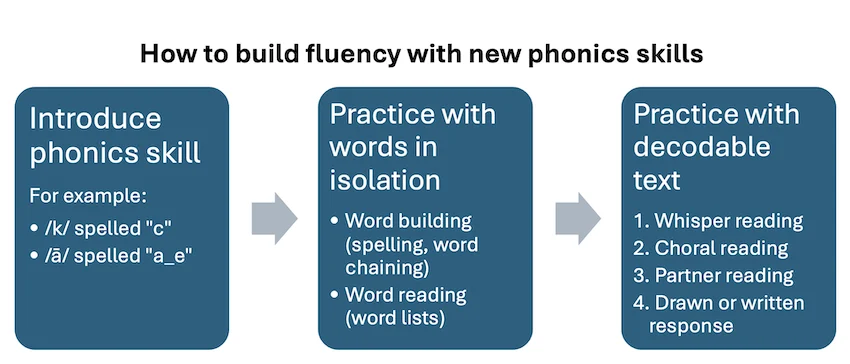
- Acquisition Stage: At this foundational level, students are first introduced to letter sounds and blending techniques. Decodable texts are the undisputed champion here, allowing students to apply isolated phonics skills directly to connected text (e.g., practicing short /t/ with sentences like "Sam taps. Pat taps. Sam and Pat tap, tap, tap!").
- Fluency Stage: As students transition from halting decoders to smooth readers, decodable texts bridge the gap, building automaticity and speed with known patterns.
- Generalization Stage: Once foundational knowledge is secure, students must learn to apply their skills across diverse contexts. This is where leveled texts become critical. They expose children to rich, varied vocabulary and help build what researchers call "set for variability."
Understanding "Set for Variability"
Set for variability refers to a child’s cognitive ability to flex the pronunciation of a decoded word so that it matches a word already stored in their oral vocabulary.
For instance, if a student encounters the word wasp in the sentence "The wasp stings the pig," they might initially decode it using standard short-A rules (rhyming with clasp). However, if the child knows what a wasp is through oral language, they can use their set for variability to adjust the pronunciation to the correct real-world word. Exposing students to varied, non-controlled texts helps "exercise" this phonics-flexing muscle, jumpstarting self-teaching capabilities.
A Warning Regarding Predictable Texts
Experts draw a sharp line between standard leveled trade books and predictable or repetitive texts (commonly found in Guided Reading Levels A–D). Predictable texts—such as those featuring repetitive sentence stems like "I see a cat. I see a dog. I see a bird"—encourage children to guess words using pictures or initial letters rather than decoding the graphemes on the page.
Australian speech pathologist Alison Clarke and other literacy advocates warn that predictable texts are fundamentally counterproductive for early word recognition instruction. They are best reserved for shared reading, modeling rhyme during poetry units, or practicing oral predictions, rather than independent decoding practice.

Implications for Classrooms and School Leadership
Translating these research-backed principles into daily practice requires deliberate audits and strategic planning from both teachers and school administrators.
Actionable Recommendations for Teachers
Educators seeking to optimize their literacy blocks should conduct a three-part inventory:
- Audit Phonics Materials: Ensure that your decodable text library aligns tightly with your core phonics curriculum’s scope and sequence. Verify that students are only given decodable books matching skills they have already been explicitly taught.
- Audit Leveled Libraries: Review your leveled book collections. Ensure that books chosen for small-group instruction align with the generalization stage, and verify that students can read them with 93–97% accuracy.
- Eliminate Harmful Practices: Remove predictable, repetitive texts from early decoding and word-recognition groups. Replace them with targeted decodable texts or rich, authentic trade books meant for read-alouds.
- Provide Daily Variety: Ensure students have balanced daily exposure to both tightly controlled decodable texts (for skill mastery) and rich, varied leveled texts (for vocabulary, comprehension, and phonics flexibility).
Actionable Recommendations for School Leaders
Administrators play a crucial role in providing the structural and material support teachers need to succeed:
- Resource Allocation: Procure systematic decodable text sets that correspond directly to approved phonics programs, alongside a wide array of high-quality leveled texts for older or transitioning readers.
- Clear Policy Guidance: Establish clear school-wide guidelines explicitly prohibiting the use of predictable, guessing-based texts in early foundational literacy instruction.
- Professional Development: Invest in comprehensive professional learning opportunities—such as science of reading literacy suites—to ensure that all instructional staff understand the distinct pedagogical roles of decodable and leveled materials.
By honoring the unique, complementary functions of both decodable and leveled texts, schools can build a seamless, evidence-based pathway that guides young learners from foundational decoding all the way to joyful, independent literacy.