
Beyond the Initiative Treadmill: Why School Improvement Fails and How Educators Can Actually Solve Their Own Problems

By Educational Research & Insights Desk
Published in partnership with Leading Pedagogy Review
Main Facts: The Eternal Search for Educational Progress
Every academic year begins with a familiar ritual: faculty meetings, rallying cries from administration, and the introduction of the latest school-wide or district-wide improvement initiative. Whether it is a branded leadership program, a novel curriculum, or a sweeping new set of instructional frameworks, schools across the globe exist in a perpetual state of attempting to transform.
Yet, this cycle of implementation often gives way to a phenomenon known as "initiative fatigue." Programs are rolled out with high hopes, consume valuable educator time, fail to produce the desired outcomes, and are quietly discarded a few years later in favor of the next big trend.
In their groundbreaking new book, A Chance to Solve Their Own Problems, education researchers Jal Mehta and Max Yurkofsky examine why so many well-intentioned school improvement frameworks falter—and, more importantly, what distinguishes the districts that succeed from those trapped in the loop of superficial reform. Through extensive qualitative research, Mehta and Yurkofsky reveal that sustainable school improvement is not about finding the right prepackaged solution, but rather about aligning mindsets, routines, and practices within an environment that supports genuine, ground-up problem-solving.
Chronology: From Top-Down Mandates to Adaptive Integration
To understand where modern school improvement stands today, it is helpful to trace the evolution of how educational systems have attempted to solve structural problems over the past several decades.
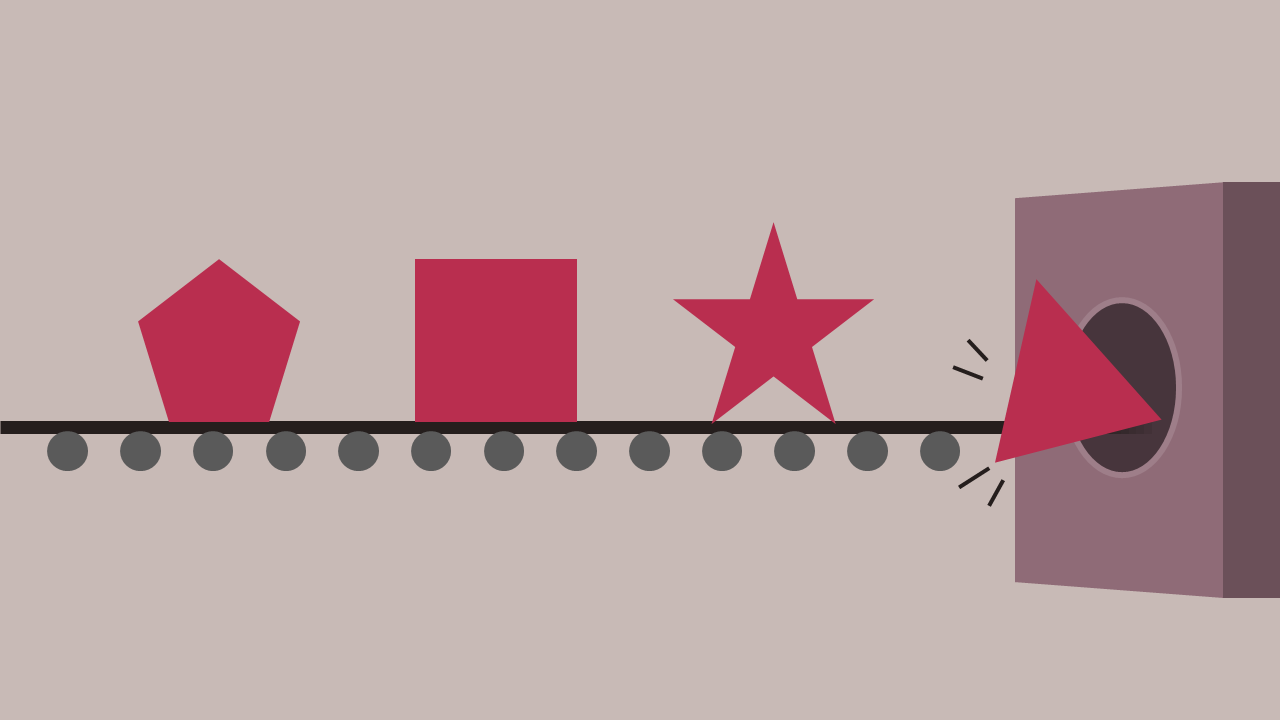
Era of Standardized Reform (Late 20th Century)
For decades, school reform was predominantly top-down and compliance-driven. Policymakers and district administrators identified achievement gaps or structural deficits through standardized test scores, designed top-down mandates, and expected teachers to function as passive implementers of external solutions. Little attention was paid to context, local autonomy, or teacher agency.
The Rise of Continuous Improvement Frameworks (2010s)
Recognizing the limitations of top-down mandates, educational theorists introduced improvement science and design-thinking models. Inspired by engineering and healthcare, these frameworks encouraged schools to study local problems, run small-scale trials (such as Plan-Do-Study-Act cycles), and iterate. In theory, this put problem-solving tools directly into the hands of educators.
The Bureaucratization of Improvement (Present Day)
In practice, however, many districts converted these bottom-up frameworks into bureaucratic checklists. Rather than empowering teachers, the frameworks themselves became another set of mandates handed down from above. Fidelity to the process often superseded the actual work of solving the problem.
Mehta and Yurkofsky’s recent research synthesizes this history, pointing toward a necessary paradigm shift: moving away from mechanical implementation and toward adaptive integration, where educators use structured methodologies not as rigid blueprints, but as tools for localized learning.
Supporting Data and Common Pitfalls
Mehta and Yurkofsky’s research identifies four critical missteps that consistently undermine educational reform efforts. Understanding these data-backed patterns explains why billions of dollars in school improvement funding routinely yield disappointing results.
+-------------------------------------------------------------------------+
|                  FOUR COMMON PITFALLS IN SCHOOL REFORM                   |
+-------------------------------------------------------------------------+
| 1. Leaving out the frontline: Solutions are designed at the top and      |
|    handed down, ignoring the insights of educators closest to the work.  |
|                                                                         |
| 2. Focusing on people, not systems: Targeting "struggling" teachers     |
|    instead of evaluating the institutional infrastructure around them.  |
|                                                                         |
| 3. Prioritizing fidelity over learning: Treating new curricula as rigid  |
|    scripts rather than living tools that require adaptive integration.  |
|                                                                         |
| 4. Jumping to solutions: Committing to programs before fully            |
|    understanding or accurately framing the core problem.                |
+-------------------------------------------------------------------------+
1. Leaving Out the Frontline
When central offices define problems without consulting classrooms, they often target issues that teachers do not view as priorities. As Mehta notes, improvement efforts only gain traction when they address problems that educators genuinely experience and care about. If teachers feel disconnected from the diagnostic phase, buy-in drops precipitously.
2. Focusing on People Instead of Systems
Data-driven accountability systems frequently isolate individual teachers or student cohorts who are underperforming. Yurkofsky argues that effective improvement requires looking one layer deeper: examining how onboarding, coaching, curriculum design, and instructional scaffolding contribute to those outcomes. Shifting the lens from individual failure to systemic design makes it psychologically safer for educators to admit shortcomings and seek collective fixes.
3. Prioritizing Fidelity Over Learning
When schools adopt a new curriculum, administrative emphasis often centers on "fidelity"—making sure teachers implement every page precisely as designed. However, Yurkofsky points out that "fidelity means we’re not learning." Because external programs are rarely tailor-made for a specific local context, real progress depends on adaptive integration: trying a strategy, identifying where it falls short, and adjusting it continuously.
4. Jumping to Solutions Prematurely
Educational systems are notorious for buying a solution before agreeing on the definition of the problem. Mehta illustrates this via a design-thinking exercise where students immediately suggested building phone booths for Zoom calls, misidentifying a spatial feature as the core problem rather than recognizing that individuals simply needed private spaces for digital communication. Broadly defining a problem opens the door to multiple creative solutions.
Official Responses and Expert Insights
The insights from Mehta and Yurkofsky challenge conventional administrative playbooks, prompting dialogue across academic institutions, teachers’ unions, and district leadership organizations.

The Triad of Effective Improvement: Mindsets, Routines, and Practices
According to the researchers, successful school improvement cannot rely on a single element; it demands the simultaneous presence of three interconnected components:
- Mindsets: The baseline beliefs of the staff. For example, if secondary educators believe that teaching literacy is exclusively the job of elementary school teachers, structural literacy initiatives will stall regardless of instructional quality. Educators must see themselves as agents of change capable of solving the specific problems before them.
- Routines: The institutionalized structures—such as common planning time, structured student-work protocols, and peer classroom observations—that turn isolated experimentation into collaborative dialogue. Without routines, innovative teachers feel stranded on professional islands.
- Practices: The concrete strategies, materials, and disciplinary expertise required to enact change. Mehta stresses that schools cannot simply process-cycle their way into better teaching; at some point, they must infuse external disciplinary expertise and robust instructional materials into the system.
Cultivating an Enabling Environment
Even with sound mindsets, routines, and practices, improvement efforts wither without an enabling organizational culture. School leaders must actively cultivate three environmental conditions:
- Protecting Time and Space: Recognizing that time is the scarcest resource for educators, administrators must actively shield teachers from administrative clutter to allow for deep, analytical improvement work.
- Making It Safe to Learn: Psychological safety is non-negotiable. If failure is penalized, teachers will hide their challenges rather than dissecting them transparently.
- Embedding Improvement Within a Strategy: Improvement methodologies must serve a larger, purposeful vision rather than existing as standalone administrative exercises.
Implications for the Future of School Leadership
The findings of A Chance to Solve Their Own Problems offer a radical reframing for school and district leaders navigating the pressures of accountability and reform. Rather than viewing problems as administrative burdens or performance liabilities, leaders are encouraged to view problems as a gift.
When educators feel safe enough to articulate what is failing within their classrooms, it signifies deep professional trust. How leadership responds—whether with punitive defensiveness or genuine intellectual curiosity—determines whether an organization remains stuck on the initiative treadmill or evolves into a self-correcting community of practice.
Ultimately, breaking the cycle of failed reform requires trusting the intelligence, proximity, and capacity of teachers. By trading top-down compliance for localized, adaptive problem-solving, schools can finally transform improvement from an exhausting annual mandate into a sustainable, enduring professional practice.

To hear the full interview with Jal Mehta and Max Yurkofsky, explore the Cult of Pedagogy podcast (Episode 281) or visit Max Yurkofsky’s Substack and Harvard’s Deeper Learning Institute for related professional development resources.