Beyond the Lab Coat: Transforming Chemistry Education Through Hands-On Discovery
Teaching children about the fundamental properties of matter—specifically the interplay between acids and bases—is often viewed as a daunting task reserved for high school chemistry classrooms. However, educators and child development experts are increasingly arguing that the most effective way to demystify complex scientific concepts is to move away from rote memorization and toward tactile, curiosity-driven exploration. By integrating hands-on experimentation into the home or classroom environment, we can turn potentially abstract topics into engaging, tangible experiences.
The Foundations of Chemistry: Understanding Acids and Bases
At its core, chemistry is the study of how the world is built. Acids and bases are two of the most common categories of substances in our daily lives. While the term "acid" might evoke images of volatile laboratory chemicals, the reality is far more mundane and pervasive. From the sharp tang of a lemon to the crisp bite of a tomato, acids are staples in our kitchens. Conversely, bases—often characterized by a bitter taste and a slippery, soap-like texture—are essential components in cleaning agents and culinary staples like baking soda.
Molecular Mechanics: What Lies Beneath?
To understand these substances, one must look at the atomic level. All chemical substances are composed of ions—atoms or molecules that carry an electrical charge. The primary differentiator between an acid and a base is their chemical composition regarding these ions. Acids are defined by a high concentration of hydrogen ions ($H^+$), which provide that characteristic sour, zesty flavor. Bases, however, are rich in hydroxide ions ($OH^-$), which contribute to their bitter profile and reactive, slippery nature.
This is not merely a theoretical exercise; these chemical interactions are vital to biological survival. The human stomach, for instance, maintains a highly acidic environment—roughly a 1.5 to 3.5 on the pH scale—to effectively break down food and neutralize pathogens.
Measuring the Invisible: The pH Scale and Indicators
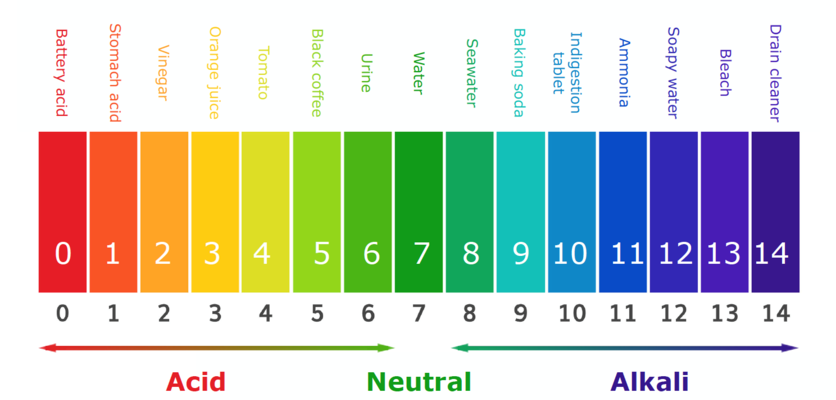
How do we quantify these properties? Scientists utilize the pH (potential of Hydrogen) scale, a logarithmic measure ranging from 0 to 14.
- 0 to 6.9: These are acidic solutions. The lower the number, the stronger the acidity.
- 7.0: This is the "neutral" zone, perfectly balanced, with pure water being the classic example.
- 7.1 to 14: These are basic (or alkaline) solutions. The higher the number, the stronger the base.
While we can identify some substances by taste or touch, many chemical compounds are hazardous. In these instances, we rely on indicator solutions. These are natural or synthetic substances that undergo a chemical reaction to change color in the presence of varying pH levels. Purple litmus paper, derived from lichen, remains the industry standard, turning red in acidic conditions and blue in the presence of a base.
A Chronology of Discovery: Why Early Engagement Matters
The history of chemistry education suggests that children who engage with science before the age of 12 are significantly more likely to pursue STEM-related fields in higher education. By introducing the concept of acidity and basicity early, we allow children to develop an intuitive understanding of "cause and effect."
- The Observational Phase: Early exploration focuses on identification. Children learn that household items like orange juice, vinegar, and coffee are acidic, while soaps, antacids, and baking soda are basic.
- The Testing Phase: By the middle stage of learning, students begin using indicators to confirm their hypotheses.
- The Experimental Phase: Finally, students manipulate these substances to create reactions, such as the famous vinegar-and-baking-soda "volcano," observing how these substances neutralize one another.
Practical Projects for Scientific Inquiry
To reinforce these lessons, we have curated six hands-on projects designed to spark curiosity and provide concrete data for young researchers.
1. The Red Cabbage Indicator
You can synthesize your own pH indicator using red cabbage, which contains a pigment called anthocyanin.
- Method: Boil shredded cabbage in water until the liquid turns a deep purple. Once cooled, strain the liquid.
- Testing: Dip white index cards into the liquid to create custom "litmus strips." Test household liquids—from milk to laundry detergent—and record the color shifts to map where they fall on the pH spectrum.
2. The Edible Chemical Reaction
Chemistry isn’t just for the lab; it can be for the kitchen table. By mixing an acidic powder (like citric acid or cream of tartar) with a base (baking soda) and a sweetener, you can create a "fizzy" sherbet. When these ingredients hit the moisture in your mouth, an acid-base reaction occurs, releasing carbon dioxide bubbles. This provides a sensory lesson in chemical reactivity.
3. Metallic Restoration: Cleaning Pennies
Acids are excellent at breaking down the metal oxides that cause copper to tarnish.
- Experiment: Place dirty pennies in separate glasses containing lemon juice (acid), water (neutral), and soapy water (base).
- Analysis: Over several hours, students observe which solution removes the oxidation best. This provides a lesson in how acids interact with inorganic materials.
4. The "Rubber" Egg
This experiment demonstrates the corrosive nature of acids on calcium carbonate.
- Process: Place a raw egg in a container of white vinegar for 24–48 hours.
- Result: The acid slowly dissolves the calcium shell, leaving behind the semi-permeable membrane. The result is a "rubber" egg that is squishy and translucent.
5. Neutralization Dynamics
When an acid and a base are mixed, they work to neutralize each other, moving the resulting solution closer to a pH of 7. By adding baking soda to vinegar, students can witness the rapid release of gas. Using the cabbage indicator mentioned earlier, students can see the liquid shift from bright red (acid) to a neutral purple as they add the base.
Supporting Data and Educational Implications
According to recent pedagogical studies, hands-on science activities improve retention rates by up to 40% compared to traditional lecture-based learning. The "Scientific Method," which requires students to state a hypothesis, conduct a test, record data, and form a conclusion, is the bedrock of these exercises.
Official Perspectives:
Educational experts emphasize that failure is a crucial component of this process. When a student predicts a substance is an acid but the indicator reveals it is a base, the cognitive dissonance created by that result forces the student to re-evaluate their understanding. This "productive struggle" is where true learning occurs.
Conclusion: A Future of Inquisitive Minds
The goal of teaching chemistry to children is not to produce professional laboratory technicians, but to foster a generation of critical thinkers who understand that the world is a complex, reactive, and fascinating place. By utilizing simple household items, we remove the barriers to entry and prove that science is not a remote, intimidating discipline, but a language that describes the reality we interact with every single day.
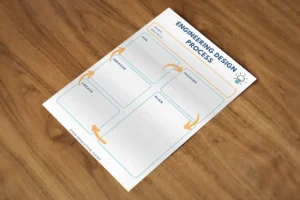
Whether it is through the fizz of a sherbet treat or the color change of a cabbage-soaked index card, these experiments provide the foundation for a lifetime of scientific literacy. We encourage parents and educators to download our supplementary scientific method worksheets to ensure these projects are accompanied by rigorous documentation and thoughtful analysis. After all, the best way to predict the future of science is to start experimenting with it today.