Bridging the Future: World Education Leads the Discourse on Digital Literacy and AI at COABE 2026
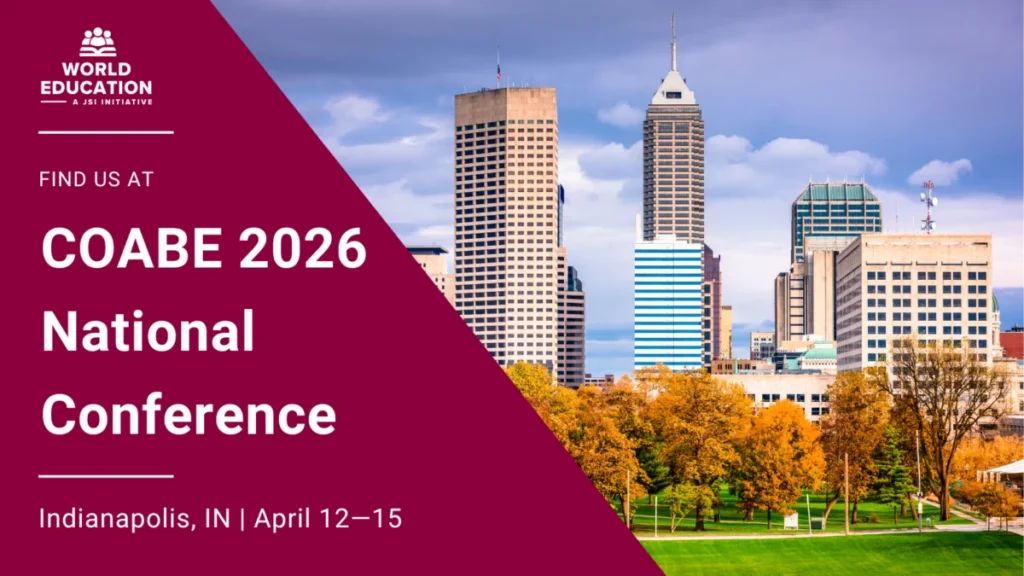
INDIANAPOLIS, IN – As the landscape of adult education undergoes a seismic shift driven by rapid technological advancement, World Education, a pioneering initiative of JSI, is set to take center stage at the 2026 Coalition on Adult Basic Education (COABE) National Conference. Held from April 12–15 in Indianapolis, the conference serves as the premier forum for educators, policymakers, and researchers to address the challenges and opportunities facing adult learners today.
World Education’s participation this year is not merely a series of presentations; it is a strategic roadmap for the future of the field. With a heavy emphasis on Generative AI, digital equity, and the translation of research into actionable classroom strategies, the organization aims to empower practitioners to build more accessible and responsive learning environments.
The State of Adult Education: Bridging the Digital Divide
The central theme of the World Education delegation’s contribution is the urgent need to integrate digital literacy into the core of adult education. In an era where workplace requirements are increasingly digitized, the disparity between those who possess high-level digital skills and those who do not is growing.
"Our mission at COABE 2026 is to demystify the intersection of technology and pedagogy," says a spokesperson for World Education. "We are moving beyond the theoretical. We are providing educators with the tools, checklists, and research-backed frameworks they need to implement change immediately in their classrooms, regardless of the context."
By leveraging partnerships with organizations such as the American Institutes for Research (AIR) and UMass Amherst, World Education is demonstrating that the future of adult education lies in the collaborative application of data-driven insights.
Chronology of Innovation: A Detailed Schedule of Engagements
World Education’s presence at COABE 2026 is meticulously scheduled to provide a comprehensive professional development journey. Below is the breakdown of their sessions.
Monday, April 13: Foundations of Digital Competency
The conference begins with a focus on structural improvement and the lessons learned from urban implementation.
- 8:00–9:10 AM: Using BRIDGES Skills Checklists. Jeff Goumas will explore how to drive digital skills development in any environment, focusing on the practical application of the BRIDGES framework.
- 11:50–1:00 PM: From Policy to Practice. Sandy Goodman and Catalina González will present a post-mortem analysis of Boston’s Digital Literacy Initiative, offering a roadmap for other cities to translate high-level policy into tangible classroom outcomes.
- 3:50–5:00 PM: Practical Solutions from the CREATE Network. A deep dive into digital tools, presented by Jen Vanek, Jeff Goumas, and members of the CREATE Network, focusing on evidence-based instructional technology.
Tuesday, April 14: The AI Revolution and Open Resources
Tuesday focuses on the most disruptive forces in modern education: Generative AI and open-access curricula.
- 8:00–9:10 AM: Aligning AI Literacy with Learning Goals. Rachel Riggs will discuss how to integrate AI fluency into the existing curriculum without overwhelming learners.
- 11:50–1:00 PM: Free and Open Online Literacy Curriculum. Jen Vanek, Jeff Goumas, and Stephen Sireci (UMass Amherst) will showcase the power of SkillBlox and ASAP in supporting adult readers.
- 2:00–3:10 PM: Practitioner-Friendly Findings. A collaborative session with AIR on leveraging free research-based resources to teach in-demand skills.
- 2:00–3:10 PM: Generative AI and the EdTech Maker Space. Rachel Riggs returns to facilitate a workshop on using GenAI to bridge resource gaps, a session poised to be a highlight for tech-forward educators.
Wednesday, April 15: Professional Development and Engagement
The final day focuses on the "human" element of EdTech, ensuring that educators are as prepared as their students.
- 11:50–1:00 PM: Maximum Impact Professional Development. Dani Scherer will outline a three-pronged approach to professional development that ensures long-term teacher retention and growth.
- 1:30–2:40 PM: EdTech in Action. Eliana Stanislawski will guide educators on how to structure a digital literacy learning series for peers.
- 3:00–4:10 PM: Engaging Strategies for Online Instruction. Stanislawski will conclude the series with a focus on the most vulnerable learners, providing strategies for the online instruction of literacy-level adults.
Supporting Data: Why This Matters
The urgency of these sessions is supported by current workforce data. According to recent labor market reports, over 90% of job openings now require at least a baseline of digital literacy. However, millions of adult learners in the United States remain on the wrong side of the "digital divide."
World Education’s approach relies on a "practitioner-friendly" philosophy. By focusing on free and open resources, they remove the financial barrier that often prevents underfunded community colleges and adult education centers from modernizing their technology stacks. The integration of the CREATE Network research ensures that the tools suggested are not just "shiny new things" but are proven to increase student persistence and learning gains.
Official Perspective: The World Education Mission
World Education operates under the JSI umbrella with a clear mandate: to foster enduring, cross-sector partnerships. Their work is categorized into five key pillars:
- Education Systems Strengthening: Building the capacity of governments and local agencies to deliver sustainable results.
- Program Design and Implementation: Developing curricula that meet the specific needs of diverse learner populations.
- Applied Research and Evaluation: Using the scientific method to determine what works in real-world settings.
- Capacity Development: Training the trainers to ensure the longevity of educational interventions.
- Policy Development: Working at the legislative level to ensure adult education is prioritized in national and regional budgets.
"We don’t just want to attend the conference," the representative noted. "We want to transform the way our partners think about the future of work. When we talk about AI or digital literacy, we are talking about human dignity and the ability for every individual to participate fully in the modern economy."
The Implications of AI in Adult Education
Perhaps the most significant contribution World Education is making at COABE 2026 is their focus on Generative AI. For many educators, AI represents a threat to academic integrity or a complex technical hurdle. World Education, however, views it as a "gap-filler."
By teaching educators how to use GenAI to create differentiated reading materials, generate practice assessments, and streamline administrative tasks, they are freeing up valuable human time—time that teachers can then spend on direct student mentorship and instruction. The implication here is a shift in the teacher’s role: from being a primary content creator to being a content curator and facilitator, empowered by AI to provide more personalized, responsive support to adult learners.
A Call to Action for Attendees
For those attending the conference, the invitation from World Education is open. Whether you are an administrator looking to overhaul your program’s digital literacy policy or an instructor seeking a new way to engage literacy-level adults, the sessions in the JW Grand Ballroom and the designated breakout rooms are designed to offer immediate, high-impact takeaways.
Beyond the conference, World Education continues to invite stakeholders to engage with their newsletter and join their global network. As the landscape of education evolves, the collaboration between policy, research, and classroom practice becomes more critical than ever.
In Indianapolis this April, the message from World Education is clear: The digital future is not coming; it is already here. Through the right frameworks, the right tools, and a commitment to equity, we can ensure that every adult learner is prepared to navigate it with confidence.
For more information on World Education and their initiatives, visit their website or subscribe to their newsletter to stay updated on the latest in research and pedagogical innovation.