The Illusion of Reality: Navigating the Frontier of Synthetic Media in the Age of AI
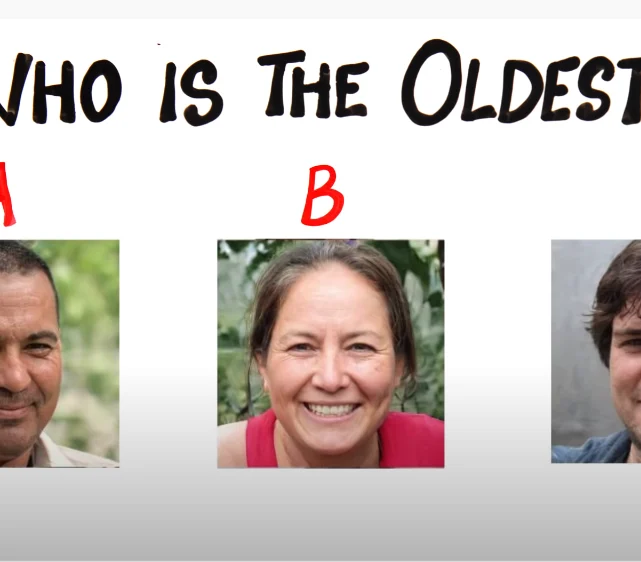
In an era where the boundary between human creativity and algorithmic generation is becoming increasingly porous, society faces a fundamental epistemological crisis. Can you distinguish a masterpiece painted by a human hand from one rendered by a generative model? Can you discern a symphony composed by a sentient mind from a series of predictive tokens arranged by machine learning? More pressingly, can you identify when a video or a phone call is a sophisticated digital fabrication?
As synthetic media reaches a level of fidelity that often surpasses human perception, the challenge of digital literacy has moved from a peripheral concern to a central pillar of civic stability. With over 2,100,000 documented views on leading educational platforms, the public’s hunger for guidance in this landscape is palpable. This article explores the mechanics of this transformation, the rigorous standards required to curate truth in an age of misinformation, and the profound implications of an AI-integrated reality.
The Chronology of Synthetic Proliferation
The trajectory of synthetic media is a story of exponential acceleration. While the theoretical foundations of artificial intelligence date back to the mid-20th century, the shift from academic curiosity to mass-market disruption occurred in distinct waves.
The Foundation (2014–2017)
The development of Generative Adversarial Networks (GANs) by Ian Goodfellow and his colleagues in 2014 marked the "Big Bang" of modern synthetic media. For the first time, two neural networks—the generator and the discriminator—competed against each other, allowing for the creation of images that were increasingly difficult to categorize as machine-made.
The Rise of Deepfakes (2018–2020)
By 2018, the term "deepfake" entered the public lexicon. Initially used for benign research, the technology was rapidly weaponized through open-source software, allowing non-experts to swap faces in videos with unsettling accuracy. This period established the framework for the current crisis: the democratization of high-level digital deception.
The Generative Explosion (2021–Present)
The arrival of Large Language Models (LLMs) and diffusion-based image generators (such as Midjourney, DALL-E, and Stable Diffusion) signaled the end of the "early adopter" phase. Today, we are in the era of multimodal generation, where a single prompt can produce high-definition video, complex orchestral scores, and hyper-realistic human voices in seconds.
Rigorous Standards: The Anatomy of Curated Truth
In a digital ecosystem saturated with content, the role of expert curation has never been more vital. The challenge is not merely to provide information, but to provide vetted information. To combat the noise, specialized editorial teams have emerged to curate the top 11% of AI resources and best practices.
The 90% Threshold
The modern gold standard for content credibility relies on a strict filtering process. Content is evaluated based on technical accuracy, ethical alignment, and long-term utility. Only materials that meet a scoring threshold of 90% to 100% are permitted for inclusion in reputable databases. Anything falling below this mark—due to potential bias, hallucination, or lack of empirical backing—is systematically excluded.
The Expert Vetting Process
The integrity of this curation is maintained by professionals possessing graduate-level degrees in data science and related technical fields. This ensures that the information provided is not merely anecdotal, but grounded in the underlying mathematics and logic of the algorithms being discussed. By employing human-in-the-loop oversight, these organizations provide a necessary check against the "black box" nature of AI.
Supporting Data and the Erosion of Trust
The proliferation of synthetic media has created a "trust deficit" that permeates every layer of society. Statistical evidence suggests that the average user is increasingly ill-equipped to handle the volume of deceptive content encountered daily.
The Accuracy Gap
Recent surveys indicate that while 70% of respondents claim they can spot AI-generated content, controlled experiments reveal that the actual success rate is often lower than 40%. The "uncanny valley"—that unsettling space where an image is almost, but not quite, human—is rapidly narrowing.
The Scale of Exposure
With the 2,100,000+ views on synthetic media literacy resources, we see a clear correlation between the rise of "deepfake awareness" campaigns and the growing public anxiety regarding digital authenticity. This data confirms that users are not complacent; they are actively seeking tools to help them navigate the uncertainty.
Official Responses and Non-Profit Governance
As the debate over synthetic media intensifies, the role of non-profit organizations and governance structures becomes critical. A 501(c)3 non-profit model is often utilized to distance educational efforts from the commercial interests of the companies developing the technology.
The Non-Endorsement Doctrine
It is a foundational principle of ethical content distribution that the inclusion of an AI tool or resource does not constitute an endorsement. Whether a company is a global tech titan or an agile startup, its products are scrutinized solely on their pedagogical value.
Financial Independence
To maintain objectivity, leading educational portals operate without advertising revenue or direct compensation from the corporations mentioned in their resources. This "firewall" between editorial content and corporate funding is essential to ensuring that the guidance provided is free from the influence of lobbyists or marketing departments. When a user visits a site to learn about the latest in AI safety, they are interacting with an entity that has no financial incentive to steer them toward a specific brand or software.
The Implications: A New Social Contract
The transition to a reality defined by synthetic media has profound implications for our social, political, and legal structures. We are currently witnessing a shift in the "social contract" of communication.
The Death of the "Evidence" Paradigm
Historically, the legal and journalistic professions have relied on the axiom that "seeing is believing." Photographs and audio recordings were considered primary evidence. That paradigm is effectively dead. In the coming years, our judicial systems will need to develop new standards for the admissibility of digital evidence, likely moving toward cryptographic verification and blockchain-based provenance for authentic content.
Cognitive Sovereignty
The most insidious implication of AI-driven media is the impact on human perception. If a bad actor can generate a hyper-realistic video of a political leader or a loved one, the victim’s sense of reality is fundamentally compromised. This raises the question of "cognitive sovereignty"—the right to a reality that hasn’t been manipulated by algorithmic interference.
The Future of Creativity
Despite the risks, the implications for human creativity are equally transformative. AI is not merely a tool for deception; it is a collaborative partner. The goal of current digital literacy efforts is not to demonize AI, but to demystify it. By understanding the processes behind the creation of an AI-composed song or a computer-generated painting, we transition from passive consumers to active, critical participants in a new creative economy.
Conclusion: Developing Digital Intuition
The challenge of the 21st century is not the absence of information, but the overwhelming presence of synthetic noise. As we move forward, the ability to discern the authentic from the artificial will be as fundamental as reading or writing.
By relying on vetted, graduate-level expert insights and maintaining a strict, non-commercial approach to digital literacy, we can mitigate the risks posed by synthetic media. While technology will continue to advance, our human capacity for skepticism, verification, and critical inquiry remains our most powerful defense. We must continue to curate the truth, refine our methodologies, and foster a public that is as sophisticated as the machines they interact with.
The digital world is evolving at a pace that few could have predicted. The question is no longer whether we can stop the advance of synthetic media—that is a mathematical inevitability—but whether we can evolve our own understanding to keep pace with the machines. Through education, transparency, and a commitment to rigorous curation, we can ensure that, even in an age of artificial reality, the truth remains within reach.