Rethinking Math Enrichment: Why Deepening Curriculum for All Students is Transforming Modern Classrooms

By Educational Policy and Practice Desk
Published: October 2024
Main Facts
The traditional definition of "enrichment" in K-12 mathematics education is undergoing a radical paradigm shift. For decades, enrichment was treated as a localized, exclusive resource—typically manifested as puzzle packets handed to "fast finishers" or segregated pull-out programs designed exclusively for students labeled "gifted and talented."
However, contemporary educational research, combined with equity-focused policy positions from organizations like the National Council of Teachers of Mathematics (NCTM), argues that this siloed approach is fundamentally flawed. It creates a false dichotomy between "boring" regular math and "fun" enrichment work, while systematically excluding historically underserved populations—including African American, Latino, and Native American students, English learners, students with disabilities, and children from lower socioeconomic backgrounds—from accessing higher-order mathematical thinking.
In response, educators and researchers are championing a new model: math enrichment for all. Rather than focusing on acceleration (pacing through content ahead of schedule), this approach centers on deepening current grade-level content through open-ended exploration, robust student discourse, and low-floor, high-ceiling tasks. By treating mathematical potential as a dynamic, fluid trait rather than a static label, schools are finding that all students—when given the right environment—are capable of profound mathematical reasoning.
Chronology of an Educational Shift
1. The Early Career Misconceptions (The Traditional Era)
When many current veteran educators began their careers, enrichment was reactionary. Fast finishers were handed logic puzzles or supplementary worksheets to keep them occupied while the rest of the class caught up. This practice was built on two erroneous assumptions: first, that finishing a task quickly equates to a deeper understanding of mathematical concepts; and second, that enrichment is a reward reserved only for the fastest students.
2. The Pull-Out Paradox and Whole-Class Integration
As schools developed targeted enrichment and gifted programs, a two-tiered system emerged. While pull-out programs persisted, progressive districts began experimenting with whole-class enrichment models. Educators noticed that when enrichment activities—such as multi-week, inquiry-based units focused on core grade-level standards—were opened to all students, engagement soared. Rather than holding back students who needed a challenge, open-ended tasks allowed every learner to access the material at varying depths of complexity.
3. The Equity and Research Awakening (Present Day)
Over the past decade, a growing body of academic literature has formally differentiated between "acceleration" and "enrichment." Landmark studies by researchers like Susanne Schnell and Susanne Prediger have highlighted math enrichment not merely as an instructional strategy, but as a critical issue of educational equity. Today, education reform focuses heavily on dismantling the barriers that prevent marginalized student groups from accessing rigorous, high-level instruction.
Supporting Data and Research Insights
To understand why the "enrichment for all" model is gaining national momentum, one must examine the data surrounding traditional gifted education and student engagement:
- Demographic Disparities: Extensive research—including analyses by Scott Peters and publications from Harvard’s Graduate School of Education—shows that Black, Latino, and Native American students, along with English learners and low-income youth, are severely underrepresented in traditional gifted and talented programs. This underrepresentation is frequently driven by flawed entry criteria and systemic inequities rather than a lack of innate potential.
- Attitudinal Impacts: A study evaluating the UK’s Secondary Mathematics Masterclass program found that over 60% of participating students reported a marked improvement in their attitude toward mathematics, confidence, and overall ability after engaging in exploratory, experiment-based learning rather than rote instruction.
- The Power of Discourse: Research compiled through John Hattie’s Visible Learning project and the work of researchers like Chase Nordengren demonstrates that student discourse is the most concrete indicator of higher-order thinking. Classrooms that prioritize regular, high-level mathematical conversations yield significantly higher student growth.
Official Responses and Perspectives
Educational leaders and international mathematics projects have increasingly spoken out against exclusionary enrichment models.
Jennifer Piggott of the University of Cambridge’s NRICH Mathematics Project has long advocated for systemic reform, noting: "Enrichment should pervade the curriculum as a whole and not simply be available to those who work fastest."

Similarly, the NCTM’s official position statement on Access and Equity in Mathematics Education emphasizes that educators must dismantle instructional bottlenecks:
"To increase opportunities to learn, educators at all levels must focus on ensuring that all students have access to high-quality instruction, challenging curriculum, innovative technology, exciting extracurricular offerings, and the differentiated supports and enrichment necessary to promote students’ success at continually advancing levels."
Furthermore, educational researchers like Schnell and Prediger emphasize that student potential is situational. When learning environments are mathematically rich, latent potential is unlocked. If a student is perpetually underchallenged, their capacity for advanced mathematics remains hidden, reinforcing the false narrative that mathematical talent is an innate, unchangeable trait.
Implications for Classrooms and Policy
Transitioning to a universal math enrichment model carries profound implications for curriculum design, teacher training, and daily classroom instruction. Educators looking to implement "enrichment for all" are adopting three primary pedagogical strategies:
1. Fostering Meaningful Student Discourse
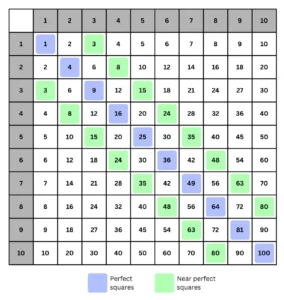
Classrooms are shifting away from rigid, procedural questioning toward open-ended, conceptual dialogue. Using frameworks like NWEA’s Formative Conversation Starters, teachers use a single math problem as a springboard to explore broader mathematical themes—such as the fundamental relationship between multiplication and division. Open prompts like "How does that work?", "Is that always true?", and "What do you notice or wonder?" encourage students to articulate their reasoning and critically evaluate the strategies of their peers.
2. Utilizing Rich, Inquiry-Based Problems
Moving beyond standard, predictable word problems, teachers are integrating resources like Dan Meyer’s Three-Act Tasks and Fermi problems (open-ended estimation challenges like "How much water does your household use in a week without looking at a bill?"). These multimedia-driven or real-world tasks require students to collaborate, determine what information they need, test assumptions, and iteratively adjust their problem-solving pathways.
3. Embracing Low-Floor, High-Ceiling Tasks
Pioneered by educators like Marian Small and supported by platforms like NRICH, low-floor, high-ceiling tasks are structured so that "everyone can get started and everyone can get stuck." By presenting open questions that accept multiple entry points and solution strategies—such as open number sentences involving fractions or decimals—teachers can naturally differentiate instruction. Every student can contribute, while advanced learners can be prompted to explore greater numbers, alternative representations, and deeper conceptual complexity.
The Role of Technology
As schools increasingly integrate digital tools, experts warn against falling into the trap of using online software as mere digital worksheets for fast finishers. Instead, technology should serve as a collaborative canvas where students can visually model, map, and share their mathematical thinking. When aligned with clear metacognitive goals, digital tools can reinforce the broader classroom objective: deep, conceptual understanding for every learner.
Conclusion
The evolution of math enrichment marks a turning point in how schools view student capability. By replacing exclusionary, fast-finisher paradigms with inclusive, deepening instructional practices, educators are dismantling long-standing equity gaps. Ultimately, providing math enrichment for all does not mean lowering standards; rather, it means opening the doors of deep mathematical thinking wide enough for every student to walk through.