Chemistry in the Kitchen: Unlocking the Secrets of Acids and Bases for Young Scientists
For many students, the mere mention of "chemistry" conjures images of complex, incomprehensible equations and sterile laboratory settings. However, the fundamental principles of chemistry—specifically the study of acids and bases—are not confined to advanced institutions. They are, in fact, the building blocks of our daily lives, occurring in our kitchens, our bodies, and the natural environment. Teaching children the principles of pH and chemical reactivity does not require expensive equipment; it requires curiosity and a few household staples.
By transforming the dining room table into a makeshift laboratory, educators and parents can dismantle the intimidation factor often associated with science. This guide explores the core tenets of acid-base chemistry, provides the foundational data necessary for instruction, and outlines five rigorous, hands-on experiments designed to foster scientific literacy.
Main Facts: The Chemistry of Everyday Life
At its most basic level, chemistry is the study of how matter interacts. When we categorize substances as "acids" or "bases," we are essentially describing their chemical personality.
What Are Acids?
Acids are substances characterized by a high concentration of hydrogen ions ($H^+$). In the culinary world, acids are synonymous with a sharp, tangy, or sour flavor profile. From the citric acid in lemons and oranges to the acetic acid found in white vinegar, these substances are ubiquitous. While some acids are essential for digestion—such as the hydrochloric acid in the human stomach—others, like concentrated battery acid, possess corrosive properties that can damage fabrics and skin.
What Are Bases?
Bases, often referred to as "alkaline" substances, are the chemical counterparts to acids. They are characterized by a high concentration of hydroxide ions ($OH^-$). Unlike the sharp, tangy taste of acids, bases often present a bitter flavor profile. When dissolved in water, bases typically exhibit a slippery or "soapy" texture. Common household bases include baking soda, soaps, detergents, and even chalk. While many are safe, others, such as concentrated ammonia, require careful handling due to their caustic nature and potential respiratory irritation.
Chronology: The Evolution of pH Theory
The scientific understanding of acidity and alkalinity has evolved significantly over the centuries. In the early days of chemistry, substances were identified primarily by taste and touch—a method that is highly discouraged in modern laboratory settings.
- 17th Century: Robert Boyle, the father of modern chemistry, was among the first to distinguish between acids and bases based on their characteristics. He noted that acids changed the color of vegetable dyes, such as litmus, to red, while bases turned them blue.
- 1884: Svante Arrhenius proposed the first sophisticated definition of acids and bases. He suggested that acids produce hydrogen ions in aqueous solutions, while bases produce hydroxide ions. This provided a mathematical framework for chemistry.
- 1909: Danish chemist Søren Sørensen introduced the "pH scale." The "p" stands for potenz (power) and the "H" stands for hydrogen. This scale, ranging from 0 to 14, allowed scientists to quantify exactly how acidic or basic a substance is.
- Modern Era: Today, the Brønsted-Lowry theory expands upon Arrhenius’ work, focusing on how these substances exchange protons, allowing for a more nuanced understanding of chemical reactions in both biological and industrial contexts.
Supporting Data: The pH Scale and Indicators
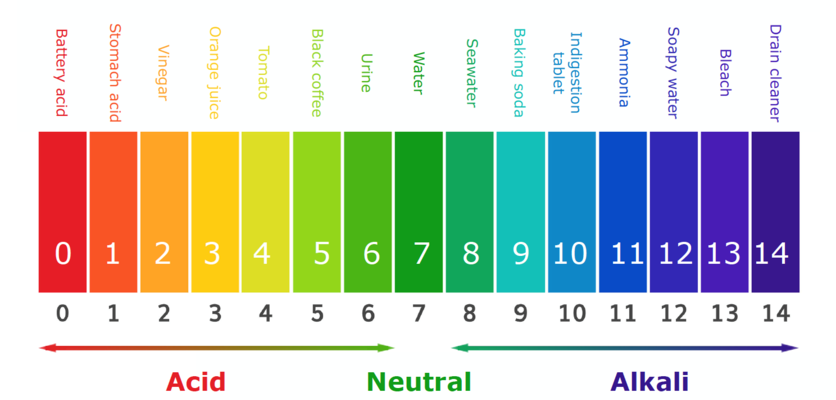
The pH scale is the definitive metric for measuring the acidity or alkalinity of a solution.
- 0–6.9: Acidic range. The lower the number, the stronger the acid. (Example: Stomach acid is roughly 1–2; black coffee is 5).
- 7.0: Neutral. This is the hallmark of pure water.
- 7.1–14: Basic (alkaline) range. The higher the number, the stronger the base. (Example: Baking soda is 9; bleach is 12–13).
To measure where a substance falls on this scale, scientists use indicator solutions. These are substances that change color in response to changes in hydrogen ion concentration. While professional laboratories use electronic pH meters, natural indicators—such as red cabbage extract—provide a stunning, visual demonstration of the invisible world of ions.
Official Perspectives: The Value of Inquiry-Based Learning
Educational experts and STEM (Science, Technology, Engineering, and Mathematics) advocates emphasize that early exposure to chemical concepts is critical for long-term academic success. By utilizing the scientific method—observation, hypothesis, experimentation, and conclusion—children learn to process information systematically.
"When a child realizes that the ‘fizz’ in their sherbet or the ‘cleaning’ of a penny is actually a chemical reaction, the barrier between ‘school science’ and ‘real life’ dissolves," says a representative from the STEM Education Initiative. "These hands-on activities are not just fun; they build the foundational logic required for advanced science and engineering."
Five Hands-On Projects for the Home Lab
To reinforce the theory, students should engage in active experimentation. Below are five proven projects that illustrate the dynamics of acids and bases.
1. The Red Cabbage Indicator
This project demonstrates how natural pigments act as pH sensors.
- Procedure: Simmer chopped red cabbage in water until the liquid turns a deep purple. Strain the liquid and let it cool. Soak index cards in the juice and allow them to dry.
- The Experiment: Once dry, cut the paper into strips. Dip these into various household liquids. The paper will turn red/pink in acidic solutions and blue/green in basic solutions. This provides a visual map of the chemical properties of common items.
2. The Edible Chemical Reaction (Sherbet)
Chemistry can be tasted safely when the correct ingredients are chosen.
- Procedure: Combine citric acid (or lemon juice powder), baking soda, and powdered sugar.
- The Reaction: When these ingredients combine with the moisture in your mouth, an acid-base reaction occurs, releasing carbon dioxide gas. This creates the signature "fizzing" sensation, providing a sensory lesson on how chemicals react when they meet.
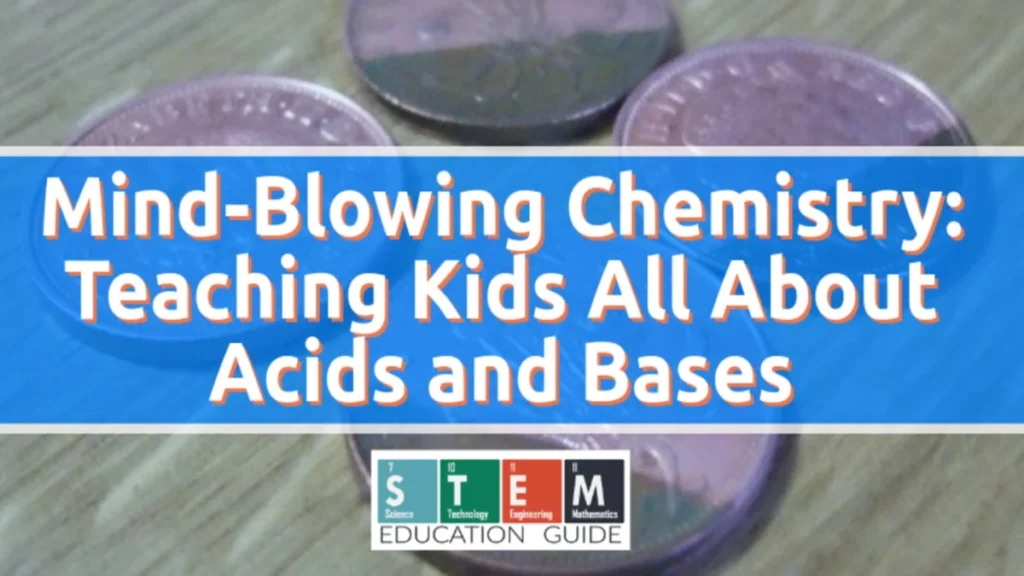
3. The Tarnished Penny Challenge
This experiment showcases how acids interact with metal oxides.
- Procedure: Prepare glasses filled with different solutions (vinegar, lemon juice, soap, water). Place a tarnished penny in each.
- The Analysis: Acids like vinegar will strip the copper oxide (tarnish) from the coin, revealing a bright surface. This demonstrates how acids can be used for cleaning and metal treatment.
4. The "Rubber" Egg Experiment
This project illustrates the power of acid on calcium carbonate.
- Procedure: Place a raw egg in a glass of white vinegar for 24 hours.
- The Result: The acetic acid in the vinegar slowly dissolves the calcium carbonate shell. After 24 hours, the shell is gone, leaving the egg encased in its thin, flexible membrane. Safety Note: The egg is raw and fragile; handle with care and avoid consumption.
5. Neutralization: The Grand Finale
This experiment demonstrates the "balancing act" of chemistry.
- Procedure: Take a glass of vinegar (acid) and slowly add baking soda (base).
- The Observation: The vigorous bubbling is the release of carbon dioxide as the substances move toward a neutral pH. By testing the resulting solution with your red cabbage paper, you can track the shift as the mixture becomes less acidic and approaches neutrality.
Implications for Future Learning
Integrating these experiments into a child’s education does more than teach them about pH; it teaches them to observe the world with a critical, analytical eye. When students understand that the items in their kitchen cabinets are subject to the same physical laws as those in a professional lab, they become more confident in their ability to understand complex systems.
As we continue to navigate a world increasingly driven by scientific advancement, fostering this early, enthusiastic connection to chemistry is an essential step in preparing the next generation of thinkers, innovators, and problem-solvers. By keeping the experiments safe, the data clear, and the curiosity alive, parents and teachers can ensure that science is never seen as a "groan-worthy" subject, but rather as an exciting adventure in discovery.