
Illuminating the Universe: The Science, History, and Future of Light
Light is the fundamental medium through which we perceive reality. It is a silent traveler that bridges the gap between the furthest reaches of the cosmos and the pupils of our eyes. More than just a tool for vision, light is a complex, high-speed form of energy that defines the physical laws of our universe. From the bioluminescent glow of a deep-sea creature to the high-speed fiber optic cables fueling the global internet, light is the cornerstone of modern existence.
Main Facts: The Physics of Photons
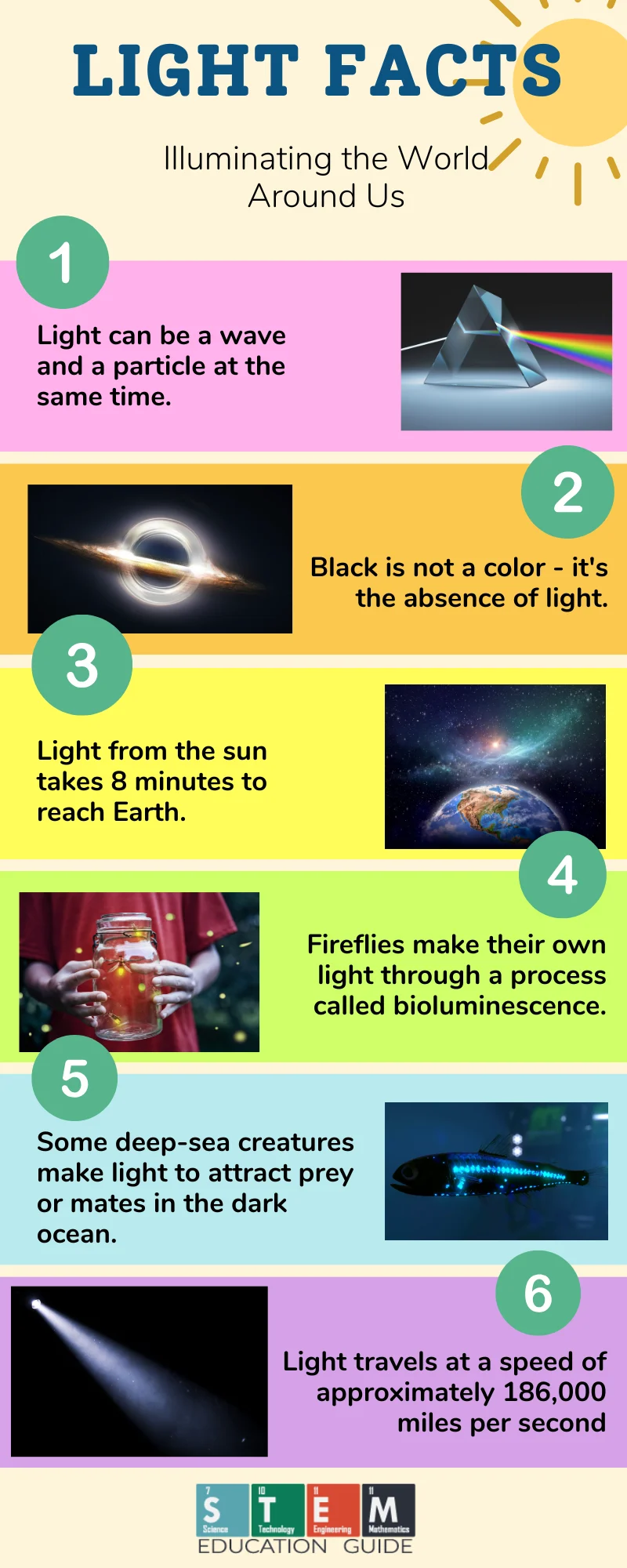
At its core, light is a form of electromagnetic radiation. Unlike sound, which requires a medium like air or water to travel, light possesses the unique ability to propagate through the vacuum of space. It exists in a dual nature, acting simultaneously as a stream of particles—known as photons—and as a series of oscillating waves.
The speed of light is perhaps the most famous constant in physics, measured at approximately 186,000 miles per second (299,792 kilometers per second). This staggering velocity allows sunlight to traverse the 93-million-mile void between the Sun and Earth in just over eight minutes.
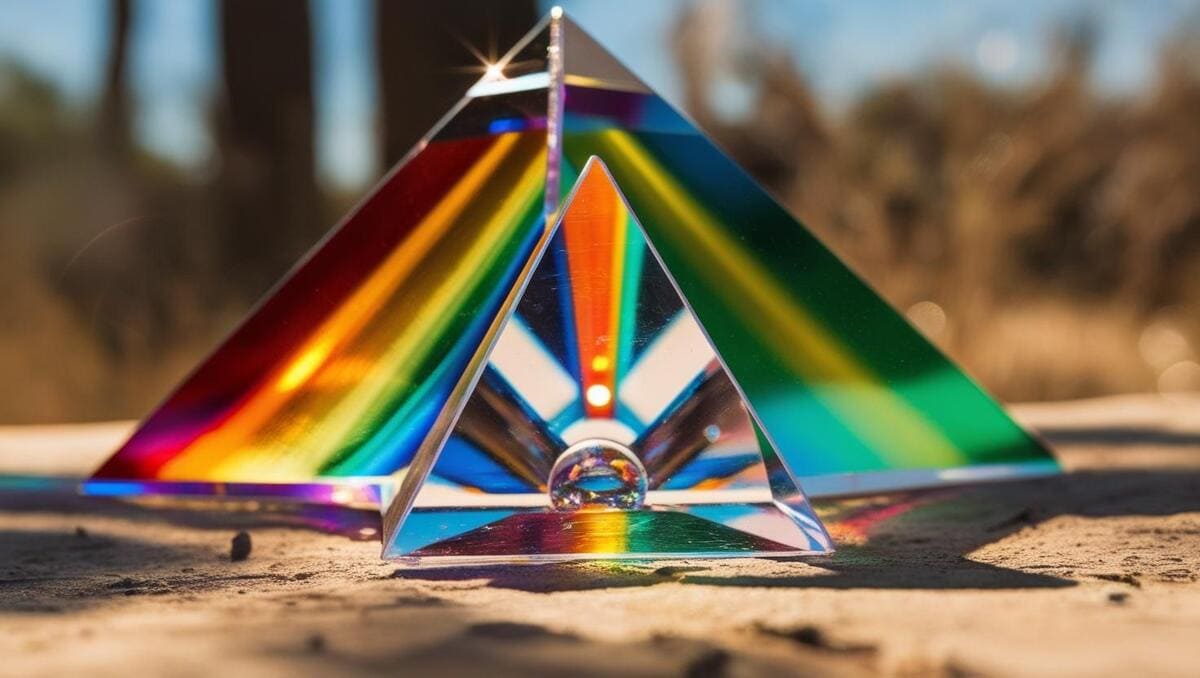
Visible light represents only a minuscule sliver of the broader electromagnetic spectrum. To the human eye, this spectrum appears as the rainbow, ranging from violet (the shortest wavelength) to red (the longest). Beyond our vision lie the energetic realms of ultraviolet, X-rays, and gamma rays, as well as the lower-energy infrared and radio waves. Every object we see is essentially reflecting a specific combination of these wavelengths, which our eyes and brain interpret as color.
Chronology: A History of Understanding Light
The human journey to understand light spans millennia, shifting from philosophical conjecture to rigorous scientific mastery.
- Ancient Philosophies: Early Greek thinkers, such as Euclid and Ptolemy, theorized that vision was caused by rays emitting from the eyes. It was the Islamic scholar Ibn al-Haytham (Alhazen) in the 11th century who revolutionized the field by proving that light actually enters the eye, reflecting off objects.
- The 17th Century Revolution: Isaac Newton conducted his seminal experiments with prisms, demonstrating that white light is actually a composite of all colors. Simultaneously, Christiaan Huygens proposed the "wave theory" of light, initiating a debate that would last for centuries.
- The 19th Century Synthesis: James Clerk Maxwell provided the mathematical foundation for light, proving that it is an electromagnetic wave. This bridged the gap between electricity, magnetism, and optics.
- The Quantum Leap: In the early 20th century, Albert Einstein and Max Planck introduced the concept of the photon, reconciling the particle-wave duality. This discovery birthed quantum mechanics and led directly to the development of modern technologies like lasers and semiconductors.
Supporting Data: The Spectrum and Optics
To understand how light behaves, scientists rely on the principles of optics—the study of reflection, refraction, and diffraction. When light encounters different materials, its speed and path change.
The Visible Spectrum
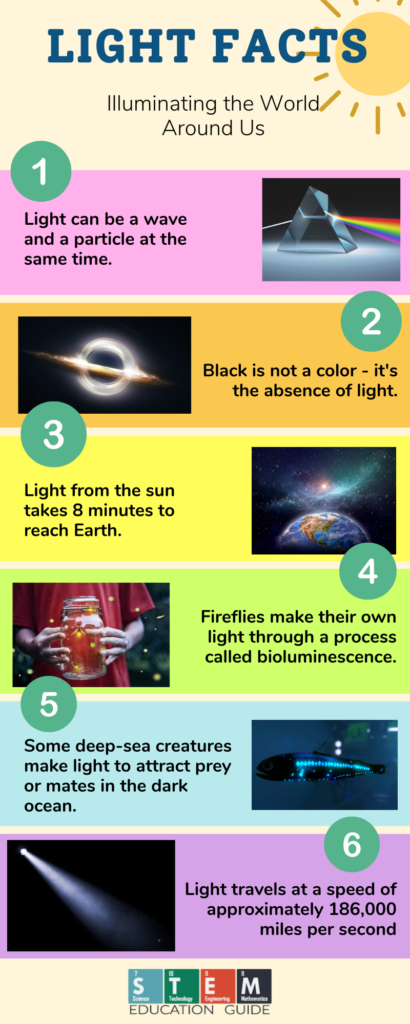
| Color | Wavelength Range (nm) | Natural Occurrence |
|---|---|---|
| Red | 620–750 | Sunsets |
| Orange | 590–620 | Autumn leaves |
| Yellow | 570–590 | Sunflowers |
| Green | 495–570 | Chlorophyll in grass |
| Blue | 450–495 | Atmospheric scattering |
| Violet | 380–450 | Lavender blooms |
Mechanisms of Interaction
When light hits an object, three primary behaviors occur:
- Reflection: Light bounces off a surface. Smooth, shiny surfaces like mirrors create clear reflections, while rougher surfaces scatter light.
- Refraction: Light bends as it passes from one medium to another (e.g., from air into water). This is why a straw appears bent in a glass of water.
- Absorption: Materials "soak up" specific wavelengths of light. A red apple appears red because it absorbs all other colors of the spectrum and reflects only red wavelengths back to our eyes.
Official Scientific Perspectives
The scientific community views light not merely as an illumination source but as a primary data carrier. According to NASA and other leading research institutions, light serves as the "fingerprint" of the universe. Through spectroscopy—the study of light emitted or absorbed by matter—astronomers can determine the chemical composition of stars trillions of miles away without ever visiting them.
Furthermore, biologists have identified bioluminescence as a critical evolutionary adaptation. Whether it is the firefly’s mating signal or the deep-sea anglerfish’s lure, nature has harnessed chemical energy to generate light. This process, which occurs without significant heat, serves as a model for engineers striving to create more efficient artificial lighting.

Implications: The Future of Light Technology
The implications of our mastery over light are profound. We are currently in the midst of a "photonic revolution" that promises to reshape technology as significantly as the electrical revolution did in the 20th century.
Telecommunications and Fiber Optics
The modern internet relies on the speed of light. Fiber optic cables transmit data as pulses of light through thin glass strands, allowing for near-instantaneous communication across continents. Research is now shifting toward "all-optical computing," where light replaces electricity within computer processors, potentially increasing speeds by several orders of magnitude.
Medical and Scientific Breakthroughs
Optics continue to push the boundaries of medicine. Advanced microscopy allows scientists to observe live cells at the molecular level, while laser surgery has become a standard, precise tool for correcting vision and removing tissue with minimal damage.

The "Invisibility" Frontier
One of the most ambitious areas of research involves metamaterials—synthetic structures designed to bend light around an object. While true "invisibility cloaks" remain in the realm of experimental physics, the ability to manipulate light at the nanoscale is paving the way for revolutionary advancements in stealth technology and ultra-high-resolution imaging.
Sustainable Lighting
The transition from incandescent bulbs to LEDs (Light Emitting Diodes) represents a major shift in global energy consumption. LEDs operate by moving electrons through a semiconductor, a process far more efficient than heating a filament. As we continue to develop quantum dots—tiny particles that can be tuned to emit specific, pure colors—we are moving toward screens and lighting systems that are more vibrant and energy-efficient than anything previously imagined.
Conclusion: A Never-Ending Discovery
From the ancient wonder of a rainbow to the cutting-edge development of quantum computing, light remains our most vital scientific frontier. It is both the object of our study and the tool by which we conduct it. As we continue to unravel the mysteries of photons, waves, and the vast electromagnetic spectrum, one thing remains certain: we have only just begun to see the light.

Whether it is through a simple prism experiment in a classroom or the complex observations of a deep-space telescope, light connects us to the cosmos, to our environment, and to the very mechanics of existence. Understanding light is not just a scientific pursuit; it is a way of seeing the world in a new, clearer, and more brilliant perspective.