The Chemistry of Everyday Life: Transforming Science Education Through Hands-On Inquiry
Teaching children about chemistry often suffers from a reputation for being overly abstract or intimidating. However, the study of acids and bases provides a unique gateway into the scientific method, as these substances are not confined to high-security laboratories but are present in every kitchen, bathroom, and garden. By demystifying the pH scale and the reactive nature of these compounds, educators and parents can turn mundane household chores into rigorous scientific explorations.
The Fundamentals: What Are Acids and Bases?
At its core, the study of acids and bases is the study of ions—charged particles that dictate the behavior of substances. While the terminology can sound daunting, the reality is tactile and experiential.
An acid is a substance that, when dissolved in water, increases the concentration of hydrogen ions ($H^+$). These substances are characterized by their sharp, tangy, or sour taste. Familiar examples include the citric acid found in lemons, the acetic acid in vinegar, and the malic acid in apples.
Conversely, bases—often referred to as alkaline substances—increase the concentration of hydroxide ions ($OH^-$) in water. Bases possess distinct physical properties, often feeling slippery or soapy to the touch. They typically have a bitter flavor and are foundational in products like baking soda, antacids, and various cleaning agents.
While these terms are common, they carry a spectrum of safety considerations. Highly acidic substances, such as concentrated battery acid, can be corrosive to organic materials, while strong bases, like industrial ammonia, require careful handling to avoid respiratory irritation. Understanding the balance between these two categories is not merely an academic exercise; it is a fundamental skill for understanding chemical safety and reactivity in the home.
Measuring Acidity: The Science of the pH Scale
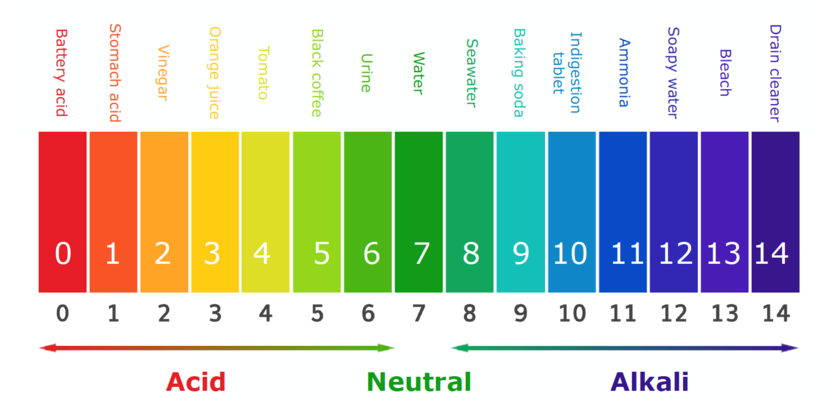
To quantify the strength of an acid or base, scientists utilize the pH scale—a logarithmic measurement ranging from 0 to 14.
- Acids (0–6.9): Substances with a pH lower than 7. The lower the number, the more acidic the solution.
- Neutral (7): Pure water is the benchmark for neutrality.
- Bases (7.1–14): Substances with a pH higher than 7. The higher the number, the more basic (alkaline) the solution.
Measuring these values in a classroom or home setting requires the use of "indicators." These are chemical compounds that change color in response to changes in hydrogen ion concentration. While professional laboratories use electronic pH probes, the historical and pedagogical standard remains the use of litmus paper or organic indicators like anthocyanin, found in red cabbage. These indicators provide a visual representation of invisible chemical processes, allowing students to observe the "shifting" of pH levels in real-time.
Chronology of Inquiry: From Observation to Experimentation
The history of scientific education suggests that the most effective learning occurs through a structured cycle of observation, hypothesis, experimentation, and analysis. This chronological approach to STEM learning ensures that children move beyond "magic tricks" and into the realm of evidence-based discovery.
- Preparation (The Observation Phase): Before testing, students must identify household substances and hypothesize their nature. Are they sour (acidic) or slippery/bitter (basic)?
- Experimentation (The Testing Phase): Utilizing indicator solutions to verify these guesses.
- Synthesis (The Analysis Phase): Documenting how mixing acids and bases results in a move toward a neutral pH.
Six Fun Projects to Enhance Scientific Literacy
To facilitate this learning, we have curated six hands-on projects that bridge the gap between theoretical chemistry and observable results.
1. The Red Cabbage Indicator
Red cabbage contains a pigment called flavin (an anthocyanin). This pigment is a natural pH indicator. By boiling the cabbage in water, students create a purple solution. When this solution is added to an acid, it turns pink or red; when added to a base, it turns blue, green, or even yellow. This experiment is an excellent introduction to colorimetry and data logging.
2. Edible Chemical Reactions
Chemistry can be delicious. By creating "fizzy sherbet"—a mixture of citric acid and baking soda (sodium bicarbonate)—students can experience an endothermic acid-base reaction. The sensation on the tongue is the result of the release of carbon dioxide gas as the acid and base neutralize one another.
3. The Penny Polishing Experiment
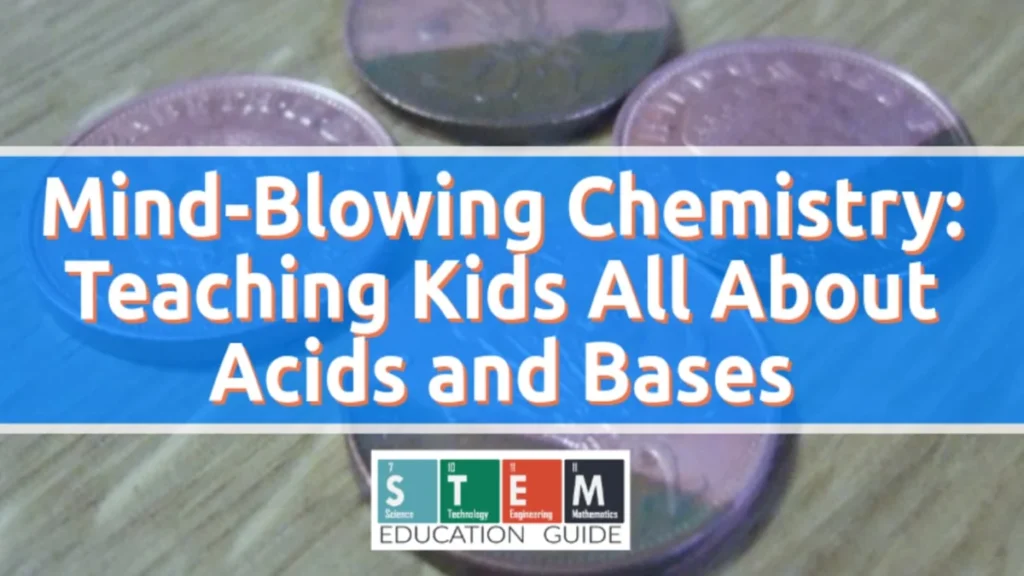
Metals like copper react differently to acidic environments. By placing oxidized (dull/tarnished) pennies into various solutions—ranging from vinegar (acidic) to soap (basic)—students can observe which substances effectively dissolve the copper oxide layer. This provides a practical lesson in chemical cleaning and the reactivity of metals.
4. The Rubber Egg Experiment
This is a long-form experiment requiring patience. By submerging a raw egg in white vinegar for 24 to 48 hours, the acetic acid in the vinegar reacts with the calcium carbonate in the eggshell. The shell dissolves, leaving behind the semi-permeable membrane. The result is a "bouncing" egg, which demonstrates the structural breakdown of minerals by acids.
5. Neutralization: The Baking Soda and Vinegar Volcano
When an acid (vinegar) meets a base (baking soda), they react to produce carbon dioxide gas, water, and a salt. This is a classic neutralization reaction. By using a pH indicator alongside this reaction, students can visualize the transition of the solution from acidic to neutral as the two components reach a balanced state.
6. The "Mystery Liquid" Challenge
Once students have mastered the basics, provide them with a set of unmarked liquids—lemon juice, dish soap, milk, and baking soda water. Challenge them to classify each substance based on their previous experiments. This reinforces critical thinking and deductive reasoning.
Supporting Data: The Impact of STEM Education
Empirical data suggests that students who engage in hands-on science experiments are 40% more likely to retain complex scientific concepts compared to those who only consume text-based materials. The use of the scientific method—as outlined in our free scientific method worksheet—allows students to organize their observations, compare their findings with their initial hypotheses, and draw conclusions based on evidence rather than assumption.
Official Perspectives and Educational Implications
Leading educators and STEM advocates emphasize that the goal of early science education is not to produce professional chemists, but to cultivate "scientific habits of mind." According to the National Science Teaching Association (NSTA), inquiry-based learning—where students drive the experimentation—is essential for developing long-term interest in STEM careers.
The implications for the classroom are significant. By integrating chemistry into the daily lives of students, we remove the "fear factor" associated with the subject. Furthermore, the focus on acids and bases provides an essential introduction to environmental science (e.g., understanding ocean acidification or acid rain), which are critical topics in modern global discourse.
Conclusion
The study of acids and bases is a fundamental pillar of chemical literacy. By leveraging the natural curiosity of children and the ubiquity of household substances, we can transform a standard lesson into an engaging narrative of discovery. Whether it is turning a penny bright with vinegar or watching a cabbage indicator change colors, these experiments provide the "Aha!" moments that define a lifelong passion for science.
As you embark on these experiments, remember that safety is paramount. Always ensure that children are supervised when handling cleaning agents or strong kitchen acids. With the right tools—such as our 25 STEM Activities eBook—the path to scientific mastery becomes not just a requirement, but a source of genuine excitement and intellectual growth.
What were your findings? We encourage all young scientists to document their results and share their observations in the comments below. Science is a collaborative process, and your data contributes to the collective understanding of these fascinating chemical phenomena.