
The New Fiscal Reality: How School Districts Are Navigating the Crisis of Sustainability

In the modern educational landscape, fiscal instability has transitioned from a periodic inconvenience to a permanent feature of district management. As pandemic-era federal relief funds dissipate and enrollment trends fluctuate, school districts across the United States are facing an unprecedented "new normal." A comprehensive new report, synthesizing research from 14 diverse school districts and charter networks, reveals that the path to financial sustainability requires more than just rigorous accounting—it demands a sophisticated, integrated political strategy.
The report, developed in collaboration with experts from Afton Partners, Education Resource Strategies, and New Solutions K12, argues that leadership must fundamentally shift how they approach budget management. By analyzing real-world outcomes in districts ranging from rural Louisiana to suburban Massachusetts, the researchers provide a blueprint for balancing the books without compromising the core student learning experience.
The Core Challenge: Financial Strategy as Political Strategy
The central finding of the research is perhaps the most difficult for administrators to accept: financial decisions cannot be decoupled from political ones. Historically, district leaders have often treated budget cuts as a technical, mathematical exercise, leaving the political "messaging" until after the decisions have been finalized.
The report contends this is a critical error. The most successful district leaders—those who managed to implement painful austerity measures while maintaining community trust—integrated their political and financial strategies from the very beginning. They did not view public pushback as a problem to be managed; they treated community engagement as an essential component of the fiscal process itself. In this new era, financial sustainability is an ongoing, daily operational responsibility, not a reactive crisis management task.
Chronology of the Crisis: From Pandemic Surplus to Structural Deficits
To understand the current climate, one must look at the timeline of the last five years in American public education:
- The Windfall (2020–2022): Following the onset of the COVID-19 pandemic, schools received an unprecedented infusion of federal cash via the Elementary and Secondary School Emergency Relief (ESSER) funds. This created a temporary sense of abundance, allowing districts to launch new programs, hire additional staff, and address immediate health and safety needs.
- The "Fiscal Cliff" Warning (2023): As the deadline for spending ESSER funds approached, analysts began warning of a "fiscal cliff." Districts that had used one-time federal dollars to fund recurring expenses—such as permanent salary increases or new permanent positions—began to realize their structural budgets were unsustainable.
- The Realignment Phase (2024–Present): Currently, districts are in a period of painful recalibration. This phase is characterized by school consolidations, the sunsetting of specialized programs, and, in many cases, significant staff reductions. The report highlights that this phase is not a temporary dip, but a long-term adjustment to declining birth rates, lower enrollment, and the expiration of emergency funding.
Case Studies: Real-World Lessons in Resilience
The research underscores the necessity of tailored solutions. While no two districts face the exact same variables, the strategies employed by four key entities—Rapides Parish, Acton-Boxborough, Lubbock ISD, and Uplift Education—provide a masterclass in varied approaches to fiscal pressure.
Acton-Boxborough Regional School District (Acton, MA)
In this affluent community, skepticism regarding budget deficits was high. Residents struggled to believe that a wealthy district could actually be facing a "crisis." Leadership responded with radical transparency. By establishing a public planning committee and tasking residents with the responsibility of balancing the budget, the district created a shared understanding of the trade-offs involved. This participatory process turned abstract budget concerns into concrete community decisions, ultimately securing support for necessary staff reductions and a school closure.
Lubbock Independent School District (Lubbock, TX)
Facing declining enrollment and shifting state accountability metrics, Lubbock ISD took a data-driven approach to program sustainability. Rather than making across-the-board cuts, the district conducted a rigorous Return-on-Investment (ROI) analysis of its Career and Technical Education (CTE) pathways. By aligning their offerings with current regional labor-market data, they were able to optimize their budget, sunsetting outdated programs and doubling down on those with clear outcomes for student career readiness.
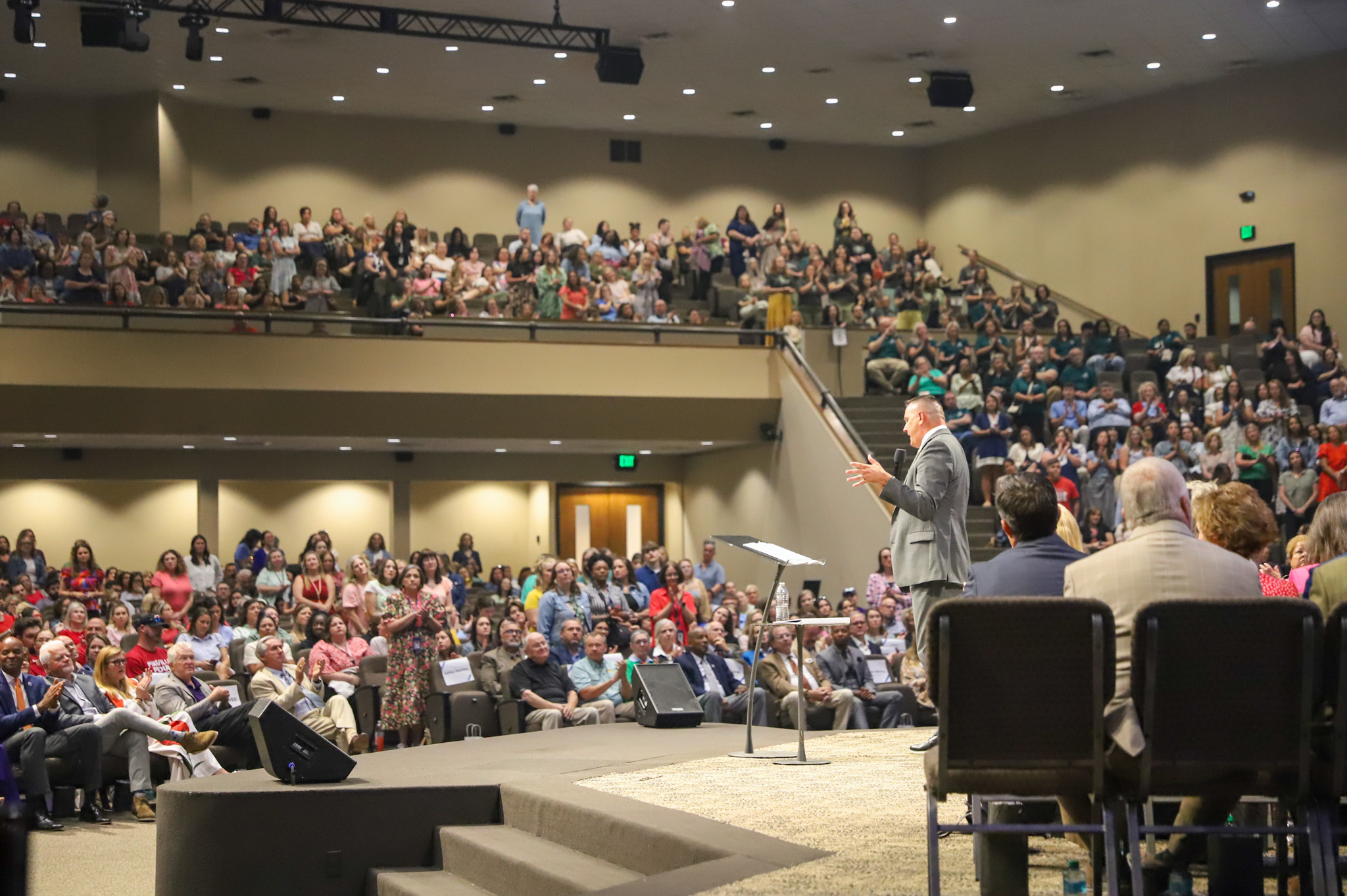
Rapides Parish Public Schools (Alexandria, LA)
The history of school consolidation in Rapides Parish serves as a cautionary tale of the importance of community trust. An initial attempt at consolidation failed due to poor communication and lack of stakeholder buy-in. When the district revisited the plan, they prioritized engagement "early and often." By treating the community as a partner in the process rather than a target for policy, they successfully implemented a consolidation plan that yielded both immediate financial relief and improved academic outcomes within a single school year.
Uplift Education (Dallas-Fort Worth, TX)
The charter sector is not immune to these pressures. Uplift Education faced a persistent $30 million structural shortfall despite having balanced budgets on paper. The organization’s experience highlights the limitations of purely operational fixes. While large-scale staffing changes, aggressive philanthropic fundraising, and the implementation of a performance-pay model provided temporary relief, the underlying structural gap remained. The case demonstrates that for some organizations, the challenge is not just "cutting," but re-evaluating the entire business model.
Supporting Data: The Anatomy of Fiscal Pressure
The research suggests that the "new normal" of fiscal instability is driven by three primary variables:
- Demographic Shifts: Across the country, birth rates have slowed, leading to smaller cohorts of K-12 students. For districts funded on a per-pupil basis, this creates a compounding revenue decline that outpaces the ability to shrink fixed costs (like building maintenance and administration).
- Inflationary Pressure: Schools, like any other entity, are feeling the impact of rising costs for utilities, transportation, and specialized services. When funding remains flat while the cost of delivering education rises, the "purchasing power" of a school district budget is effectively cut.
- Competing Mandates: As societal expectations for schools grow—including increased focus on mental health, security, and specialized technology—districts are asked to do more with less. The report notes that the districts that survive this pressure are those that make explicit, difficult decisions about what they will stop doing.
Official Responses and Strategic Implications
For school superintendents and board members, the implications of this report are clear: the era of "business as usual" is over.
Superintendents are increasingly finding themselves in a "gut-check" moment. The role has evolved from that of an academic leader to a chief executive of a complex, often highly polarized, public enterprise. The report’s contributors—including experts like Paul Hill and Bree Dusseault—have long argued that the job of a modern district leader is, in many ways, "impossible" because it requires reconciling the interests of teachers, unions, parents, state legislatures, and taxpayers.
The report concludes with a mandate for future policy:
- Integrate Operations and Politics: Finance officers must be in the room when political strategy is discussed, and communications teams must be in the room when budget scenarios are drafted.
- Prioritize Transparency: The Acton-Boxborough model suggests that the public is more capable of handling hard truths than leaders often give them credit for, provided they are given access to the same data as the administration.
- Focus on Sustainability, Not Just Solvency: It is not enough to survive this year’s budget cycle. Leaders must focus on building systems that can withstand future economic volatility without requiring constant "emergency" interventions.
Conclusion
The fiscal crises facing America’s schools are no longer isolated incidents—they are systemic. However, as the case studies demonstrate, they are not insurmountable. By moving away from reactive, closed-door budgeting and toward a model of transparent, data-informed, and politically engaged leadership, districts can navigate the current turbulence.
The challenge for the next generation of school leaders is not merely to balance the books, but to reshape the institution of public education to be as resilient as the students it serves. The lessons from Rapides Parish, Lubbock, and others serve as a beacon: when the community is brought into the fold, and when financial strategy is rooted in both hard data and hard political realities, public schools can continue to deliver high-quality learning, even in the most difficult of economic times.