
The Silent Partner of Literacy: Educators Advocate for a Brain-Based Revolution in Writing Instruction

By [Your Name/Journalist Name]
While the "Science of Reading" has dominated educational headlines and legislative agendas across the United States for the past several years, a critical component of literacy has remained largely in the shadows: writing. Despite the deep, neurological intertwining of reading and writing, the national discourse has focused almost exclusively on phonics, fluency, and comprehension. This month, literacy experts Melanie Meehan and Maggie Roberts are challenging this imbalance with a new framework designed to bring writing instruction into the modern, brain-based era.

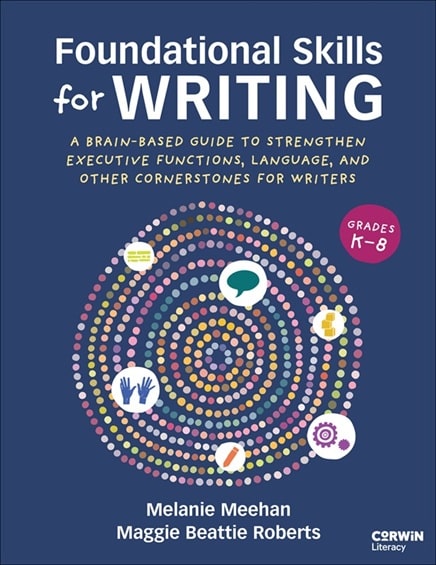
Through their newly released book, Foundational Skills for Writing: A Brain-Based Guide to Strengthen Executive Functions, Language, and Other Cornerstones for Writers, Meehan and Roberts argue that writing is not merely a byproduct of reading, but a sophisticated cognitive feat that requires its own targeted, foundational instruction. By breaking down the act of writing into its neurological components—transcription, oral language, and executive functioning—the authors provide a roadmap for educators to support students who often find themselves paralyzed by the "blank page."
Main Facts: The Cognitive Architecture of Writing
The central premise of Meehan and Roberts’ work is that writing is a high-load cognitive task. When a student sits down to write, their brain must simultaneously manage physical motor skills, linguistic rules, and high-level organizational strategies. If the foundational "transcription skills"—such as handwriting, keyboarding, and spelling—are not automatized, they consume the cognitive energy needed for the "real work" of composition.
The authors categorize the essential pillars of writing into three distinct domains:
- Transcription Skills: The mechanical ability to get words onto a page, encompassing small motor development and orthographic mapping (spelling).
- Oral Language: The precursor to written expression, involving the ability to construct sentences mentally and understand the relationship between spoken and written syntax.
- Executive Functioning: The "air traffic control" of the brain, which includes working memory (holding an idea while writing it), cognitive flexibility (the ability to revise or pivot), and inhibitory control (staying focused on the task).
To address these needs without overwhelming already packed school schedules, Meehan and Roberts have introduced "Minute Moves"—short, high-impact activities designed to be integrated into transitions, warm-ups, or brief moments of the school day.
Chronology: From the Reading Wars to the Writing Gap
The emergence of this brain-based writing framework follows a decade of intense debate over literacy instruction.
- 2018–2021: The "Science of Reading" movement gains massive traction, led by advocates and journalists like Emily Hanford. Dozens of states pass legislation mandating phonics-based instruction. However, these mandates focus primarily on the decoding side of literacy.
- 2022–2023: Educators begin to report a "writing gap." While students show improvement in reading isolated words, their ability to produce cohesive, grammatically complex written work remains stagnant. Literacy consultants Melanie Meehan and Maggie Roberts begin synthesizing research on executive function to address why students are struggling to bridge the gap between reading a word and writing a paragraph.
- Early 2024: Meehan and Roberts publish their findings, emphasizing that writing must be taught with the same granular, evidence-based rigor as reading. They argue that the "writing process" (planning, drafting, revising) cannot happen if the "foundational skills" are weak.
- Present Day: The "Minute Moves" strategy is being adopted by districts looking to integrate writing into the "Science of Reading" framework without adding hours to the instructional block.
Supporting Data: The Eight "Minute Moves" for Cognitive Growth
The core of the Meehan-Roberts approach lies in eight specific strategies that target different areas of the brain. These activities are designed to build neurological pathways through repetition and play.

Strengthening the Spelling Neural Network
The authors emphasize that spelling is not about memorization, but about understanding the logic of language.
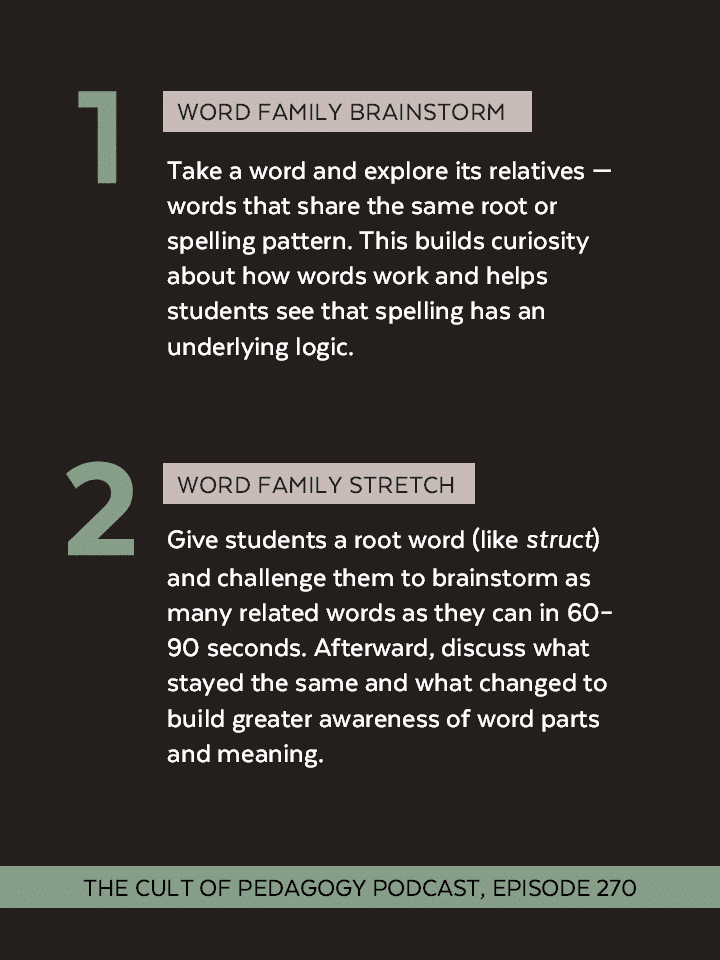
- Word Family Brainstorm: Based on the research of Rebecca Treiman, this move encourages students to find etymological "relatives." For example, connecting the silent ‘w’ in two to twin and twenty helps students map the concept of "twoness" to the spelling.
- Word Family Stretch: This involves timed brainstorming around a root word (e.g., struct for build). The goal is to help students internalize how word parts carry meaning across academic vocabulary.
- Prefix Swap: By swapping prefixes on a base word (e.g., form becoming reform, transform, inform), students, particularly multilingual learners, begin to see the modular nature of the English language.
Developing Syntactic Complexity
Writing requires an internalized sense of how sentences are built, which often begins with oral play.
- Sentence Scramble: Using physical cards to manipulate words helps students see the "bones" of a sentence. This tactile approach reveals which words must stay together and how punctuation dictates flow.
- Sentence Expander: Starting with a "kernel" (e.g., The cat purrs), students add detail by answering who, what, where, and why. Meehan suggests using the terms "doer" and "doing" to make the abstract concepts of subject and predicate more accessible.
- Sentence Combining: This strategy is cited as a high-impact way to help students move away from "choppy" writing. By merging two simple sentences into one complex one, students practice precision and sophistication.
Training Executive Function
Perhaps the most innovative aspect of the book is its focus on "Cognitive Flexibility."

- What’s Another Way?: Students are challenged to rewrite a single sentence in multiple ways—changing the starting clause or substituting nouns for pronouns. This trains the brain to see writing as a series of choices rather than a rigid formula.
- New Angle: This zooms out to the narrative level, asking students to retell a scene from a different character’s perspective. This requires holding multiple viewpoints in the mind—a peak executive function task.
Official Responses: Perspectives from the Field
Melanie Meehan, who recently opened an in-person writing center to support struggling students, notes that the emotional toll of writing is often overlooked. "When you start naming [these skills] as cognitive flexibility for kids, that’s exciting to them," Meehan said in a recent interview. "There’s something genuinely empowering about being told you’re practicing a sophisticated cognitive skill—especially for students who have struggled to see themselves as capable writers."
Maggie Roberts, a veteran literacy consultant, highlights the efficiency of the "Minute Moves" model. "Writing instruction is almost never mentioned [in literacy debates], even though reading and writing are so deeply intertwined," Roberts observed. She argues that by making these skills "automatic" through short bursts of practice, teachers can free up students’ "brain space" for the creative and critical thinking that writing requires.
The educational community has responded with cautious optimism. While some administrators worry about "initiative fatigue," the brevity of the "Minute Moves" has made them an attractive option for teachers who feel they have no time left in the day for a separate writing block.
Implications: Beyond the Classroom
The shift toward brain-based writing instruction has implications that extend far beyond test scores. Meehan and Roberts argue that teaching students to manipulate language and understand perspective is a foundational requirement for a healthy democracy.
"It’s not just about writing… it’s also about democracy and thinking about how other people think and what their perspectives are," Meehan noted. By practicing the "New Angle" strategy, students are essentially building the empathy and analytical skills required to navigate a complex, multi-vocal society.
Furthermore, for multilingual learners, the focus on morphology (roots and prefixes) provides a bridge between their native languages and English, turning their bilingualism into a tool for orthographic mastery rather than a barrier.
As the "Science of Reading" continues to evolve, it is becoming increasingly clear that the next frontier is the "Science of Writing." By focusing on the neurological underpinnings of how we get thoughts onto the page, Meehan and Roberts are providing a necessary correction to a literacy conversation that has been one-sided for too long. The goal is a future where every student has the foundational tools to ensure their voice is not just heard, but clearly and effectively written.