Cultivating Community: How One Honolulu Elementary School Transforms Promotion Ceremonies into Deep Cultural Celebrations
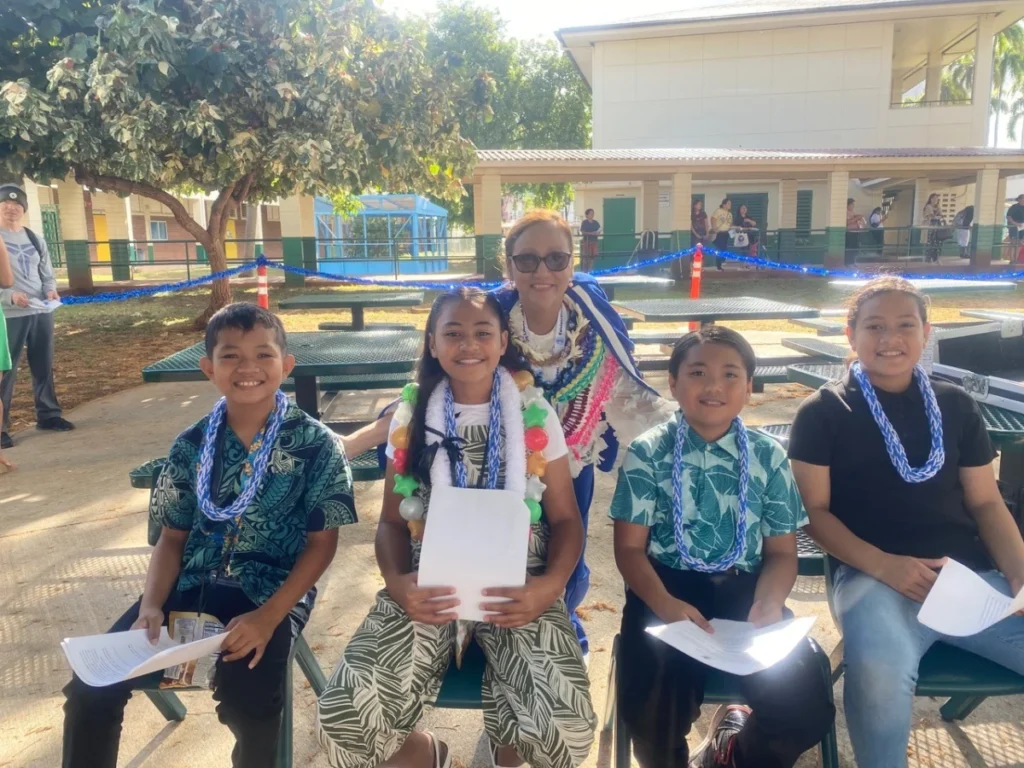
As the academic calendar winds down in regions spanning from the mainland to the islands, the final weeks of the school year bring a familiar flurry of activity. For schools operating on an August-to-June schedule, the 2025–26 academic year is rapidly drawing to a close. At Kaʻiulani Elementary School in the heart of Honolulu, HI, this milestone triggers months of careful preparation for a uniquely vibrant rite of passage: the fifth-grade promotion ceremony.
Far from a routine, cookie-cutter assembly, Kaʻiulani’s promotion ceremony is a deeply intentional celebration. It weaves together the rich historical fabric of the Hawaiian Kingdom, the storytelling art of hula, generational community ties, and local hospitality—complete with chocolate haupia pie and pupus (finger foods).
Led by Principal Bebi Davis, the school’s approach offers a masterclass in how educational leaders can infuse standard milestone events with profound meaning, cultural heritage, and genuine joy, proving that celebrating young children does not require sacrificing substance for the sake of efficiency.
Main Facts: The Heart of Kaʻiulani Elementary’s Promotion
The ethos of Kaʻiulani Elementary School is inextricably linked to its namesake. Established in 1899, the school shares its birth year with the death of Princess Kaʻiulani, a towering figure in Hawaiian history. The princess courageously served as an activist, diplomat, and defender of her people during the turbulent overthrow of the Hawaiian Kingdom in the late 1890s. Though her life was cut tragically short at the age of 23, her legacy of eloquence, grace, and fierce advocacy lives on within the walls and traditions of the institution bearing her name.
This deep historical reverence forms the bedrock of the school’s annual promotion ceremonies. Rather than herding students across a standard gymnasium stage under harsh fluorescent lights, Kaʻiulani embraces the island environment. The ceremony centers around a "hula mount"—an outdoor stage naturally canopied by the sprawling branches of banyan trees and swaying palms, which provide essential shade from the tropical sun.
Families arrive equipped with lawn chairs and umbrellas, transforming the school grounds into an intimate, communal gathering place. Local dignitaries, including state senators and representatives, frequently join the audience, underscoring the community-wide significance of the event.
The primary objective of the ceremony is twofold: to celebrate the academic transition of fifth graders moving on to middle school, and to ground that transition in a living, breathing connection to Hawaiian culture and ‘ohana (family).
Chronology: From March Planning to Lifelong Memories
Organizing an event that seamlessly blends tradition, logistics, and emotional resonance requires a disciplined timeline. At Kaʻiulani Elementary, the journey from concept to execution is a collaborative school-wide effort that unfolds over several months.
March: Planting the Seeds of Preparation
Planning officially kicks off in March—two full months before the final school bell rings. Because Kaʻiulani is a small school, the heavy lifting of event coordination cannot fall to a single individual. Instead, Principal Davis convenes her staff to divide and conquer the workload through a democratic, all-hands-on-deck approach:
- Who will spearhead family invitations and track RSVPs?
- Which teachers will guide the students in mastering their traditional songs (meles) and hula choreography?
- Who will coordinate food logistics, including the legendary Costco run for pupus and sheet cakes?
- Who will take charge of crafting handmade banners, securing balloons, and designing the aesthetic landscape?
April: Rehearsals and Community Outreach
As April progresses, classrooms buzz with anticipation. Fifth graders rehearse their storytelling through movement, while staff members initiate a special outreach campaign. For the past three consecutive years, the dedicated staff has tracked down former Kaʻiulani Elementary students who are now preparing to graduate from high school. These young adults are formally invited back to campus to participate in the school’s hallmark "Senior Walk."
May: Execution and Extended Celebration
By mid-to-late May, all logistical threads converge. The hula mount is dressed with flowers and homemade signs, the food is prepped, and the community gathers. The ceremony itself is a dynamic showcase of student performance, historical reflection, and generational connection.
Crucially, the timeline does not end when the final certificate is handed out. Davis notes that the physical conclusion of the ceremony is merely a transition into unstructured community time. Last year, families lingered on campus for roughly two hours after the official program ended—eating, taking photographs, and "talking story." This intentional space for lingering transforms a formal school obligation into a cherished, enduring memory for students, parents, and educators alike.
Supporting Data and Strategic Pillars
Principal Davis emphasizes that creating a deeply engaging promotion ceremony is entirely scalable, regardless of a school’s geographic location or budgetary constraints. Whether a campus is situated on a tropical island or an urban mainland block, the underlying strategies remain universally applicable. Davis outlines five foundational pillars that guide Kaʻiulani’s success:
1. Invite Past Graduates Back (The Senior Walk)
Bridging the gap between elementary and high school creates a powerful visual narrative of growth. When former students return wearing their caps and high school graduation gowns, they provide living proof of the educational journey ahead.
- The Interaction: Alumnus high-five the fifth graders as they step off the stage with their promotion certificates.
- The Impact: Younger students get to ask questions and hear stories, while alumni experience a poignant full-circle moment, often reconnecting with educators who shaped their early academic years a decade prior.
2. Food Makes Everyone Feel Welcome
Gathering around food is a universal human tradition that breaks down social barriers.
- The Logistics: Using designated school funds, the cafeteria manager executes a strategic "Costco run" to stock up on pupus—varied finger foods that invite teachers, parents, and students to let down their guard and mingle.
- The Scalability: Davis stresses that schools facing tighter financial restrictions need not mount an elaborate spread. Even a modest sheet cake serves as an unmistakable signal that an academic milestone is worthy of communal celebration.
3. Make It Beautiful
Environment directly influences emotional engagement. Transforming an ordinary space requires creativity rather than an exorbitant budget.
- The Execution: Guided by creative staff members—such as teacher Melissa Ching, who has served as the creative mastermind behind several campus design initiatives—the school converts standard spaces into warm, welcoming environments.
- The Takeaway: Investing time in floral arrangements, vibrant balloons, and thoughtful, handmade signs communicates to families that their children’s achievements are deeply valued.
4. Honor Tradition and Heritage
Culture provides an anchor that unifies diverse student bodies. At Kaʻiulani, every grade level contributes a performance, but the graduating fifth graders carry the primary cultural responsibility.
- The Performance: Students perform traditional meles (songs) and execute hula—an indigenous Hawaiian art form that functions as sophisticated storytelling through physical movement.
- The Connection: Weaving indigenous history and cultural practices into the fabric of the ceremony ensures that attendees do not feel like passive spectators, but active participants in a shared cultural heritage.
5. Plan Ahead and Share the Load
An event of high emotional and aesthetic caliber cannot be thrown together overnight.
- The Collaborative Spirit: Because small schools operate with limited personnel, collective participation is vital. Distributing responsibilities prevents administrative burnout and fosters a profound sense of shared institutional pride.
- The Return on Investment: While planning demands dozens of hours of coordination, the payoff—witnessing families deeply immersed in joy and connection—makes the effort unequivocally worthwhile.
Official Perspectives and Insights
Reflecting on the philosophy behind these celebrations, Principal Bebi Davis points out a common pitfall in modern school administration: the temptation to streamline events to the point of clinical efficiency, thereby stripping them of their soul.
"When you have so many young children, you may think you have to forego meaning just to keep things moving," Davis observes. "But I haven’t found that to be the case. Instead, we honor our heritage and our history with a celebration that makes everyone feel connected and engaged."
Davis’s leadership philosophy positions the elementary school not merely as a transitional checkpoint for state-mandated testing, but as a cultural hub where young people learn who they are, where they come from, and how they fit into a broader historical continuum. By deliberately invoking the memory of Princess Kaʻiulani—who used her voice during a time of immense political upheaval—the school instills in its youngest learners a sense of dignity, resilience, and civic responsibility.
Furthermore, educational researchers and administrators reading accounts of Kaʻiulani’s success—shared broadly through professional networks such as the National Association of Secondary School Principals (NASSP) and its School of Thought programming—are increasingly recognizing the value of localized, culturally responsive programming. As schools nationwide grapple with chronic absenteeism and post-pandemic disconnection among families, initiatives that prioritize authentic community building are shifting from "nice-to-have" extras to essential strategies for student retention and school climate improvement.
Implications for Schools Nationwide
The methodologies practiced at Kaʻiulani Elementary School carry profound implications for educational institutions across the United States. As school districts continually search for innovative ways to boost family engagement and honor student achievement, the Honolulu model provides a compelling blueprint:
- Combating Family Disconnection: Many families experience school events as transactional obligations. By incorporating shared meals, relaxed outdoor seating, and unstructured post-ceremony mingling (talking story), schools can transform mandatory attendance into anticipated community gatherings.
- Integrating Local History and Culture: Every region possesses a unique historical identity, indigenous roots, or immigrant heritage. By centering promotion ceremonies around local history—mirroring Kaʻiulani’s dedication to its namesake princess and traditional hula—schools can foster a powerful sense of place-based education.
- Longitudinal Community Building: The "Senior Walk" concept demonstrates that a school’s responsibility and community do not terminate on the final day of fifth or eighth grade. Cultivating an alumni pipeline reinforces institutional memory and provides younger students with tangible, relatable role models from their own neighborhoods.
- The Economics of Joy: Davis’s emphasis on scalable hospitality—from Costco pupus to a simple sheet cake—proves that emotional resonance is driven by intentionality and warmth rather than expensive budgets.
As the 2025–26 academic year draws to a close, the lessons from Honolulu serve as an inspiring reminder to principals and educators everywhere. With thoughtful planning, deep respect for local heritage, and an unwavering commitment to community connection, educational milestones can evolve from simple administrative checkmarks into unforgettable celebrations of human potential and cultural pride.