From Grassroots to Global Impact: The Two-Decade Evolution of Net Literacy
In the landscape of modern philanthropy, few stories resonate with the same clarity and impact as that of Net Literacy. What began in 2003 as a modest, student-led initiative in a suburban community has blossomed into a globally recognized nonprofit powerhouse. Over the past twenty years, this all-volunteer organization has fundamentally altered the digital topography for hundreds of thousands of underserved individuals, bridging the "digital divide" through ingenuity, youth empowerment, and a relentless commitment to technological equality.
As the organization marks its twentieth anniversary, it is currently undergoing a strategic pivot—transitioning from its long-standing model of computer hardware repurposing to a future-focused mission centered on Artificial Intelligence (AI) literacy. This evolution reflects not only the changing nature of technology but also the organization’s agility in addressing the most pressing digital challenges of the 21st century.
The Origin Story: A Student’s Vision for Connectivity
The genesis of Net Literacy—originally incorporated as "Senior Connects"—is the stuff of modern philanthropic legend. In 2003, a middle school student, fueled by a desire to help his elders navigate an increasingly digital world, made a decision that would define his formative years. Instead of using his personal savings to purchase a car, as many of his peers were planning, he diverted those funds to incorporate a nonprofit organization and procure the necessary hardware to begin his mission.
Recognizing that senior citizens often faced a steep learning curve with emerging digital tools, the founder developed four standardized lesson guides. These documents served as the bedrock for the organization’s pedagogical approach, ensuring that digital literacy training was not just accessible, but effective and structured. He soon recruited a cadre of friends, forming a peer-led volunteer force that fanned out across the community to teach computer basics, internet navigation, email usage, and the burgeoning world of social media.
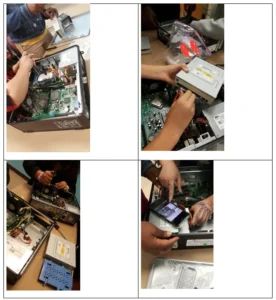
By 2004, the scope of the project had widened significantly. "Senior Connects" expanded its operations to include the repurposing of donated hardware, providing computers to low-income families, schools, and community centers. The organization was built on a unique governance model: it remained entirely volunteer-run, with no paid staff, and a Board of Directors that was historically comprised of 50% students. This structure ensured that the organization remained true to its founding spirit—empowering youth to lead the charge in community service.
Chronology of Progress: Two Decades of Digital Empowerment
The history of Net Literacy is marked by a series of strategic expansions and high-level recognitions that have propelled it into the national spotlight.
- 2003: Foundation of Senior Connects. The launch of the "students teaching students" model, providing foundational digital training to seniors.
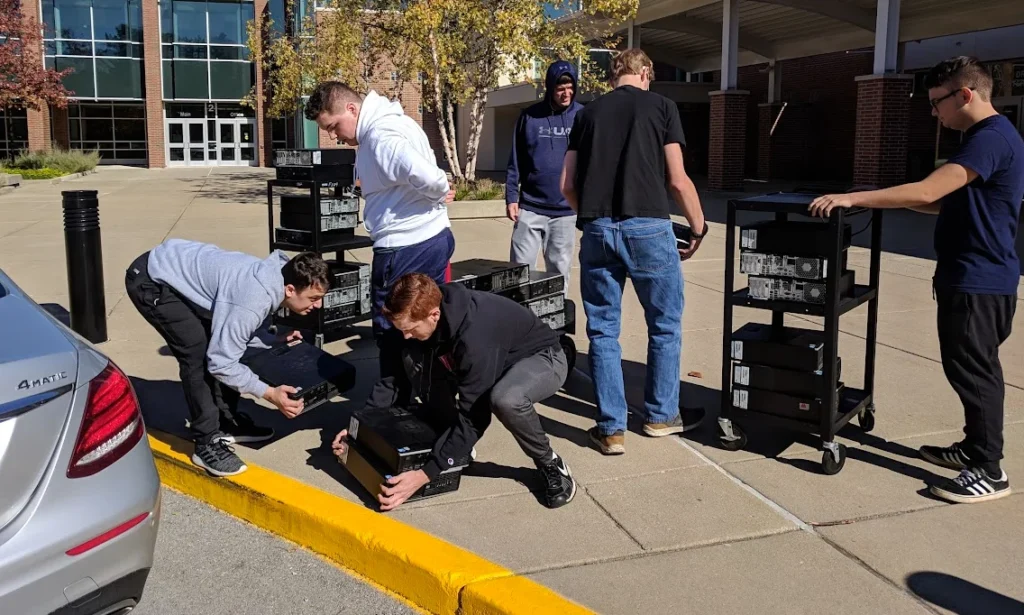
- 2004: Expansion into hardware procurement. The organization begins collecting, refurbishing, and distributing surplus computers to bridge the hardware gap in underserved neighborhoods.
- 2007–2010: Scaling operations. Net Literacy earns national acclaim, leading to its inclusion in the FCC’s National Broadband Plan. The organization begins hosting high-level summits in partnership with global technology giants and academic institutions like Harvard.
- 2011–2015: Peak of hardware distribution. The organization achieves its milestone of repurposing over 46,000 computers, with distribution networks covering entire regions.
- 2016–2023: Focus on broadband advocacy and safety. Efforts shift toward internet safety awareness, reaching over 1,000,000 individuals through public service announcements and school-based training.
- 2024–Present: The AI Pivot. Recognizing that the hardware gap is narrowing due to the ubiquity of affordable tablets and Chromebooks, Net Literacy shifts its focus to AI literacy, aiming to ensure the next generation understands the implications and applications of generative AI.
Supporting Data: The Magnitude of the Impact
The scale of Net Literacy’s influence is best understood through the metrics of their success. Over the last two decades, the organization has generated an economic and social impact valued at more than $16.5 million in equipment and services.
Key Performance Indicators
- Hardware Distribution: 46,000+ computers refurbished and donated to individuals and organizations in need.
- Broadband Access: Hundreds of thousands of individuals gained high-speed internet access through the organization’s advocacy and infrastructure programs.
- Internet Safety: Over 1,000,000 people reached through in-school safety training and televised public service announcements.
- Volunteer Engagement: A massive network of 4,900 student volunteers—mostly from core urban areas—who have provided the labor and leadership necessary to drive the mission forward.
This data underscores a critical reality: Net Literacy succeeded not by merely handing out hardware, but by fostering a culture of peer-to-peer education. By training students to teach, they created a sustainable loop of knowledge that far outlived the lifespan of the hardware they donated.
Official Recognition and Global Influence
Net Literacy’s impact has not gone unnoticed by the highest tiers of government and industry. Their model—which emphasizes student leadership and innovative IT application—has been lauded by international bodies and two separate U.S. Presidential administrations.

One of the organization’s most significant achievements was winning the Computerworld International 21st Century Award. Nominated by Intel, the organization was honored for creating "the most innovative application of IT to extend the distribution of digital information and access to Web-Based programs and services to previously underserved populations."
Beyond industry awards, the organization has enjoyed a close relationship with the federal government. During the development of the National Broadband Plan, the Federal Communications Commission (FCC) highlighted Net Literacy’s work as a template for successful community-based digital inclusion. Their work has even been celebrated at a private White House ceremony, an honor that stands as a testament to the fact that youth-led initiatives can effect systemic change.
The Strategic Pivot: Embracing the AI Frontier
"Since 2003, a lot has changed," the organization notes in its latest transition briefing. "Many school districts have 1:1 student-to-laptop programs, and tablets and Chromebooks are now much less expensive to purchase than cell phones."
This shift in the market—where basic computing hardware is no longer the primary barrier to entry—has prompted Net Literacy to reinvent itself. The organization is now moving away from the logistics-heavy model of computer refurbishing to focus on "AI Literacy."
The logic behind this pivot is sound. As Artificial Intelligence becomes integrated into every facet of the workforce and education, the "digital divide" is evolving into an "AI divide." Without proper guidance, marginalized communities risk being left behind in the era of generative AI. By rebuilding their digital platforms and focusing on AI education, Net Literacy aims to ensure that their mission remains as relevant in 2030 as it was in 2003.
Implications: The Leadership of Today, Not Tomorrow
The legacy of Net Literacy is rooted in a fundamental philosophy: that young people are not merely "tomorrow’s leaders," but "today’s leaders." By entrusting students with the management of an organization that handles millions of dollars in resources and impacts over a million lives, Net Literacy has effectively created a pipeline of socially conscious, technologically savvy professionals.
The implications of this model are profound for the nonprofit sector. It demonstrates that when students are given autonomy and agency, they can operate with a level of efficiency and passion that traditional, adult-led hierarchies often struggle to emulate.
As Net Literacy looks to the future, it carries the weight of its history and the optimism of its new mission. The organization remains a beacon for how grassroots movements can scale, how volunteers can fill the gaps left by institutional policy, and how a simple idea—a student saving money to help a senior citizen—can eventually lead to the halls of the White House and the forefront of the global AI conversation.
The path ahead for Net Literacy is clear: to remain at the intersection of technology and humanity, ensuring that regardless of the era, the tools of progress remain accessible to all.