Higher Education Faces a Leaner Future: Summer Layoffs Signal Deepening Structural Crisis Across U.S. Campuses

By Higher Education Bureau
Published September 10, 2026
As campuses welcome students back for the start of a new academic term, the halls of academia are visibly emptier—not just of learners, but of the personnel required to keep them running. Throughout the summer months, colleges and universities across the United States pushed forward with aggressive workforce reductions, belt-tightening measures, and structural reorganizations. These cuts underscore a prolonged era of austerity and institutional retrenchment that is fundamentally transforming the landscape of American higher education.
The summer downsizing wave is not an isolated phenomenon, but rather the continuation of a multi-year contraction driven by demographic shifts, inflationary pressures, rising operational costs, and the looming expiration of federal pandemic-era relief funds. Institutions that once prided themselves on administrative expansion and comprehensive student support services are now confronting hard financial realities.
Among the high-profile institutions enacting workforce reductions and budget containment strategies over the summer are prominent private and public universities, including Full Sail University, the Illinois Institute of Technology (IIT), Temple University, and Johns Hopkins University. These cuts reflect a sector-wide vulnerability that spares few, affecting regional teaching institutions and prestigious research universities alike.
Main Facts: The Scope of the Higher Education Contraction
The scope of the ongoing workforce reduction becomes starker when viewed through recent employment data. According to a comprehensive survey released in August 2026 by the College and University Professional Association for Human Resources (CUPA-HR), the ranks of full-time staff at colleges and universities shrank by a dramatic 6.6% in 2025 compared to the previous year. This historic contraction follows years of marginal adjustments, signaling that institutions have moved past minor cost-saving measures and are now executing fundamental structural shrinkage.
Key elements defining this current wave of campus retrenchment include:
- Broad Institutional Impact: Layoffs and hiring freezes are no longer restricted to financially fragile, tuition-dependent small private colleges. Major research institutions, online-focused universities, and large state flagships are implementing deep cuts.
- Non-Faculty and Administrative Vulnerability: While tenure-track faculty positions have remained relatively resilient or seen targeted investments at certain institutions, administrative, operational, and student-support staff bear the brunt of the cuts.
- Summer Implementation Strategy: Many universities deliberately schedule workforce reductions and restructurings for the summer months to minimize operational disruption during the active academic term and to balance budgets ahead of the fiscal and academic year kickoffs in August and September.
- Persistent Deficits: Structural deficits at universities are increasingly viewed by leadership not as temporary post-pandemic anomalies, but as the new normal, requiring permanent downsizing of physical footprints, academic programs, and personnel.
Chronology: How the 2026 Summer Cuts Unfolded
The path to the current summer downsizing wave has been marked by escalating financial strain and cascading budget declarations across multiple institutions.
Spring Planning and Early Warnings (March – May 2026)
As the spring 2026 semester drew to a close, financial officers across the country faced widening budget gaps. Falling enrollment projections for the incoming freshman class—compounded by ongoing delays and technical frustrations associated with the federal Better FAFSA rollout—left many institutions in the dark regarding their tuition revenues. By late spring, presidents and boards of trustees began signaling that voluntary buyouts would not suffice to close multi-million-dollar budget holes.
Escalation of Summer Reductions (June – July 2026)
Throughout June and July, formal reduction notices were issued across diverse institutional settings.
- Full Sail University initiated workforce adjustments as part of a broader realignment of its online and on-campus operational models.
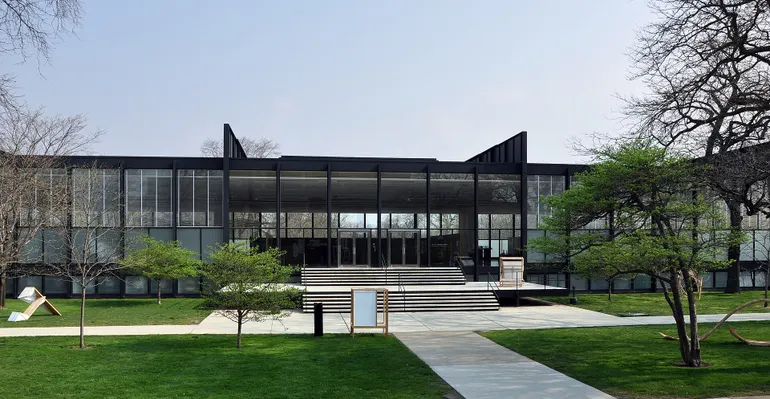
- The Illinois Institute of Technology, operating out of its iconic Chicago campus, structured targeted layoffs to align its operating budget with shifting enrollment demands in engineering, architecture, and technology programs.
- Temple University and Johns Hopkins University—representing large public research and elite private research ecosystems, respectively—faced distinct yet pressing financial pressures that forced administrative consolidations, departmental merges, and staff reductions.
Late-Summer Stabilization and Fall Realities (August – September 2026)
As August transitioned into September, human resources departments finalized severance packages, consolidated remaining job duties, and prepared for the arrival of the fall student cohort. Remaining staff returned to leaner offices, absorbing the responsibilities of departed colleagues while university leadership initiated strategic planning sessions aimed at surviving what many predict will be an even more challenging fiscal year in 2027.
Supporting Data: CUPA-HR Metrics and Economic Pressures
To understand the magnitude of the current crisis, one must examine the macroeconomic and labor metrics shaping modern higher education. The CUPA-HR survey data released in late summer 2026 provides empirical validation for what campus workers have experienced anecdotally for years.
The 6.6% Staff Drop
A year-over-year decline of 6.6% in full-time campus staff represents one of the steepest single-year contractions in modern higher education labor history. While higher education historically served as a safe haven during broader economic recessions, the sector is now facing an internal economic downturn driven by structural shifts rather than macroeconomic cycles.
Enrollment Cliffs and Demographic Realities
The contraction is fundamentally tied to the "enrollment cliff"—the sharp decline in traditional college-aged demographics stemming from the post-2008 birth dearth. With fewer high school graduates entering the pipeline, regional colleges are experiencing acute revenue shortfalls. Even as elite institutions maintain strong application numbers, rising costs of facility maintenance, employee healthcare, and technology infrastructure continue to outpace tuition revenue growth.
Endowment Realities
While institutions like Johns Hopkins possess substantial endowment funds, legal restrictions, donor designations, and prudent spending rate policies prevent endowments from being used as limitless operational slush funds. Consequently, even wealthy universities are finding themselves forced to cut non-revenue-generating administrative units to preserve capital for core academic and research missions.

Official Responses: Institutional Rationales and Stakeholder Reactions
University leadership teams have defended the painful downsizing measures as an existential necessity to ensure long-term institutional viability. Conversely, faculty senates, labor unions, and student organizations have fiercely criticized the cuts, arguing that they erode the quality of education and place an unfair burden on remaining personnel.
Leadership Perspectives
Administrators framing the cuts typically emphasize fiscal responsibility and strategic repositioning. In communications released by institutions like IIT and Temple, leadership has stressed that failing to address structural deficits today would risk the long-term health of the university.
“To remain competitive and fulfill our educational mission in a rapidly evolving economic environment, we must make the difficult decision to realign our operational expenses with our projected revenues,” noted representatives from several institutions undergoing restructuring. University presidents frequently argue that leaner administrative structures allow institutions to pivot more rapidly toward innovative academic programming and enhanced student-success technology.
Faculty and Staff Pushback
Labor unions and professional organizations have pushed back vigorously against this narrative. Critics argue that years of administrative bloat at the highest executive levels are rarely targeted for cuts, with the axe falling disproportionately on lower-paid administrative assistants, library staff, IT personnel, and student-affairs professionals.
The Coalition of Higher Education Labor Unions noted that cutting frontline staff directly undermines the student experience. “When you reduce the number of advisors, mental health counselors, facilities workers, and administrative support staff, you are directly harming students’ ability to succeed,” union representatives stated following the summer announcements. Furthermore, remaining employees report severe burnout as they are expected to absorb multiple portfolios without corresponding wage increases.
Implications: The Shape of Higher Education to Come
The steady drumbeat of workforce cuts through the summer of 2026 signals a permanent paradigm shift for colleges and universities across the United States. As institutions adapt to leaner times, several long-term implications are beginning to emerge:
1. The Death of the "Comprehensive" Small College
Regional private colleges and smaller universities may no longer be able to offer a comprehensive array of liberal arts programs and sprawling student support services. Institutions are increasingly forced to hyper-specialize, focusing strictly on high-demand, career-aligned majors while cutting programs with low student enrollment.

2. Technological Substitution and Automation
With fewer human resources available, universities are accelerating their adoption of artificial intelligence and automated systems for student advising, admissions processing, financial aid counseling, and even basic instructional support. The human-centric model of higher education is steadily giving way to a hybrid, tech-reliant operational framework.
3. Increased Centralization and Shared Services
To cut costs, multi-campus university systems and large single institutions are centralizing administrative functions. Human resources, payroll, legal services, and marketing departments are increasingly consolidated into regional or system-wide offices, stripping individual colleges and departments of local autonomy.
4. Widening Disparities Between Elite and Regional Schools
The continuous cycle of budget cuts threatens to widen the chasm between heavily endowed elite research universities and tuition-dependent regional institutions. While elite universities can weather deficits through philanthropy and research grants, regional campuses face a perilous cycle of budget cuts leading to declining enrollment, which in turn triggers deeper budget cuts.
Conclusion
As the 2026–2027 academic year gets underway, the message from campus leadership is clear: the era of unchecked institutional growth is definitively over. Navigating the road ahead will require colleges and universities to innovate not only in their classrooms, but fundamentally in how they manage their human capital and financial architectures. For the thousands of workers affected by the summer cuts, however, the transition to leaner times represents a painful personal reality that underscores the deep structural turbulence reshaping American academia.