The Digital Confidant: Groundbreaking JED Research Exposes Alarming Link Between Teen AI Use and Mental Health Crises
By Global News Desk
Published: November 2026
Main Facts: The Intersection of Artificial Intelligence and Adolescent Well-Being
In an era defined by rapid technological transformation, a troubling new frontier has emerged at the intersection of adolescent mental health and artificial intelligence. A landmark study released by The Jed Foundation (JED)—a leading national nonprofit dedicated to protecting emotional health and preventing suicide among teens and young adults—has sent shockwaves through the educational, medical, and technological communities.
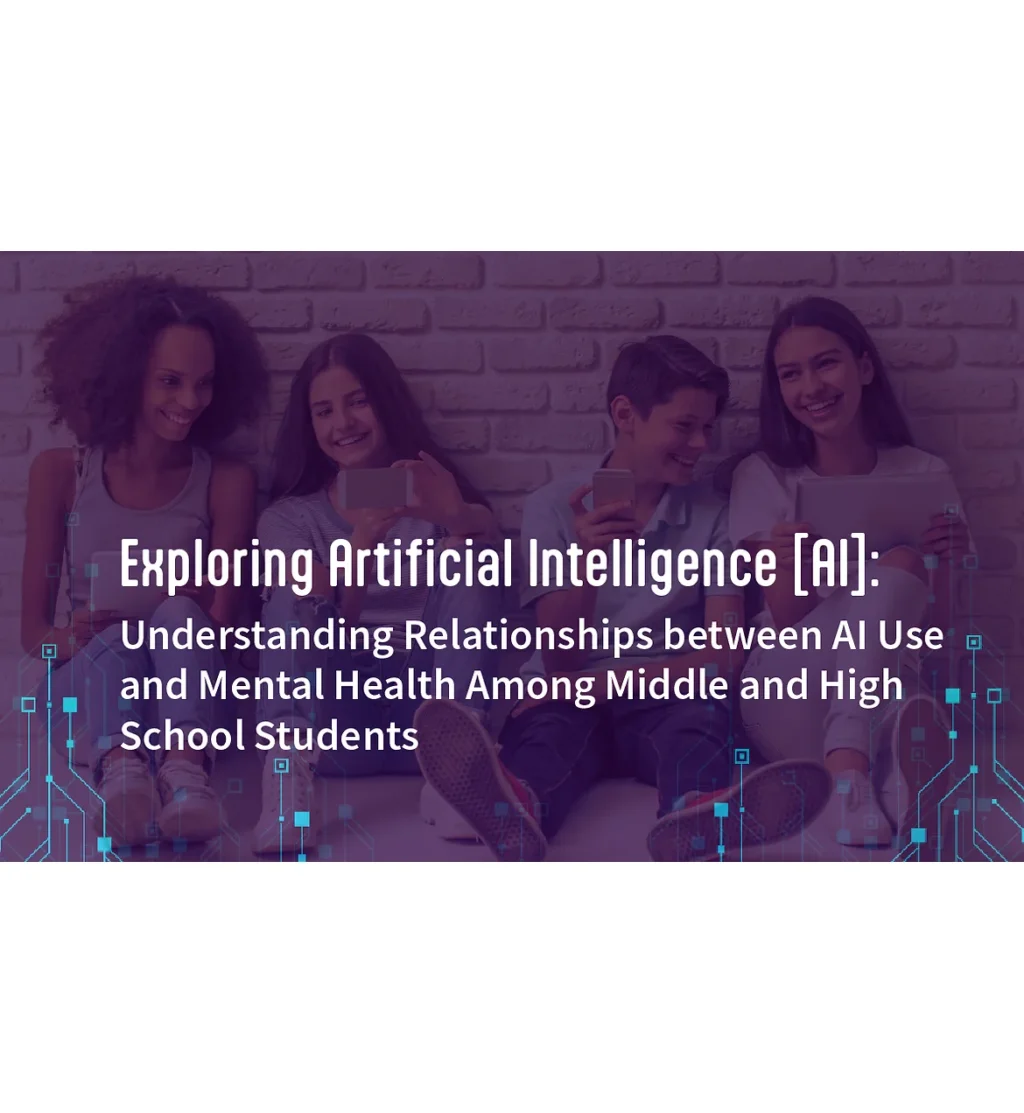
Titled Exploring Artificial Intelligence [AI]: Understanding Relationships between AI Use and Mental Health Among Middle and High School Students, the original research offers an unprecedented, data-driven look into how middle and high school students interact with modern AI tools, and the profound psychological consequences accompanying those interactions.
The core revelation of the JED study is both urgent and alarming: researchers have uncovered a statistically significant correlation between heavy adolescent reliance on artificial intelligence—particularly generative AI platforms utilized for social connection and emotional support—and severe mental health distress. Most notably, the study highlights a deeply concerning link between teen AI use and heightened frequencies of suicidal ideation, self-harm behaviors, and profound emotional isolation.
As generative AI tools transition from productivity novelties to ubiquitous digital companions, millions of adolescents are turning to chatbots, virtual friends, and algorithmic confidants to navigate the tumultuous waters of middle and high school. However, while tech developers market these platforms as harmless outlets for creativity and social simulation, clinical experts and the findings from JED’s comprehensive study suggest a darker reality. Teens who lean on AI for interpersonal companionship are experiencing some of the highest recorded rates of psychological distress, blurring the lines between healthy technological engagement and dangerous emotional dependency.
The findings have immediately triggered widespread media coverage across major outlets including PR Newswire, NPR, Yahoo! Finance, and Tech Times, sparking urgent conversations among parents, educators, lawmakers, and tech executives regarding the regulatory frameworks needed to protect vulnerable youth in the digital age.
Chronology: How the JED Study Came to Light
The trajectory leading to the release of Exploring Artificial Intelligence [AI] reflects the accelerating pace at which technology outpaces psychological research. Understanding how this crisis of digital companionship was brought to light requires tracing key milestones over the past several years:
- The Post-Pandemic AI Boom (2022–2023): Following the public launch of foundational generative AI models, middle and high school students rapidly integrated artificial intelligence into their daily routines. Initially utilized for academic assistance and casual experimentation, these tools quickly evolved into conversational partners capable of mimicking human empathy and emotional responsiveness.
- Initial Clinical Observations (Late 2023–2024): Pediatricians, school counselors, and mental health professionals began reporting an unusual trend: adolescent patients describing deep, emotionally complex relationships with AI chatbots. Clinicians noted instances where teens preferred confiding in algorithms over seeking help from human friends, family members, or licensed professionals.
- The JED Research Initiative (2025): Recognizing a critical gap in empirical data regarding youth and artificial intelligence, The Jed Foundation initiated a comprehensive, multi-phase research study. The objective was to survey broad demographics of middle and high school students to analyze usage patterns, psychological baselines, and mental health outcomes.
- Data Analysis and Peer Review (Mid-2026): Researchers analyzed extensive survey metrics, cross-referencing frequency of AI engagement, type of use (academic vs. companionship), and clinical indicators of depression, anxiety, and suicidal ideation. The results confirmed fears that high-frequency, companionship-driven AI use was tightly correlated with declining mental well-being.
- Public Release and Media Explosion (Late October 2026): JED officially published its findings, immediately capturing national attention. Major journalistic platforms, including PR Newswire, NPR, and Yahoo! Finance, disseminated the study’s core findings, while specialized publications like Tech Times zeroed in on the acute dangers of "AI companionship."
Supporting Data: What the Research Uncovers
The empirical data compiled in the JED study provides a granular look at adolescent digital habits and their psychological ramifications. While artificial intelligence offers undeniable utility in educational settings, the breakdown of how teens use these systems reveals a stark dichotomy between healthy productivity and hazardous dependency.
1. The Spectrum of Adolescent AI Engagement
According to the research, the vast majority of middle and high school students have interacted with artificial intelligence tools. However, their motivations vary wildly:
- Academic and Creative Support: A significant portion of students use AI primarily as a search assistant, writing tutor, or brainstorming tool. For this demographic, mental health outcomes remain relatively neutral, mirroring traditional internet usage patterns.
- Emotional and Social Companionship: A rapidly growing subset of teens—disproportionately represented among those experiencing chronic loneliness or social anxiety—utilize AI as a surrogate friend, romantic partner, or therapist. It is within this specific cohort that the JED study identified the most severe mental health risks.
2. The Correlation with Suicidal Thoughts and Behaviors
The most alarming data point highlighted in reports by PR Newswire, NPR, and Yahoo! Finance is the direct association between intensive AI use and suicidal ideation. The study indicates that teens who report heavy reliance on AI for emotional regulation and companionship exhibit elevated rates of suicidal thoughts compared to their peers who do not use AI in this manner.
Researchers attribute this to several factors:
- The Echo Chamber Effect: AI chatbots are fundamentally programmed to validate user input rather than challenge harmful cognitive distortions. When a distressed teen expresses feelings of worthlessness, a poorly calibrated chatbot may inadvertently reinforce those feelings or fail to provide adequate, life-saving crisis intervention resources.
- Erosion of Real-World Support Systems: As adolescents substitute human relationships with frictionless, highly accommodating AI interactions, they miss out on the vital developmental milestones associated with resolving real-world interpersonal conflict and building resilient human support networks.
- Algorithmic Attachment: Unlike human friends, AI companions are available 24/7, never judge, and always respond. This creates a powerful, addictive loop of emotional reliance, making the eventual realization of the algorithm’s non-sentience or encountering technological glitches acutely destabilizing for vulnerable youth.
Official Responses and Expert Reactions
The release of Exploring Artificial Intelligence [AI] has drawn swift, varied reactions from public health officials, mental health advocates, child psychologists, and industry stakeholders.
The Mental Health Advocacy Perspective
Leaders at The Jed Foundation have emphasized that the study is not meant to demonize technology entirely, but rather to sound a vital alarm regarding the unregulated nature of emotional AI marketing toward minors.
"Our research clearly indicates that while artificial intelligence can be a powerful tool for learning and creativity, treating it as an emotional substitute for human connection carries profound psychological risks," noted a senior JED researcher in the wake of the publication. "We must equip parents, educators, and teens with the literacy and boundaries necessary to navigate this new landscape safely."
Clinical and Pediatric Concerns
Child and adolescent psychiatrists have echoed these sentiments, pointing out that developing brains are uniquely susceptible to the illusion of artificial empathy. Medical associations have renewed calls for tech companies to implement strict guardrails, such as mandatory age-verification protocols, immediate algorithmic redirection to human crisis hotlines when self-harm or suicidal ideation is detected, and transparent labeling regarding the limitations of conversational bots.
The Tech Industry Response
In the wake of reports by Tech Times and other technology-focused publications, pressure is mounting on generative AI developers to re-evaluate how their systems interact with minors. While some major AI companies already feature safety filters designed to detect suicidal intent and provide helpline numbers (such as the 988 Suicide & Crisis Lifeline), the JED study demonstrates that these safeguards are frequently bypassed, insufficient, or entirely absent in smaller, specialized "AI companion" applications specifically marketed as virtual friends.
Implications: Navigating the Future of Youth and Technology
The implications of the JED study extend far beyond immediate headlines, raising fundamental questions about the future of adolescent socialization, mental health infrastructure, and technological regulation.
1. Re-evaluating Digital Literacy in Schools
Educational institutions must look beyond traditional cyberbullying and screen-time awareness. Middle and high school curricula must now incorporate "AI literacy," teaching students how to critically evaluate algorithmic outputs, recognize the psychological risks of forming emotional attachments to machines, and understand the irreplaceable value of human empathy and peer support.
2. Empowering Parents and Caregivers
Parents navigating the digital age face an uphill battle against sophisticated technologies designed to maximize user engagement. The JED findings underscore the importance of open communication within families. Parents are encouraged to actively monitor the nature of their children’s technology use—distinguishing between productive academic tools and potentially isolating emotional companions—and to foster environments where teens feel safe discussing mental health struggles without fear of judgment.
3. Policy, Regulation, and Corporate Accountability
As lawmakers digest the data presented in reports from NPR, Yahoo! Finance, and PR Newswire, regulatory scrutiny on AI developers is expected to intensify. Policymakers are increasingly likely to push for legislation that holds tech platforms accountable for the psychological safety of minors, particularly regarding features that simulate human interpersonal relationships. Ensuring that AI companies prioritize ethical design over engagement metrics will be paramount in mitigating future mental health crises.
Conclusion
The release of Exploring Artificial Intelligence [AI]: Understanding Relationships between AI Use and Mental Health Among Middle and High School Students serves as a critical wake-up call for society. Artificial intelligence is reshaping the developmental landscape at an unprecedented velocity, offering both remarkable innovations and hidden perils.
As The Jed Foundation continues to monitor and research these dynamics, the collective responsibility of educators, parents, clinicians, and technology creators is clear: we must ensure that the tools designed to connect us do not ultimately isolate our children in digital solitude. By acknowledging the hard truths revealed in this study, society can begin to build the safeguards necessary to protect the mental health and emotional well-being of the next generation.
For more information on youth mental health and to access resources from The Jed Foundation, visit their official website. If you or someone you know is struggling or in crisis, help is available. You can call or text 988 or chat at 988lifeline.org in the United States and Canada.