The Great Contraction: Inside the Looming Wave of Higher Education Closures
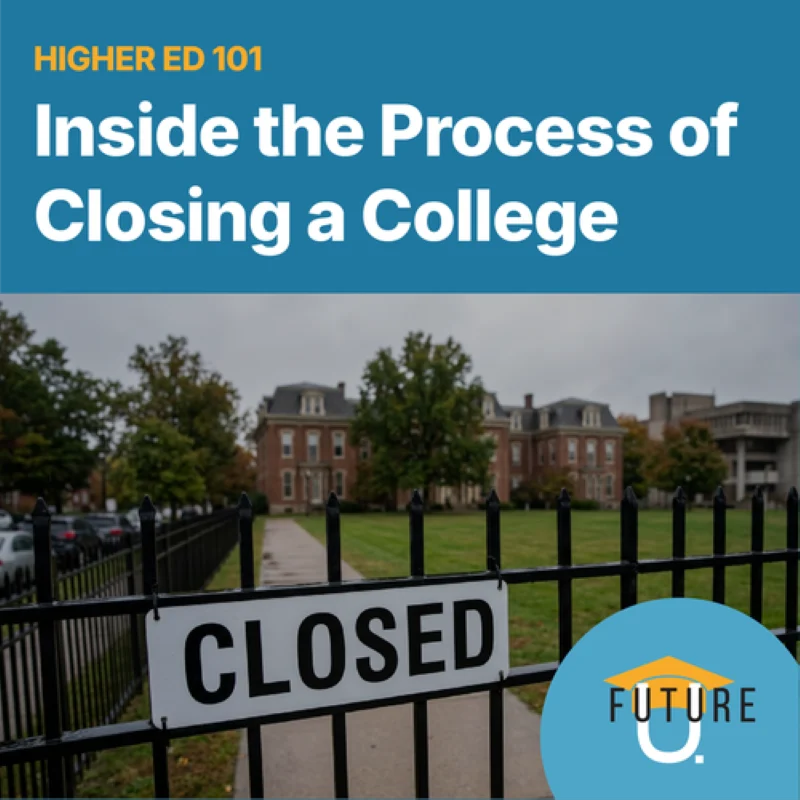
The American higher education landscape is bracing for a seismic shift, a period of structural instability that experts warn will fundamentally alter the map of the nation’s academic institutions. As demographic shifts, economic pressures, and declining public confidence converge, the once-unthinkable reality of college closures is becoming a regular occurrence.
In a recent episode of the Future U podcast, hosts Jeff Selingo and Michael Horn sat down with Doug Moore, a seasoned consultant and specialist who guides institutions through the agonizing process of dissolution. Moore’s prognosis is grim: the current climate of "business as usual" is no longer sustainable for hundreds of colleges. He predicts that over the next seven to ten years, the United States could witness the total closure of approximately 400 higher education institutions, leaving behind abandoned campuses and fractured academic communities.
The Anatomy of a Collapse: Main Facts and Drivers
For many small, private, tuition-dependent colleges, the margin for error has vanished. Moore identifies a perfect storm of factors that are forcing leadership teams to confront the reality of their own insolvency.
At the center of this crisis is the "demographic cliff"—a sharp decline in the number of high school graduates that began in the wake of the 2008 recession and is expected to accelerate through 2030. With fewer traditional-aged students entering the pipeline, competition for enrollment has turned into a zero-sum game.
"I think we’re gonna see 400 schools close completely in the next seven to ten years," Moore stated during the interview. "No mergers, meaning an abandoned campus. And that is a big number."
The financial architecture of these institutions is often fragile. Many colleges rely heavily on tuition revenue to cover operating costs, debt service, and faculty salaries. When enrollment dips, the deficit widens, leading to austerity measures that often degrade the quality of the student experience, further accelerating enrollment declines in a vicious cycle. Moore emphasizes that leaders frequently miss the warning signs—such as dwindling endowment draws, rising discount rates, and an over-reliance on a narrow geographic student base—until it is far too late to pivot.
A Chronology of Decline: The Road to Sunset
The process of closing a college is not an overnight event; it is a protracted, traumatic, and highly sensitive operation that can span several years from the initial realization of failure to the final "lights out."
Phase I: Denial and the "Fix-it" Mentality
Initially, institutional leaders often attempt to "grow their way out" of financial distress. This phase is characterized by aggressive marketing campaigns, the introduction of new academic programs with little market research, and attempts to increase recruitment spend. During this period, the board of trustees is often kept at arm’s length from the severity of the financial deficit.
Phase II: The Crisis of Liquidity
Once the deficit becomes insurmountable, the college enters a period of operational contraction. Programs are cut, staff are furloughed, and deferred maintenance on campus facilities reaches a breaking point. This is the stage where the "emotional process" of closing begins to take hold, as faculty morale plummets and students begin to transfer out in anticipation of a potential collapse.
Phase III: The Search for a Savior (Mergers)
Many institutions view mergers as a panacea. However, Moore notes that mergers frequently fail because they are often "marriages of convenience" rather than strategic unions. The cultural clash between two distinct academic bodies, combined with the difficulty of reconciling disparate debt structures, often leads to a failure that leaves both institutions weaker than before.
Phase IV: The Final Closure
When the institution can no longer guarantee the delivery of an accredited degree, the closure becomes official. This involves a complex legal and regulatory dance: managing teach-out agreements, securing student records, settling with creditors, and navigating the emotional fallout of an alumni base and local community that view the campus as a pillar of regional identity.
Supporting Data: The Scale of the Crisis
The data supporting Moore’s dire prediction is rooted in the shifting economics of higher education. According to the National Center for Education Statistics (NCES), hundreds of small private colleges have already shuttered or consolidated over the past decade.
- Tuition Dependency: A significant percentage of private non-profit colleges rely on tuition for more than 80% of their annual revenue. When enrollment drops by even 5–10%, the institution’s ability to remain solvent is compromised.
- The Discount Rate: The "tuition discount rate"—the amount of institutional financial aid provided to students—has hit record highs, often exceeding 50% at smaller private schools. This means the actual revenue generated per student is plummeting, even if sticker prices rise.
- Demographic Projections: Western Interstate Commission for Higher Education (WICHE) data suggests that the pool of traditional 18-year-old college students will continue to shrink through the mid-2030s, particularly in the Northeast and the Midwest, where the density of small private colleges is highest.
Official Responses and Institutional Accountability
The reaction from the higher education sector has been mixed. While some institutional leaders have embraced the need for radical restructuring, others remain in a state of institutional inertia.
Regional accreditors, often tasked with overseeing the closure process, have come under scrutiny. Critics argue that accreditors often wait too long to intervene, leaving students and faculty with little warning. In response, some states have implemented "financial responsibility" triggers, requiring colleges to post surety bonds or undergo mandatory audits if their financial health scores dip below a certain threshold.
However, as Moore points out, the "emotional process" of closing is rarely addressed by policy. The loss of a college is often the loss of the largest employer in a rural town, a cultural hub for a community, and a repository of local history. There is no federal or state-level mechanism designed to support the "social recovery" of a town after its college closes.
The Human Cost: What is Lost?
The implications of these closures extend far beyond the balance sheet. When a campus disappears, it is not merely an asset liquidation; it is a loss of social capital.
For students, the closure of a college creates significant academic disruption. While "teach-out" plans are mandated to help students finish their degrees, the transfer process is rarely seamless. Many students, particularly first-generation or low-income students, choose to drop out entirely rather than navigate the complex process of transferring credits to a new institution.
For faculty and staff, the loss is both professional and personal. Academic careers are often tied to specific institutional missions; when that mission ends, many professionals are forced to relocate or leave the field of higher education altogether, representing a "brain drain" for the regions that lose their colleges.
Looking Toward the Future
Moore’s warnings suggest that we are entering an era of "pruning" in American higher education. While the prospect of 400 closures is harrowing, some economists argue that the sector has been over-saturated for decades. The challenge for the next decade will be managed closure—ensuring that when a college must close, it does so in a way that prioritizes the welfare of the students and the integrity of their academic records.
The survival of the remaining institutions will likely depend on their ability to differentiate their value proposition. The "generalist" model, where a small college attempts to be everything to everyone, is increasingly unviable. Future survivors will likely be those that specialize in high-demand career pathways, offer hybrid/flexible learning models, or leverage deep partnerships with regional industry.
As the industry faces this unprecedented contraction, the conversation initiated by Selingo, Horn, and Moore serves as a vital call to action. The era of passive growth is over; the era of strategic survival has begun. For institutional leaders, the message is clear: ignore the data at your own peril, and prepare for the difficult, emotional, and necessary work of ensuring that the closure process—when inevitable—is handled with transparency, dignity, and a focus on the human lives caught in the wake.
To listen to the full discussion on the process of closing a college and to explore further resources on the state of higher education, visit the Future U Podcast website.