The Trust Deficit: Why Higher Education’s AI Revolution is Failing the Classroom
Introduction: The Great Technological Disconnect
The promise of Artificial Intelligence in higher education has been marketed as a panacea for administrative inefficiency, personalized learning, and the modernization of pedagogical delivery. Universities across the globe are pouring millions of dollars into high-end computational infrastructure, AI-driven learning management systems, and specialized software licenses. Yet, as the excitement of the "AI revolution" meets the reality of the lecture hall, a profound friction has emerged.
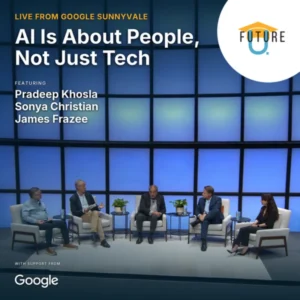
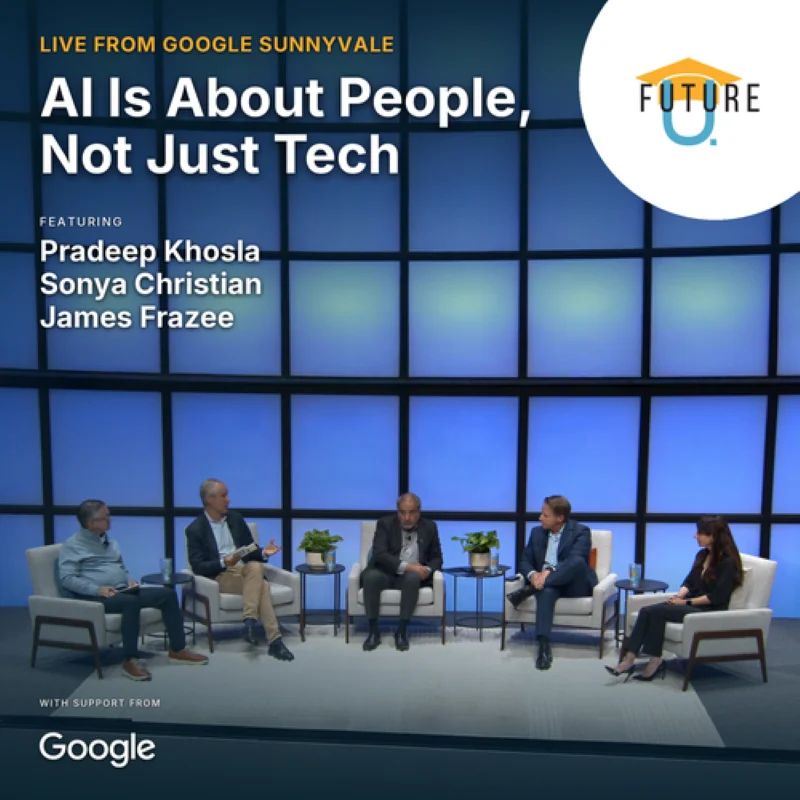
In a recent live recording of the Future U podcast, hosted by Michael Horn and Jeff Selingo at Google’s Sunnyvale campus, a critical truth was brought to the fore: the barrier to effective AI integration is not technical—it is human. The discussion centered on the widening chasm between institutional investment and classroom adoption, suggesting that without a foundation of trust, even the most sophisticated technology is destined to exacerbate existing academic anxieties rather than alleviate them.
The Core Conflict: Infrastructure vs. Integration
For many university administrators, the strategy has been one of "buying our way out" of obsolescence. By investing in premium AI tools, institutions hope to stay relevant in a rapidly evolving digital economy. However, as Horn and Selingo noted, technology is a tool, not a culture. When institutions treat AI as an infrastructure problem, they often overlook the nuanced social contract that exists between faculty and students.
The primary issue is the lack of a unified vision. While the IT department may be rolling out enterprise-wide AI access, the individual professor remains the sovereign authority over their syllabus. This creates a fragmented landscape where the "technological capacity" of the university is rendered moot by the "policy paralysis" of the faculty.
Chronology: How We Arrived at the AI Impasse
To understand the current state of confusion, one must look at the rapid evolution of the past two years:
- Late 2022 (The Disruption): The public release of generative AI tools like ChatGPT sent shockwaves through academia. Initial reactions were largely reactionary, characterized by a mix of fear regarding academic integrity and curiosity regarding potential efficiency.
- Early 2023 (The Era of Bans): Many institutions scrambled to implement blanket bans on AI tools, fearing a surge in plagiarism. This created a "cat and mouse" dynamic between students and faculty.
- Late 2023 (The Pivot to Integration): Realizing that prohibition was impossible to enforce, universities began shifting toward "AI literacy." Large-scale investments in enterprise-grade AI software began to flow.
- 2024 (The Policy Paradox): We are currently in a phase of extreme policy variance. With no national or even institutional standard, the responsibility has devolved to the individual instructor, leading to the current environment of student anxiety and pedagogical inconsistency.
Supporting Data: The Cost of Inconsistency
The anxiety experienced by students is not merely anecdotal; it is a byproduct of systemic inconsistency. James Frazee, the Vice President and Chief Innovation Officer at San Diego State University (SDSU), provided a stark illustration of this during the podcast.
Frazee highlighted a scenario that has become emblematic of the modern college experience: a student might be encouraged to utilize generative AI to brainstorm and structure essays in a 9:00 a.m. humanities seminar, only to be threatened with disciplinary action—or even expulsion—for using that same tool in a 10:00 a.m. science course.
The Psychological Impact
This "policy whiplash" creates several measurable negative outcomes:
- Academic Hesitancy: Students, fearing accidental violation of undefined academic integrity policies, may avoid using beneficial tools entirely, putting them at a disadvantage.
- Erosion of Mentorship: When students are forced to hide their use of AI tools to avoid punitive measures, the transparent dialogue required for effective mentorship breaks down.
- Cognitive Load: The mental energy spent navigating the conflicting "rules of engagement" across five or six courses subtracts from the energy available for deep learning.
Official Responses and Perspectives
The panel discussion at Google served as a microcosm of the broader academic debate. James Frazee emphasized that the solution lies in institutional guidance, not just software procurement.
"Building trust requires clear, consistent guidance," Frazee noted. He argues that universities must move away from the "siloed" approach where every professor creates their own AI policy. Instead, there must be a baseline framework—a set of ethical and practical principles—that students can rely on regardless of the building or the discipline they enter.
Other experts in the field of educational technology have echoed this sentiment, suggesting that "Trust-Based Pedagogy" must become the hallmark of the next academic cycle. This involves:
- Transparency: Clearly articulating why AI is permitted or restricted in specific contexts.
- Alignment: Ensuring that department-wide expectations match the tools provided by the university.
- Human-Centric Design: Focusing on the development of critical thinking skills alongside AI usage, rather than allowing AI to replace the human element of assessment.
Implications: The Future of the Human-AI Academic Alliance
The implications of failing to resolve this trust deficit are significant. If universities continue to present AI as a "black box" that is either forbidden or mandated without context, they risk losing the very thing they sell: an environment of rigorous, fair, and supportive intellectual growth.
Implications for Faculty
For faculty, the burden of AI integration is high. Professors are currently being asked to act as ethicists, technical support, and disciplinary enforcers simultaneously. Without institutional support that simplifies policy and provides training, burnout is inevitable.
Implications for Students
Students are currently the "guinea pigs" of this transition. The long-term implication is a potential decline in trust toward the institution itself. If students feel the system is rigged—where success depends on knowing the specific, unwritten rules of each professor rather than their own academic merit—the perceived value of a degree diminishes.
Implications for Institutional Strategy
Universities that prioritize "Human-First AI" will likely see higher retention rates and more effective learning outcomes. This strategy requires:
- Investing in Human Capital: Spending less on expensive software and more on training faculty to design assessments that are AI-resistant by nature (e.g., in-person oral defenses, process-based portfolios).
- Standardization of Policy: Creating "AI tiers" that departments can adopt to ensure students don’t face extreme disparities in expectations.
- Continuous Feedback Loops: Establishing student-faculty committees to monitor the emotional and academic impact of AI policies in real-time.
Conclusion: Reclaiming the Classroom
As Michael Horn and Jeff Selingo articulated during their conversation at Google, the future of the university depends on its ability to humanize technology. The "AI divide" is not a technical gap between those who have software and those who do not; it is a trust gap between the institution and its members.
To move forward, higher education must pivot from a procurement-heavy strategy to a culture-heavy one. The goal should not be to integrate AI at any cost, but to integrate it in a way that respects the student-teacher relationship. If a student is expected to navigate the modern world, they must be taught to use AI responsibly. That education cannot happen in an environment defined by fear, inconsistency, and confusion.
The path forward is clear: universities must prioritize the human element. They must establish clear, consistent, and compassionate guidelines that empower students to leverage the future without fearing the present. Only then will the massive investments in technology translate into genuine academic advancement. As James Frazee aptly put it, "that element of trust is really important." Without it, the digital transformation of higher education remains nothing more than a hollow, expensive shell.
For those interested in the full dialogue, the episode "AI is About People, Not Just Tech" is available on the Future U Podcast.