The Great Reckoning: How Higher Education is Navigating an Existential Turning Point
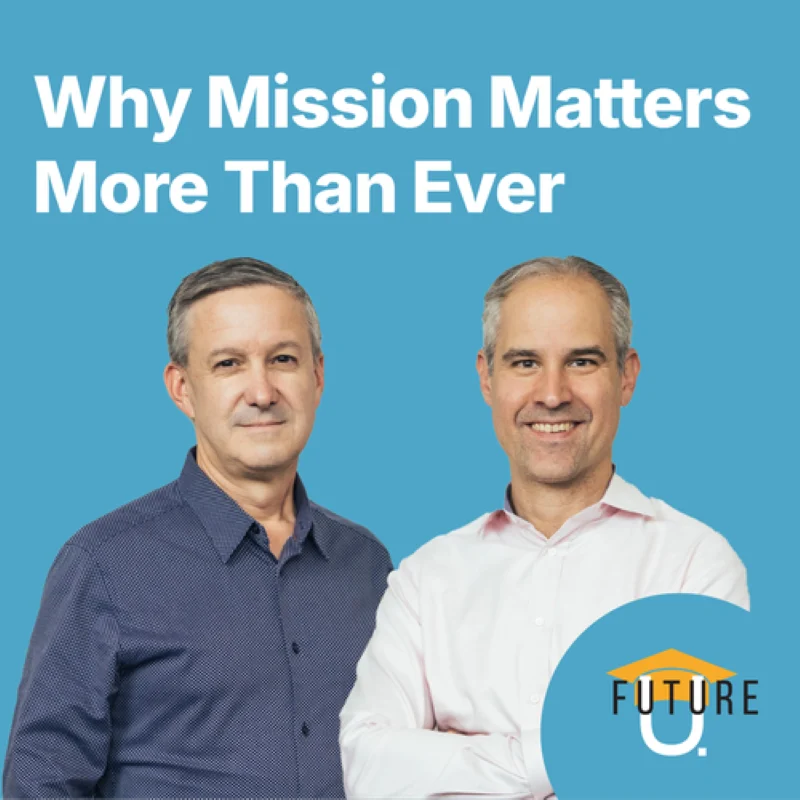
In the season finale of the widely followed Future U podcast, co-hosts Jeff Selingo and Michael Horn delivered a sobering yet optimistic diagnosis of the American higher education landscape. As colleges and universities across the nation grapple with a “perfect storm” of demographic shifts, fiscal instability, and the rapid encroachment of disruptive technologies, the hosts argue that the path forward is not found in superficial branding, but in a radical, mission-driven evolution.
The dialogue, which serves as a capstone for the podcast’s ninth season, moves beyond the standard discourse of “college vs. no college” to address the structural metamorphosis required for institutional survival.
Main Facts: The Crisis of Purpose and Survival
The central premise of the discussion is that the traditional model of higher education—largely defined by the post-World War II expansion—is undergoing its most significant stress test in history. Selingo and Horn identify three primary pillars of this crisis:
- The Enrollment Cliff: As the population of 18-year-olds in the United States begins to decline—a phenomenon demographic experts call the "enrollment cliff"—colleges are finding themselves in a zero-sum game for a shrinking pool of students.
- Financial Fragility: Many small, private, tuition-dependent institutions are currently operating on razor-thin margins, with little endowment support to buffer against unexpected shocks.
- Technological Disruption: The twin pressures of rising cybersecurity threats and the rapid proliferation of artificial intelligence are forcing institutions to reconcile their traditional pedagogical models with a digital-first reality.
According to Selingo, the future of higher education will not be uniform. "Some won’t survive, some will, others will evolve—evolve their mission, for example," he noted. "But this is why I’m kind of hopeful… we do know that so many of these institutions have survived the ups and downs of this country from before its founding."
Chronology: A Year of Unprecedented Change
To understand the current state of higher education, it is necessary to track the progression of themes that defined the last academic year:
- Q1: The AI Awakening: The start of the season was dominated by the explosion of generative AI. Institutions scrambled to develop policies regarding academic integrity, while faculty grappled with whether to ban or integrate tools like ChatGPT into their curricula.
- Q2: Financial Scrutiny: By mid-year, the narrative shifted toward the "viability" of smaller colleges. Several high-profile closures and mergers captured national headlines, highlighting the vulnerability of institutions lacking a clear "value proposition."
- Q3: The Cybersecurity Surge: As universities digitized more of their operations, they became prime targets for ransomware attacks. The conversation shifted from student experience to institutional defense, as campuses realized that their digital infrastructure was as vital as their physical buildings.
- Q4: Mission Clarity: In the closing months, the focus turned toward the necessity of institutional mission. Selingo and Horn emphasized that colleges trying to be "all things to all people" are the most likely to succumb to the looming demographic decline.
Supporting Data: The Landscape of Risk
The challenges cited by Selingo and Horn are supported by a growing body of data. Recent reports from the National Student Clearinghouse Research Center indicate that enrollment in degree-granting institutions has remained stagnant or declined across several sectors, particularly among regional public universities and private liberal arts colleges.
The Financial Margin
A recent analysis by the American Council on Education (ACE) noted that nearly 30% of private colleges are experiencing a persistent decline in net tuition revenue. Without significant growth in non-traditional student populations—such as adult learners or certificate-seeking professionals—these institutions face a structural deficit that cannot be filled by simple tuition hikes, which have already hit a ceiling of "sticker price" sensitivity among the public.
The AI Adoption Gap
Data from Inside Higher Ed suggests a widening gap in AI readiness. While top-tier research universities have established dedicated task forces and enterprise-level AI licenses, smaller institutions are often left behind due to budget constraints, creating a new form of "digital inequality" within the higher education sector itself.
Official Responses and Strategic Shifts
How are colleges responding to these pressures? The consensus among administrative leaders, as echoed in the Future U discourse, involves a return to the fundamentals of "Mission-Driven Strategy."
Rethinking the "Student-First" Model
Many universities are abandoning the "prestige chase"—the attempt to climb U.S. News & World Report rankings—in favor of specialized pathways. By narrowing their focus to specific regional workforce needs or high-demand professional fields, these institutions are finding stability.
Cybersecurity as an Institutional Imperative
The rise in attacks on university servers has led to a fundamental shift in budgetary priorities. Cybersecurity is no longer considered an "IT cost" but an essential operational requirement, akin to physical campus security. Institutions are now investing heavily in decentralized data storage and robust incident response frameworks to protect both proprietary research and sensitive student data.
The Role of AI in Pedagogy
Rather than resisting AI, forward-thinking institutions are moving toward "AI literacy." This involves teaching students how to prompt, verify, and ethically utilize AI, acknowledging that these tools will be mandatory components of their future workplaces.
Implications: The Future of the "Ivory Tower"
The implications of this year’s discussions are profound. If the goal of the modern university is to remain relevant in a rapidly changing economy, the following shifts are inevitable:
1. The Death of the "One-Size-Fits-All" Degree
The four-year, residential, monolithic degree is being augmented by modular learning. Micro-credentials, bootcamps, and stackable certificates are becoming necessary additions to the traditional curriculum. Institutions that refuse to offer these flexible pathways will likely see their enrollment numbers continue to falter.
2. Resilience Through Specialization
Selingo’s observation that some institutions will not survive is a cold reality. The survivors will likely be those that have carved out a specific niche. Whether it is an institution focused entirely on rural healthcare workers, or a specialized technical college integrated into the local manufacturing hub, the "generalist" college is becoming an endangered species.
3. The Institutional Legacy
Despite the gloom, the core message from Selingo and Horn remains one of resilience. The university, as an institution, has survived wars, economic depressions, and societal shifts for centuries. The current period of consolidation and refinement is, in many ways, a return to the core purpose of higher education: to provide value, knowledge, and social mobility in a way that is sustainable for the next generation.
Conclusion: A Call for Leadership
As the academic year concludes, the conversation on Future U provides a roadmap for leaders in higher education. The era of growth through expansion is over; the era of growth through intentionality has begun.
The challenges of AI, cybersecurity, and demographic contraction are significant, but they are not insurmountable. They require a clear-eyed assessment of what an institution does best and a willingness to shed programs or practices that no longer serve the student. As Selingo suggested, the evolution is coming. For those institutions that can define their mission clearly and pivot with agility, the future is not just a threat—it is an opportunity to prove the enduring relevance of the American college experience.
For further insights into these trends and to listen to the full analysis, readers are encouraged to visit the Future U podcast website.