Washington State Pushes for Universal FAFSA Completion Amid National Surge
By Laura Spitalniak
Published July 15, 2026
Washington State is at a critical juncture regarding its commitment to higher education access. As of July 3, 2026, the state’s high school graduating class achieved a FAFSA (Free Application for Federal Student Aid) completion rate of 50.7%. While this figure remains below the national average of 59.6%, it marks a significant, double-digit improvement of 11.6% over the previous year. This upward trajectory has become the hallmark of Democratic Governor Bob Ferguson’s education agenda, as his administration doubles down on efforts to ensure that the state’s generous financial aid packages actually reach the students they are intended to support.
The Gap Between Opportunity and Access
Washington state consistently ranks among the most generous states in the nation regarding college affordability and financial aid availability. However, Governor Ferguson has argued that the state’s financial commitments are rendered moot if students cannot navigate the bureaucratic hurdles required to claim that funding.
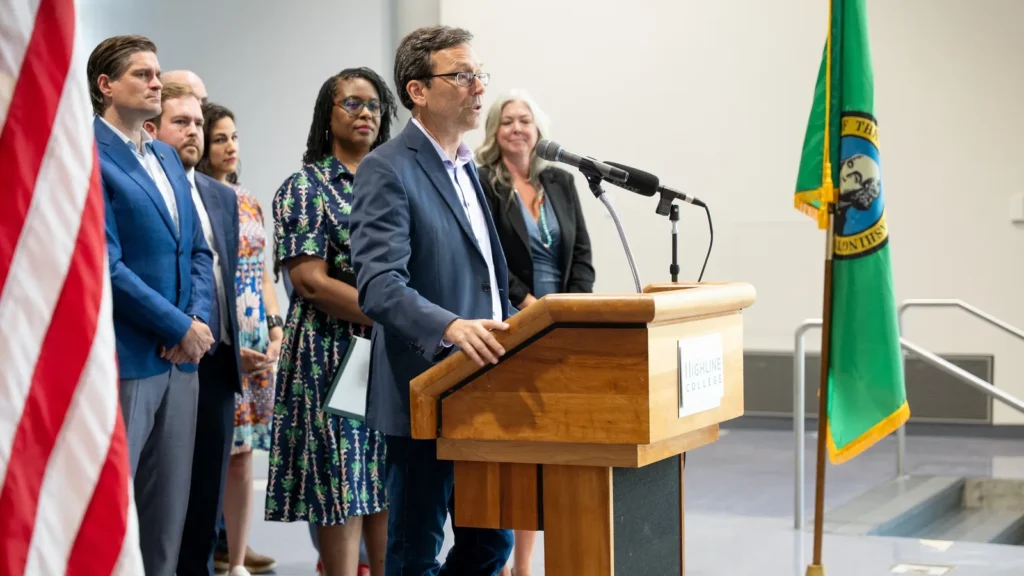
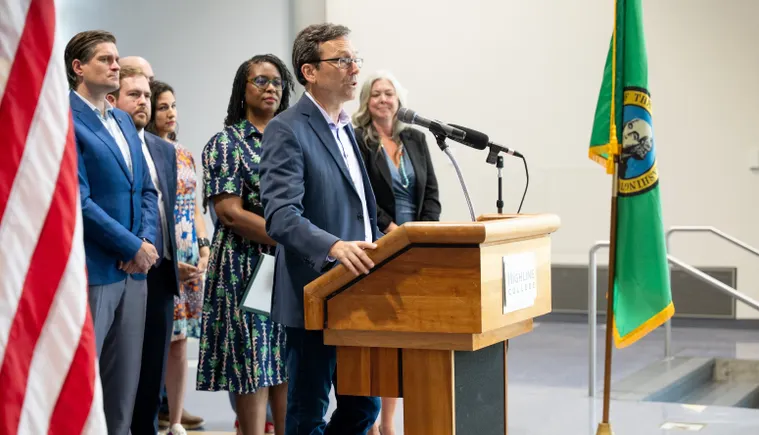
“Washington provides more free money for students to attend college or job training than virtually any other state in the nation,” Governor Ferguson stated during a press conference at Highline College in Des Moines, Washington, on July 13, 2026. “Yet, we haven’t demonstrated the same commitment to helping students access that money.”
The "money on the table" problem is a long-standing issue in American higher education. Billions of dollars in federal and state grants go unclaimed every year simply because students do not complete the necessary paperwork. For the Ferguson administration, the FAFSA is the gateway to the Washington College Grant and other state-level initiatives, and increasing its completion rate is viewed as a vital step in bolstering the state’s workforce pipeline and economic mobility.
A Chronology of Policy and Progress
The current push for FAFSA reform did not emerge in a vacuum; it is the culmination of nearly two years of strategic planning and legislative maneuvering.
- Early 2025: Following his inauguration, Governor Ferguson identified FAFSA completion as a priority, noting that Washington’s ranking (47th in the nation at the time) was unacceptable for a state with such a robust commitment to higher education.
- September 2025: Governor Ferguson officially tasked the Washington Student Achievement Council (WSAC) with establishing a formal state FAFSA completion goal for the 2026-2027 academic year. He mandated the agency to identify "equity gaps"—specifically, districts and schools with the lowest completion rates—and to form an advisory board aimed at developing scalable, high-impact strategies.
- January – June 2026: As the legislative session progressed, the administration began highlighting "pilot" successes from K-12 districts that had already implemented mandatory FAFSA completion policies.
- July 2026: Official data from the National College Attainment Network (NCAN) confirmed that Washington’s ranking had climbed from 47th to 40th, providing the political momentum necessary for the Governor to propose a universal completion requirement.
Supporting Data: Why Universal Completion Matters
The argument for a universal FAFSA requirement—where every high school senior is expected to complete the form or explicitly opt out—is rooted in the success of the few districts that have already adopted the practice.
Data provided by the Governor’s office indicates that in districts where completion or an opt-out is required for graduation, two-thirds of students successfully submit their forms. This result significantly outperforms both the current state average (50.7%) and the national average (59.6%).
The correlation between policy and participation is striking. When the process is treated as a standard, expected part of the high school curriculum—rather than an optional "extra" task—barriers such as confusion, lack of information, or the perception that college is "not for them" are systematically dismantled. This shift in culture is the primary mechanism through which the Governor hopes to lift the state’s performance to the top tier of national rankings.
The Legislative Path Forward
The Governor’s proposal is currently heading toward the state’s Democratic-controlled Legislature. While the political alignment suggests a favorable environment for the bill, it is not without potential pitfalls.

The administration’s proposal is modeled after policies currently in place in about a dozen other states. However, the path to universal FAFSA adoption is not always linear. The legislative debate is expected to center on the balance between "encouragement" and "mandate." Proponents argue that the mandate is a necessary push to break cycles of poverty, while critics often focus on administrative burdens for under-resourced schools and the potential for bureaucratic overreach.
Furthermore, the state must navigate the logistical challenges of implementation. The WSAC is currently preparing its first comprehensive progress report, due this October. This document is expected to provide the foundational data for legislators, identifying which specific districts require the most support and how much funding will be necessary to provide schools with the guidance counselors and training required to assist families through the complex federal forms.
Implications: Privacy and National Context
The movement toward universal FAFSA completion is a national phenomenon, but it is not universally accepted. The experiences of other states serve as both a roadmap and a warning for Washington.
For instance, Louisiana and New Hampshire both adopted universal FAFSA requirements, only to repeal them in the 2024-2025 cycle. The primary driver for these repeals was not a lack of effectiveness, but rather intense public and political concern regarding data privacy. Critics argued that the state’s role in facilitating federal financial disclosure raised questions about how student data is stored, shared, and protected.
As Washington debates its own version of the requirement, the Governor’s office must ensure that privacy safeguards are woven into the heart of the legislation. The success of the policy will depend on the public’s trust; if parents and students feel that the mandatory nature of the form compromises their personal data, the policy could face a backlash similar to that seen in New Hampshire and Louisiana.

Looking Ahead: The Goal of Equity
Ultimately, the push for FAFSA completion in Washington is an equity-based strategy. The students most likely to leave federal aid on the table are often those from low-income households, first-generation college students, and those from marginalized communities who lack access to the professional counseling networks that facilitate college planning.
By making FAFSA completion an institutional expectation, the state is effectively saying that access to higher education is a universal right, not a privilege reserved for those who have the resources to navigate the paperwork. As the WSAC prepares its October report and the Legislature prepares to debate the Governor’s proposal, the eyes of the nation will be on Washington. If the state succeeds in codifying a successful, privacy-conscious model for universal completion, it could provide a blueprint for other states to follow—and, more importantly, it could change the educational trajectory for thousands of Washington students who might otherwise never have realized that college was within their financial reach.
The next few months will determine if the Governor’s ambition can be translated into a durable, effective law that cements Washington as a leader in both college affordability and student access.