Federal Judge Blocks Trump Administration from Arbitrarily Terminating Research and Institutional Grants

By Natalie Schwartz
July 20, 2026
In a significant legal rebuke to the Trump administration’s fiscal strategy, a federal judge has issued a ruling that prevents the executive branch from unilaterally terminating existing federal grants based on evolving political priorities. The decision marks a major victory for a coalition of 21 state attorneys general and three governors, who had argued that the administration’s aggressive approach to federal funding was not only economically destabilizing but legally unauthorized.
The ruling, issued on July 17, 2026, provides a long-sought safeguard for billions of dollars in funding currently held by universities, non-profits, and research institutions. For many in the higher education sector, the decision offers a rare reprieve after eighteen months of profound financial volatility.
The Core of the Legal Conflict
At the heart of the dispute was a specific interpretation of federal grant regulations by the Office of Management and Budget (OMB). Under the Trump administration, federal agencies frequently invoked a regulatory provision stating that a grant could be terminated “if an award no longer effectuates the program goals or agency priorities.”
The administration interpreted this language as a broad mandate, allowing them to rescind funding for programs that did not align with their new, shifting policy agenda. The plaintiff coalition, spearheaded by the attorneys general of New Jersey, Massachusetts, and New York, challenged this interpretation in court.
The plaintiffs argued that the language was intended to apply only to the specific, pre-established goals of a grant at the time it was awarded. They contended that the administration was improperly using the clause to bypass established budgetary oversight, effectively holding critical programs hostage to the whims of the current executive.
In her ruling, Judge Talwani sided with the states. She concluded that the administration’s broad interpretation of the regulatory clause “is not clearly supported by the text of the provision” and ultimately “runs counter to the regulatory scheme.” By limiting the administration’s ability to use "shifting priorities" as a justification for cancellation, the court has effectively erected a firewall around existing grant agreements.
A Chronology of Financial Uncertainty
The landscape of higher education funding has been fraught with tension since the start of the second Trump term. The administration’s policy of "grant reallocation"—or what critics termed "grant raiding"—began in early 2025, sending shockwaves through the scientific and academic communities.
- January 2025: Following the inauguration, the administration initiates a comprehensive review of federal research portfolios, signaling an intent to align funding with a new, nationalist-oriented research agenda.
- May 2025: Initial reports emerge of federal agencies notifying major research universities that their multi-year awards are subject to "re-evaluation" based on current executive priorities.
- September 2025: Johns Hopkins University releases a sobering financial outlook, reporting a $500 million decline in its federal research portfolio, directly attributed to grant terminations and the drying up of new award opportunities.
- January 2026: The coalition of 21 attorneys general and three governors files a formal lawsuit, alleging that the administration is acting beyond its statutory authority and causing irreparable harm to public interest projects.
- July 17, 2026: Judge Talwani issues the final ruling, barring the administration from using broad policy shifts as a legal basis to terminate active, non-expired federal grants.
Supporting Data: The Scale of the Risk
The implications of the administration’s policy were not merely abstract; they involved billions of dollars in critical infrastructure, scientific research, and public health funding. The coalition of states that filed the lawsuit reported that they collectively held $5.4 billion in existing federal grants that were under immediate threat.
The impact on individual institutions has been severe. Johns Hopkins University, as a bellwether for the sector, highlighted the dual threat of "terminations and fewer new awards." When research funding is pulled mid-cycle, institutions are often left with "stranded costs"—long-term salary commitments for researchers, ongoing clinical trials, and expensive lab infrastructure that cannot be shuttered overnight.
Furthermore, the uncertainty created by the administration’s actions led to a "chilling effect." Universities became hesitant to apply for new federal grants, fearing that the funding would be pulled before projects could reach fruition. This has, according to several university lobbyists, led to a measurable decline in domestic innovation in fields such as green energy, public health, and basic science.
Official Responses and Political Fallout
The reaction from state leadership has been one of sharp condemnation, framing the court’s decision as a necessary check on executive overreach.

New Jersey Attorney General Jennifer Davenport was among the most vocal critics of the administration’s practices. Following the ruling, she characterized the administration’s actions as a reckless misuse of public funds. "The President and his allies cannot hold critical programs hostage to their personal whims and political ideologies," Davenport stated. She emphasized that the funding in question was not merely "discretionary spending" but essential support for scientific research that serves the public good.
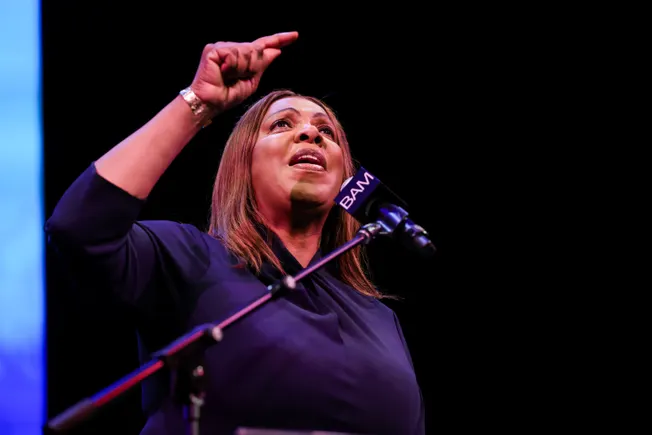
New York Attorney General Letitia James echoed these sentiments, framing the ruling as a triumph for the rule of law. "This administration has spent the past year and a half trying to slash vital funding that keeps people safe, helps working families make ends meet, protects our environment, and much more," James said. "Today, a court upheld the rule of law and put an end to their flimsy justification for these dangerous cuts."
To date, the Office of Management and Budget has remained silent on the ruling, having not provided an official comment as of Monday. Legal analysts expect the administration may attempt an appeal, though the specific phrasing of Judge Talwani’s ruling—which leans heavily on the literal text of the federal regulations—may make it difficult for the government to secure a stay.
Broader Implications for Higher Education
The ruling provides immediate relief, but it also raises long-term questions about the relationship between the federal government and research universities.
1. Restoration of Fiscal Predictability
For universities, the ability to forecast revenue is essential for long-term planning. Knowing that a grant cannot be canceled due to a change in political administration allows for the continuity of multi-year research projects. This stability is critical for recruiting top-tier faculty and maintaining long-term research infrastructure.
2. The Limits of Executive Power
The case serves as a landmark moment in determining the boundaries of administrative state power. By ruling that the executive cannot interpret "program goals" to mean "political goals," the court has reinforced the principle that federal regulations must be interpreted in a way that respects the original intent of the legislative branch when the grants were authorized.

3. Future Litigation
While the coalition did not challenge past terminations—a strategic decision meant to focus the court’s energy on preventing future harm—it is possible that individual institutions may now seek to recoup losses from terminated grants, emboldened by this legal precedent. The ruling essentially provides a template for universities to argue that their own past terminations were illegal, should they choose to pursue litigation.
4. A Shift in Funding Dynamics
The administration is now forced to pivot. Rather than terminating existing grants, they will likely focus on the "front end" of the process: tightening the criteria for new grant applications and shortening the duration of award cycles. This ensures that even if they cannot cut existing funding, they can effectively reduce the federal footprint in academic research over the next few years.
Conclusion
The July 17 ruling is more than just a procedural victory for a group of state attorneys general; it is a fundamental defense of the stability required for American research and development. By curtailing the administration’s ability to treat federal grants as political instruments, the judiciary has sent a clear message that the rule of law applies even in the halls of the federal budget office.
As higher education institutions breathe a sigh of relief, the focus now turns to whether this ruling will hold up under potential appellate scrutiny and how the administration will adjust its strategy for the remainder of its term. For now, the $5.4 billion in state-held grants—and the countless projects they fund—remain secure, protected by the stroke of a judge’s pen.