Kirk family alleges ‘stunning’ security failures at UVU led to the figure’s death
By Higher Ed Dive Staff
Published Sept. 16, 2026
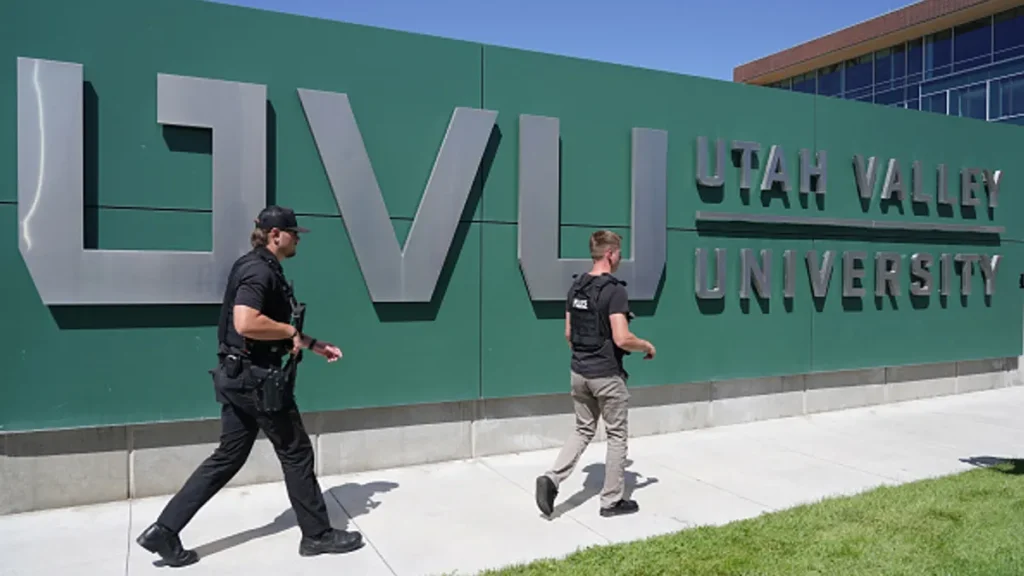
OREM, Utah — More than a year after conservative political activist Charlie Kirk was assassinated during a campus appearance, the legal fallout is beginning to take shape. Attorneys representing Kirk’s heirs have filed a formal notice of claim against Utah Valley University (UVU), laying the groundwork for a high-stakes wrongful death lawsuit.
The legal notice alleges that institutional negligence, severe security lapses, and poor event oversight directly contributed to the fatal shooting of the Turning Point USA founder. The tragedy, which unfolded on September 10, 2025, during Kirk’s "American Comeback Tour," has reignited a fierce, polarized debate regarding the obligations of public universities. Institutions across the United States increasingly find themselves caught in an untenable bind: balancing their legal and moral duties to protect free speech against the mounting financial burdens, operational challenges, and catastrophic risks of securing high-profile, polarizing figures.
Main Facts of the Case
According to the legal notice served by the law firm Parkinson Benson Potter, attorneys representing Kirk’s estate argue that Utah Valley University failed in its most fundamental duty: keeping a guest speaker safe on its campus.
Kirk, 31, was struck in the neck by a bullet fired from a nearby rooftop while speaking at UVU’s Losee Center building. He was pronounced dead shortly after the attack, sending shockwaves through the American political landscape and the higher education sector.
The core of the family’s impending lawsuit centers on alleged foreseeability and gross operational negligence. The notice points out that given Kirk’s immense national visibility, the inflammatory nature of his political rhetoric, and a volatile national climate marked by recent high-profile acts of political violence—most notably the attempted assassination of Donald Trump during the summer 2024 campaign trail—university officials should have recognized the extreme vulnerability of the event.
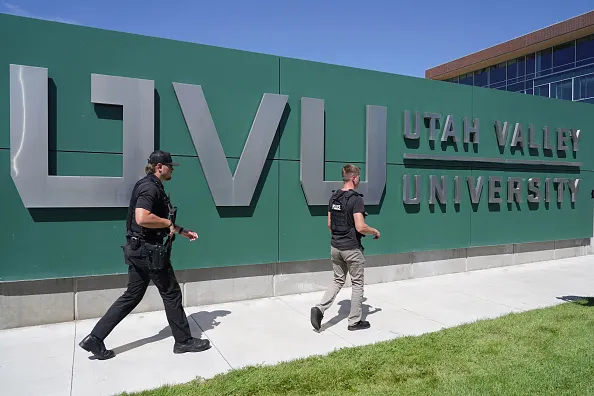
“Through a series of stunning failures and reckless decisions, the UVU Parties created a foreseeable danger to Charlie,” the family’s legal representation wrote in the notice. “Those decisions ultimately rendered Mr. Kirk helpless to the rooftop shooter in an assassination that could have been avoided had the UVU Parties only taken reasonable steps to plan and oversee a safe event.”
The notice of claim serves as a mandatory precursor to a formal civil lawsuit against a public entity in many jurisdictions, signaling that the Kirk family is preparing to seek substantial damages through the courts.
Chronology of Events
To understand the gravity of the legal claims, legal analysts and investigators have pieced together the timeline leading up to and immediately following the tragic events of September 2025:
- Early 2025: Arrangements are finalized for Turning Point USA to bring its "American Comeback Tour" to Utah Valley University in Orem, Utah, with organizers and university officials coordinating venue logistics for the autumn semester.
- Summer 2025: Security concerns are heightened nationwide following previous political violence, prompting discussions among security analysts about the physical vulnerabilities of open-air and campus speaking venues.
- September 10, 2025: Charlie Kirk takes the stage at UVU’s Losee Center. Minutes into the event, a sniper opens fire from an unsecured adjacent rooftop. Kirk is struck in the neck and killed instantly, plunging the venue into panic and law enforcement chaos.
- September–December 2025: Free speech advocacy groups, civil rights organizations, and higher education associations debate the aftermath of the shooting, weighing the safety of campus events against the chilling effect of increased security hurdles.
- September 16, 2026: Parkinson Benson Potter formally files a notice of claim against Utah Valley University on behalf of Kirk’s heirs, formally accusing the institution of negligence and setting the stage for a landmark civil suit.
Supporting Data and Financial Realities of Campus Security
The potential litigation against Utah Valley University shines a harsh light on the unsustainable economics of modern campus safety. Public universities are legally bound by the First Amendment to provide a public forum for diverse viewpoints, yet facilitating these events safely has become an exorbitant financial and logistical challenge.
Under current constitutional guidelines, public universities cannot pass arbitrary security fees onto student groups or guest speakers based on the controversial nature of their ideas. This precedent was solidified by the 1992 U.S. Supreme Court ruling in Forsyth County v. Nationalist Movement, which prohibited government entities from charging variable security fees derived from administrators’ predictions of public hostility or potential protests.
Consequently, institutions are forced to absorb extraordinary security expenses out of their own operating budgets—budgets that are already heavily strained. Historical data illustrates the massive scale of these expenditures:

- University of Florida (2017): The institution shelled out approximately $500,000 in security costs alone when white nationalist Richard Spencer appeared on campus, triggering widespread protests and stretching local law enforcement thin.
- University of California, Berkeley (2017): UC Berkeley spent an estimated $4 million over the course of a single month to protect a handful of conservative and right-wing speakers. The fallout eventually led to a free-speech lawsuit, which Berkeley settled in 2018 for $70,000, alongside a binding agreement promising never to charge security fees tied to the content of a speaker’s message or anticipated disruptions.
These soaring costs have transformed hosting controversial speakers into a logistical nightmare. Writing shortly after the 2017 wave of campus protests, Columbia Law School professor Suzanne Goldberg observed a troubling institutional reality: universities were facing a dynamic “where a commitment to free expression has enabled provocateurs not only to spew hostile messages into our communities but also to divert extraordinary levels of resources to protect their messaging.”
Now, with the death of Charlie Kirk, the stakes have escalated unimaginably from property damage and civil unrest to the ultimate loss of human life.
Official Responses and Institutional Reactions
In the wake of the notice of claim, Utah Valley University has maintained a measured posture while preparing for a prolonged legal battle.
In an email statement released Wednesday, a UVU spokesperson acknowledged receipt of the legal filing, emphasizing that the institution handles such matters through established legal channels.
“Our focus remains on supporting our campus community,” the spokesperson stated, declining to comment further on the specifics of the allegations cited by Parkinson Benson Potter.
Meanwhile, advocacy organizations are closely monitoring the legal developments. Following Kirk’s assassination last year, the Foundation for Individual Rights and Expression (FIRE) issued a statement asserting that colleges possess “a moral and legal obligation to redouble their efforts to protect free speech as well as their campus community.”

However, FIRE simultaneously cautioned against reactionary overreach. The organization warned that university administrators “must not pass those security costs along to speakers or use security concerns as pretext to cancel a speaker’s appearance.”
The tension between maintaining an open academic forum and ensuring bulletproof physical security has created an atmosphere of deep anxiety among university leadership teams nationwide.
Implications for Higher Education
The impending lawsuit by Charlie Kirk’s heirs against Utah Valley University threatens to rewrite the playbook for how colleges handle guest lectures, political rallies, and high-profile public figures.
If the Kirk family successfully proves that UVU’s security omissions constituted actionable negligence, it could establish a dangerous legal precedent. Universities across the United States might find themselves legally liable for security failures during contentious events, forcing a drastic reassessment of risk management.
Such liability could manifest in several ways:
- Preemptive Cancellations: Risk-averse university administrators may quietly refuse to host polarizing figures from across the political spectrum, preferring to face accusations of censorship rather than risk multi-million-dollar wrongful death lawsuits or catastrophic security breaches.
- Draconian Security Protocols: Campuses that do host major speakers may implement measures that mirror high-security government installations—including mandatory metal detectors, heavily restricted perimeter access, closed-off surrounding buildings, and massive deployments of armed personnel—turning academic quads into heavily militarized zones.
- Insurance Crisis: Public institutions and their municipal insurers may see skyrocketing liability insurance premiums for hosting politically charged events, further draining critical educational funds away from classrooms and student services.
As the legal proceedings between the Kirk estate and Utah Valley University move forward, the higher education sector watches with bated breath. The outcome of this case will not only determine accountability for a horrific tragedy in Orem, Utah, but may also redefine the boundaries of free speech, institutional liability, and physical safety on American college campuses for decades to come.