The AI Paradox in Higher Education: Navigating the Intersection of Innovation and Integrity

By Editorial Staff
Published July 21, 2026
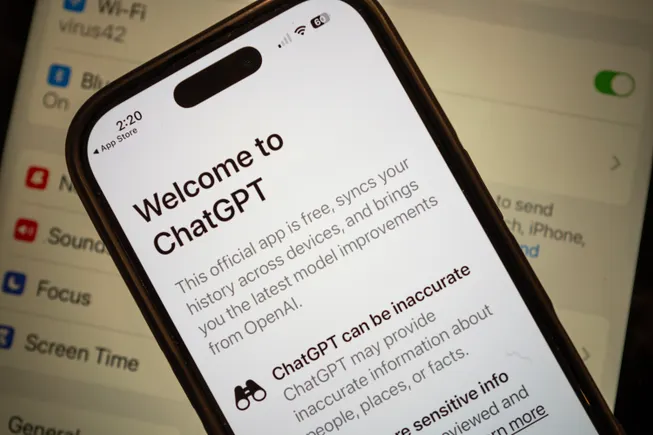
Four years after the meteoric rise of generative artificial intelligence, the landscape of American higher education remains a complex battleground. While institutions have moved past the initial shock of ChatGPT’s debut in late 2022, the sector finds itself in a state of perpetual adjustment, attempting to reconcile the immense efficiency potential of AI with profound anxieties regarding academic integrity, intellectual rigor, and the future of human judgment.
A new, comprehensive survey released by the ed-tech provider Instructure highlights the depth of this duality. While students and educators alike recognize AI as an inescapable facet of modern learning, a staggering 65% of respondents share a common, gnawing concern: the fear that these systems—while articulate and fast—possess a dangerous propensity to sound authoritative while being fundamentally incorrect.
The Chronology of a Digital Transformation
To understand the current state of AI in higher education, one must look back at the rapid evolution of the technology since late 2022.
- Late 2022 – Early 2023: The "Panic Phase." ChatGPT is released, sending university administrators into a tailspin. Institutions scramble to draft emergency policies, often resulting in blanket bans that were largely unenforceable.
- 2024: The "Partnership Phase." Recognizing that prohibition was futile, major institutions began to pivot toward integration. Arizona State University made headlines in early 2024 by announcing a landmark partnership with OpenAI, effectively legitimizing the use of AI tools in the classroom and signaling a shift from resistance to adoption.
- 2025: The "Policy Vacuum." While some universities established comprehensive AI frameworks, a vast majority of colleges remained in a state of limbo, failing to provide faculty with concrete guidance on how to evaluate AI-assisted work, leading to inconsistent standards across departments.
- 2026: The "Integration and Resistance Phase." The current year has been defined by a split between institutional top-down implementation and grassroots student-faculty pushback. As the California State University system solidified its own AI initiatives, students began to actively protest the dehumanization of academic processes, marking a significant cultural friction point.
Supporting Data: The Pulse of the Classroom
The Instructure survey, which canvassed over 1,100 participants—including higher education faculty, K-12 educators, college students, and parents—provides a data-driven look at the current sentiment.
The Optimism Gap
Despite the prevailing anxieties, the data suggests that total rejection of AI is not the answer. Among college students, 94% identified at least one reason to be optimistic about the technology’s role in their education. Whether it is acting as a personalized tutor, a research assistant, or a brainstorming partner, the utility is clear to those on the front lines. Educators, though more measured, also reported majority optimism regarding AI’s potential to streamline administrative tasks and provide personalized support to struggling students.
The Accuracy Crisis
The primary obstacle to full-scale adoption is trust. The survey confirms that 65% of instructors and students are deeply concerned about "hallucinations"—instances where AI produces false information with high confidence. This concern is not merely abstract; it goes to the heart of the educational mission. If students cannot rely on the veracity of their tools, the fundamental goal of critical thinking is at risk of being replaced by a culture of superficial verification.
The Expectation of Literacy
Perhaps the most significant finding from the report is the universal consensus on responsibility. Every demographic group surveyed explicitly stated that it is the duty of the educational institution to teach the ethics, literacy, and responsible use of AI. The message to university leadership is clear: students do not want to be left to navigate these tools alone. They are demanding a formal curriculum that addresses bias, accuracy, and the ethical implications of automated intelligence.
Official Responses: Navigating the "New Normal"
Industry leaders are now pivoting their messaging to address the "middle ground" of AI deployment. Melissa Loble, the Chief Learning Officer at Instructure, emphasized that the conversation has shifted from "if" we use AI to "how" we use it effectively.
"AI is already part of how students learn and educators work," Loble stated in a recent press release. "The challenge now is making sure people have the training, judgment, and clear expectations to use it well. That requires practical support for educators and thoughtful boundaries that keep critical thinking, human judgment, and meaningful learning at the center."

This sentiment reflects a broader industry movement toward "AI-augmented" rather than "AI-driven" pedagogy. Institutions are increasingly looking toward software solutions that provide transparency, such as AI-assisted research tools that cite sources, rather than "black box" models that hide their data origins.
Implications: The Rising Tide of Skepticism
While the data shows an openness to AI, there is an equally strong, and arguably more vocal, trend toward skepticism. This is particularly evident among Gen Z, a generation that has grown up as digital natives but is now showing signs of "tech fatigue."
The Generation Z Backlash
A December Gallup poll highlighted a growing trend of negative sentiment among Gen Z adults. Approximately 83% of respondents expressed concern that AI, while designed to increase efficiency, would ultimately degrade the quality of learning. This is not just a technological critique; it is a pedagogical one. Students are concerned that by outsourcing tasks to AI, they are losing the "struggle" of learning—the cognitive process that builds expertise.
The Commencement Protests
This skepticism has moved from surveys into the public sphere. The spring 2026 graduation season was marked by a wave of student-led resistance:
- The Eric Schmidt Incident: At the University of Arizona, former Google CEO Eric Schmidt faced significant disruption, including booing, when he praised the transformative power of AI during his commencement address.
- The Columbia University Protests: Perhaps the most symbolic moment occurred at Columbia, where students and faculty protested the administration’s decision to use an AI voice to read the names of graduates. The protest served as a powerful metaphor: for many students, the use of AI to replace human ritual was a bridge too far, highlighting a deep-seated desire to preserve the human element in the most significant milestones of academic life.
Looking Forward: A Path to Synthesis
The findings from the 2026 survey underscore a fundamental reality for higher education: the technology is no longer the variable; human behavior is.

Universities currently stand at a crossroads. They can either continue to be reactive, responding to each new iteration of AI with defensive policies and half-hearted bans, or they can take a proactive, leadership role in defining the ethics of the age.
The path forward, according to the survey data and emerging institutional best practices, involves three pillars:
- AI Literacy as a Core Requirement: Moving beyond basic "how-to" workshops to incorporate deep-dive courses on data ethics, the sociology of algorithms, and the limitations of large language models.
- Task-Specific Integration: Prioritizing AI for low-stakes, administrative support tasks (such as finding resources or organizing study schedules) while keeping high-stakes academic decisions, such as grading and original creative work, firmly in human hands.
- Preserving the "Human in the Loop": Designing classrooms where AI is used to facilitate rather than substitute discussion. This means focusing on oral exams, in-class debate, and project-based learning that requires students to defend their ideas—and the processes they used to form them—in person.
As the sector moves into the latter half of the decade, the question is no longer whether AI will change higher education, but whether higher education can change its structure to ensure that the human mind remains the primary architect of knowledge. The evidence suggests that while the tools are changing rapidly, the fundamental student desire for authentic, human-centered learning remains as robust as ever.