Beyond the Diploma: Why Career Navigation Must Become the New Core of K-12 Education
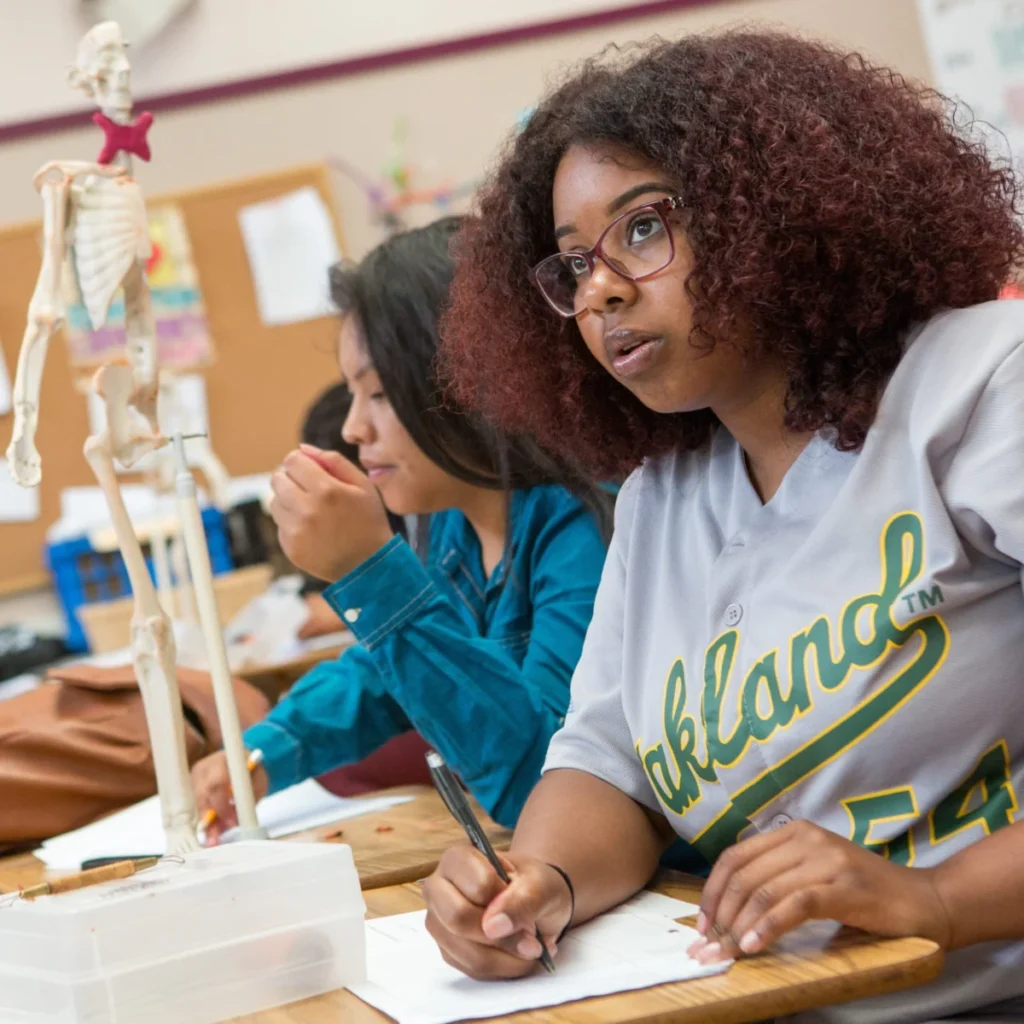
In the landscape of American secondary education, a fundamental disconnect has emerged. While state policymakers have poured record levels of funding into Career and Technical Education (CTE) programs and expanded the menu of industry-recognized credentials available to high schoolers, a quiet crisis persists. Despite these investments, the bridge between the classroom and the economy remains fractured. Millions of students are graduating with little to no clear understanding of their professional potential, leaving them vulnerable in a volatile, AI-driven labor market.
For decades, the "college for all" mantra dominated the K-12 mission. While well-intentioned, this singular focus has often sidelined the nuanced guidance required for the modern workforce. Today, a new movement is building—one that argues that robust career navigation is not a luxury or an extracurricular elective, but a core responsibility of the K-12 system.
The State of the Crisis: A Generation Adrift
The data paints a sobering picture of the status quo. A 2024 survey revealed that a staggering 66% of young adults between the ages of 16 and 24 admit they have no clear idea of what career path they wish to pursue. This uncertainty is not merely a byproduct of youth; it is a symptom of a systemic failure to provide consistent, high-quality guidance.
The primary structural bottleneck is the chronic shortage of school counselors. Across the United States, the recommended student-to-counselor ratio—ideally 250 to 1—is rarely met. In many districts, counselors are overwhelmed by administrative tasks and mental health crises, leaving career planning relegated to a "back-burner" priority.
The consequences are felt across the entire socioeconomic spectrum. Without professional networks or deep exposure to industry requirements, students from low-income households—who make up a significant portion of the student body in many districts—are particularly disadvantaged. Research indicates that social capital is a primary driver of upward mobility; when schools fail to provide that "network" via career exposure, they effectively solidify existing class barriers.
Chronology of a Shift: From "College for All" to "Career-Ready"
The evolution toward integrated career navigation has been a slow but accelerating process.
- Pre-2010s: The "College for All" model reigned supreme. K-12 curricula were almost exclusively designed to satisfy university entrance requirements, often ignoring the reality that a significant percentage of students would enter the workforce directly or via trade certifications.
- 2015–2020: As the cost of higher education skyrocketed and the "skills gap" became a common refrain among employers, states began investing heavily in CTE and dual-enrollment programs. However, these programs often existed in silos, disconnected from the core academic day.
- 2021–2023: The pandemic accelerated the need for economic stability. Policy reports from groups like the Association for Career and Technical Education (ACTE) highlighted that while states were creating "pathways," students weren’t accessing them due to a lack of guidance.
- 2024–Present: A new emphasis on "Career Navigation" has emerged. Innovative districts and nonprofits are moving away from the idea that a counselor must be the sole gatekeeper of career wisdom, opting instead to embed navigation into the curriculum and leverage technology.
Supporting Data: The Economic Toll of Disconnection
The lack of adequate guidance is not just a school problem; it is a macroeconomic failure. Consider the following metrics:
- The "Launchpad" Deficit: Less than 10% of young employees without college degrees currently work in "launchpad jobs"—roles that offer a clear, documented trajectory for career growth and wage progression.
- The Underutilization Gap: Nearly 42% of recent college graduates are currently employed in positions that do not require their specific degrees, suggesting a mismatch between educational attainment and market demand.
- The Disconnected Youth: Perhaps most concerning is the population of "disconnected" youth—those between 16 and 24 who are neither in school nor working. Recent estimates suggest this number has reached 4.3 million, or roughly 1 in 10 young people, representing a massive loss of human potential.
Innovative Models: Changing the Delivery Mechanism
To bridge this gap without hiring thousands of new staff—an impossibility for most budget-strapped districts—innovative leaders are turning to three primary strategies: curricular integration, nonprofit partnerships, and AI-assisted advising.
1. Curricular Integration: The "World of Work"
In California’s Cajon Valley Union School District, the old model of "career day" has been replaced by the "World of Work" curriculum. Here, career exploration starts as early as kindergarten. By the time students reach high school, they spend nearly 40% of their time in internships or job-based learning experiences.
This model treats career exposure as a pedagogical tool rather than an administrative one. For example, rather than teaching geometry as a series of abstract theorems, teachers present it through the lens of a construction project. This makes the academic content inherently relevant, increasing student engagement and providing a tangible look at potential career paths.
2. Nonprofit Intermediaries: Scaling Capacity
Organizations like OneGoal in Chicago have pioneered a model that trains teachers to serve as high-impact advisors. By focusing on a three-year cohort model that follows students into their first year of postsecondary life, these nonprofits offer comprehensive support—including financial aid counseling, test prep, and social-emotional development.
The results are significant. Studies from the University of Chicago’s Inclusive Economy Lab found that OneGoal participants were nearly 16 percentage points more likely to graduate from high school than their peers, proving that structured, long-term mentorship can compensate for the counselor-to-student ratio deficit.

3. AI-Powered Platforms: The Personalized Advisor
Technology is filling the gaps where humans cannot reach. Platforms like Futre.me are transforming how students interact with labor market data. By providing access to a database of over 800 living-wage careers—half of which do not require a traditional four-year degree—these tools democratize information. Students can view day-to-day tasks, salary expectations, and credentialing requirements, effectively giving them a personal career coach in their pocket.
Official Responses and Strategic Implications
The consensus among education policy experts is clear: the current model is unsustainable. However, the path forward requires a delicate balance.
"We are not suggesting that career navigation can replace the human element," notes a report by FutureEd. "AI and digital platforms are powerful force multipliers, but they cannot replace the empathetic guidance of a mentor or the life-changing recommendation of a teacher."
The implications for school leadership are profound. Principals and superintendents must now view their institutions not just as academic prep centers, but as economic engines for their local communities. This requires:
- Data Literacy: Schools must partner with local chambers of commerce to provide real-time data on which jobs are actually available in their specific regions.
- Redefining Success: Districts must move away from "college-only" metrics and begin tracking "career-pathway" success, such as the attainment of industry-recognized credentials and employment in high-growth fields.
- Professional Development: Teachers must be trained not just in their subject matter, but in how to connect that subject matter to the modern economy.
Conclusion: The New Mission of K-12
The mandate for the next decade is clear. We can no longer afford to send students into the world with a diploma in one hand and a question mark in the other. As the cost of higher education continues to climb and the nature of work shifts under the pressure of artificial intelligence, the K-12 system must pivot.
By integrating career navigation into the very heart of the school day—through curriculum, community partnerships, and smart technology—we can ensure that every student has the tools to build a fulfilling and economically stable future. The transition will be difficult, but the alternative—a growing cohort of underemployed, disconnected, and disillusioned young people—is a price the nation cannot afford to pay. The stakes are, quite literally, the future of our economy and the prosperity of the next generation.